

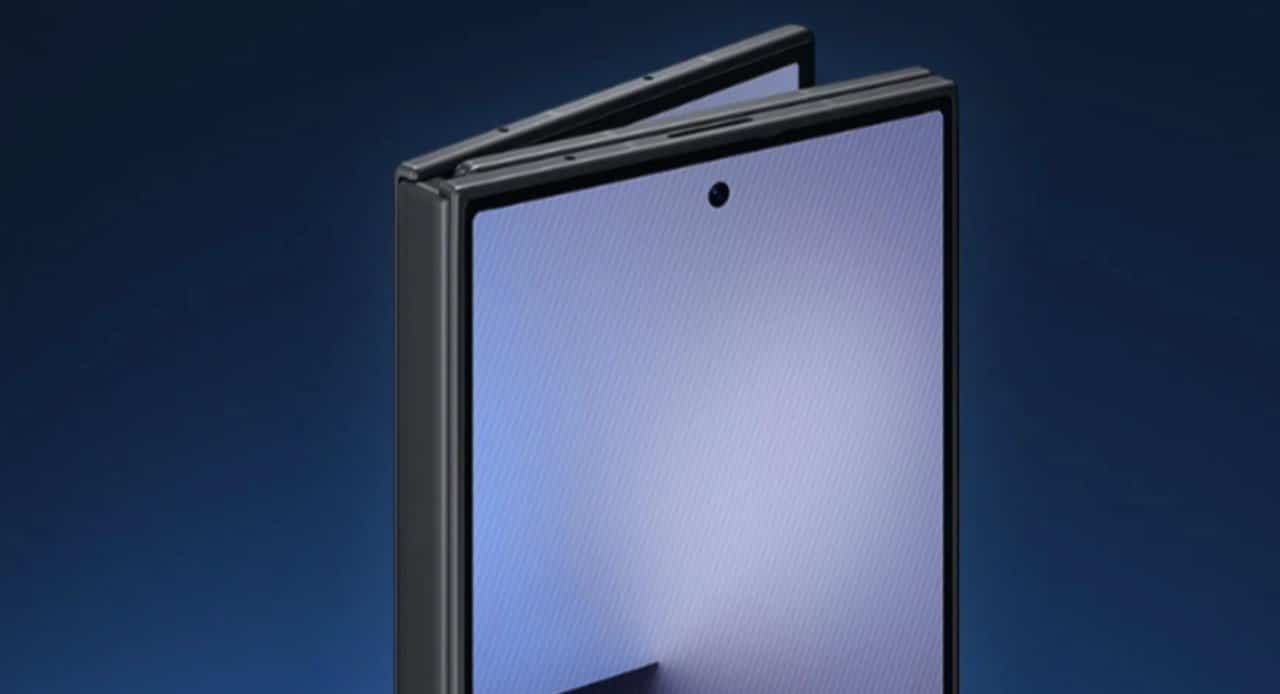
The Samsung Galaxy Z TriFold, the South Korean company’s first tri-foldable smartphone, was subjected to a rigorous durability test by the JerryRigEverything channel, led by Zack Nelson. The device, recently launched in selected markets as the Coreia of the Sul, could not withstand the pressures applied, especially in the reverse bend test, resulting in permanent damage to the structure and screen.
The device stands out for its 10-inch internal screen, which unfolds into a tablet format, and for its ultra-thin thickness of just 3.9 mm in its thinnest part. Apesar of the innovations, the test revealed vulnerabilities inherent in the complex two-hinged design.
Specifications such as Snapdragon 8 Elite processor, 16 GB of RAM and 5,600 mAh battery position the Galaxy Z TriFold as a premium device. However, the results of the practical analysis indicate that careful use is essential to preserve the integrity of the product.
Scratch tests reveal vulnerable internal screen
The external screen of the Galaxy Z TriFold, protected by Gorilla Glass, showed scratches only at level 6 of the Mohs scale, with deeper grooves at level 7.
The flexible internal screen, made of ultra-thin plastic material, was easily scratched even with fingernail pressure. Objetos common items such as keys or coins in your pocket pose a real risk of permanent damage to the main surface of the device.
The fiberglass back finish also demonstrated poor scratch resistance. Esses points highlight that, despite advances, foldable screens still require extra protection compared to traditional smartphones.
Exposure to fire and dust compromises components
In the direct flame test, the external screen withstood about 17 seconds before irreversible damage to the OLED pixels. The internal internal screen surrendered in just 10 seconds, with permanent burns that did not recover.
The presence of dust or sand on the hinges generated creaking noises when opening and closing the device. Embora rated with IP48 limited water and dust protection, the mechanism did not prevent the ingress of fine particles, which could affect the longevity of the hinges.
- External screen: flame resistant for 17 seconds
- Internal screen: damage in 10 seconds
- Hinges: squeak with accumulated dust
- Protection: IP48, but sensitive to particles
These elements reinforce the need for handling in controlled environments to avoid accelerated wear.

Thin structure does not withstand reverse pressure
The critical point occurred in the bending test opposite to the natural bending direction. The ultra-thin aluminum frame deformed quickly, with audible breakage along the antenna lines.
The hinges survived intact, but the reduced thickness compromised the overall rigidity. The screen went out permanently after the stress, marking the first failure of an Samsung foldable in this type of evaluation.
Compared to the Galaxy Z Fold 7, which withstood similar tests, the TriFold highlights trade-offs between innovative design and structural robustness.
Disassembly exposes triple battery and thermal dissipation
After the damage, dismantling revealed three batteries distributed across the segments, totaling 5,600 mAh. The absence of dedicated thermal paste suggests exclusive dependence on the aluminum frame for heat dissipation.
Accessible internal components indicate potential for repair, but general fragility increases maintenance costs. The design prioritizes portability, but sacrifices room for extreme abuse.
The teardown confirmed the engineering complexity involved in fitting two hinges into such a slender chassis.
Main vulnerabilities identified in tests
The Galaxy Z TriFold impresses with its innovation, transforming into a compact tablet with an immersive screen. However, the extreme tests highlighted clear limitations in everyday endurance.
- Deep scratches on the internal screen with common objects
- Rapid damage from prolonged exposure to heat
- Dust accumulation affecting hinge movement
- Structural failure in reverse bending, with frame breaking
These observations serve as a warning to potential users about the necessary caution.
Comparison with previous foldable models
Unlike the Galaxy Z Fold 7, which withstood similar pressures without permanent breakage, the TriFold prioritized thickness reduction over rigidity. The Samsung claims resistance to up to 200,000 normal bending cycles, but independent tests indicate early wear in adverse conditions.
Other foldables on the market face similar challenges with plastic screens and dust-sensitive mechanisms. The TriFold advances in format, but maintains trade-offs common to the category.
The evolution of foldables continues, with an increasing focus on more resistant materials for future generations.