

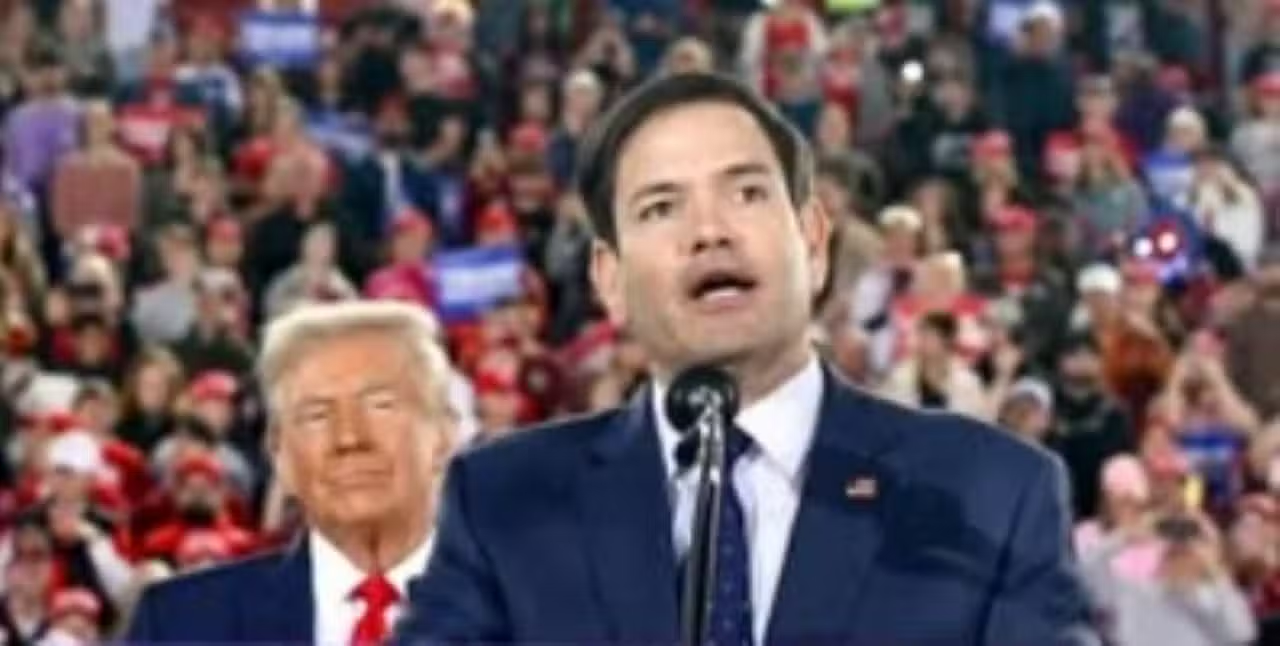
US Senator Marco Rubio recently reiterated his condemnation of the Venezuelan government, labeling it an “illegitimate regime” and accusing it of actively supporting drug trafficking operations. These statements underscore a consistent stance from Washington regarding the South American nation’s leadership. The lawmaker emphasized that this alleged support for criminal elements poses significant threats to regional security and US interests.
Rubio’s comments, made during a recent press briefing, highlighted the administration’s ongoing concerns about what he described as “criminal terrorist groups.” He asserted that these entities, allegedly operating with Venezuelan government complicity, destabilize vital partners in the region. This continued pressure reflects deep-seated strategic disagreements and security challenges.

The accusations are part of a broader US effort to address illicit activities originating from Venezuela. Washington views the Maduro administration as a non-cooperative actor that actively undermines international efforts against organized crime. The focus remains on disrupting networks that threaten stability and public safety across the Americas.
Continued scrutiny of Venezuelan governance
US Senator Marco Rubio has maintained a vocal position regarding the political landscape in Venezuela, consistently challenging the legitimacy of the current administration. His recent remarks align with a long-standing critique from various US officials. These criticisms focus on the democratic integrity and governance practices within the country.
The Senator has repeatedly drawn attention to the absence of what he considers genuine democratic processes under the current Venezuelan leadership. This narrative forms a core component of Washington’s foreign policy approach to the nation. The US continues to advocate for a return to democratic norms and free elections.
Allegations of criminal support
Senator Rubio detailed serious allegations linking the Venezuelan government to organized crime and drug trafficking. He asserted that the regime actively cooperates with, rather than combats, criminal elements. This alleged partnership allows for the unimpeded movement of illicit substances through the region.
He highlighted a stark contrast with other nations in the hemisphere that actively collaborate with the United States on security matters. In Venezuela’s case, Rubio stated, “we have an illegitimate regime that not only does not cooperate with the United States but openly cooperates with criminal elements.” This situation, he argued, creates a significant security vacuum exploited by illicit networks.
Regional security implications
The lawmaker stressed that the activities facilitated by what he calls an illegitimate regime directly imperil neighboring countries. Nations like Colombia and Mexico, which are key socio-economic partners of the United States, face severe threats from these “criminal terrorist groups.” The instability generated has far-reaching consequences across the continent.
These criminal entities, allegedly operating from Venezuelan territory, contribute to a complex web of security challenges, including drug-related violence and human trafficking. The US sees addressing this as crucial for maintaining regional stability. Protecting economic and security alliances in Latin America remains a high priority for Washington.
US non-cooperation stance
The United States maintains a firm policy of non-cooperation with the Venezuelan government, citing its alleged links to illicit activities and lack of democratic legitimacy. This stance has shaped diplomatic efforts and sanctions regimes for several years. The underlying principle is that engagement cannot occur with a regime accused of undermining international law and human rights.
Rubio underscored that this policy is a direct consequence of the Venezuelan government’s alleged actions, particularly its reported collaboration with criminal enterprises. The US prioritizes national and regional security over direct engagement with an administration it deems illegitimate. This non-cooperative approach aims to isolate and pressure the current leadership.
Counter-narcotics efforts intensify
US authorities have significantly ramped up their efforts against drug trafficking operations originating from Venezuela. These intensified operations target vessels suspected of transporting narcotics through the Caribbean. The heightened focus is a critical component of the broader US strategy to combat illicit drug flows into the United States.
Senator Rubio confirmed that “efforts against drug trafficking ships coming out of Venezuela” are receiving substantial attention from the US government. These interdiction efforts are a direct response to the perceived insecurity. They are designed to disrupt the supply chains that exploit the region’s vulnerabilities.
These actions form part of a comprehensive process by the US government to identify and mitigate sources of insecurity in the Western Hemisphere. The sustained vigilance underscores a determination to curb the influence of criminal networks. Such measures are crucial for safeguarding national borders and the well-being of its citizens.
Ongoing international dialogue
The broader international community remains engaged in discussions regarding the situation in Venezuela, often addressing human rights, democratic governance, and regional stability. These multilateral forums provide platforms for various nations to express concerns and explore potential solutions. The US actively participates in these dialogues to advocate for its policy objectives.
Deliberations at bodies like the United Nations Security Council frequently touch upon the political and humanitarian crises in Venezuela. The international community continues to monitor developments closely. Efforts are ongoing to promote a peaceful resolution that respects democratic principles and addresses the challenges posed by illicit activities.