

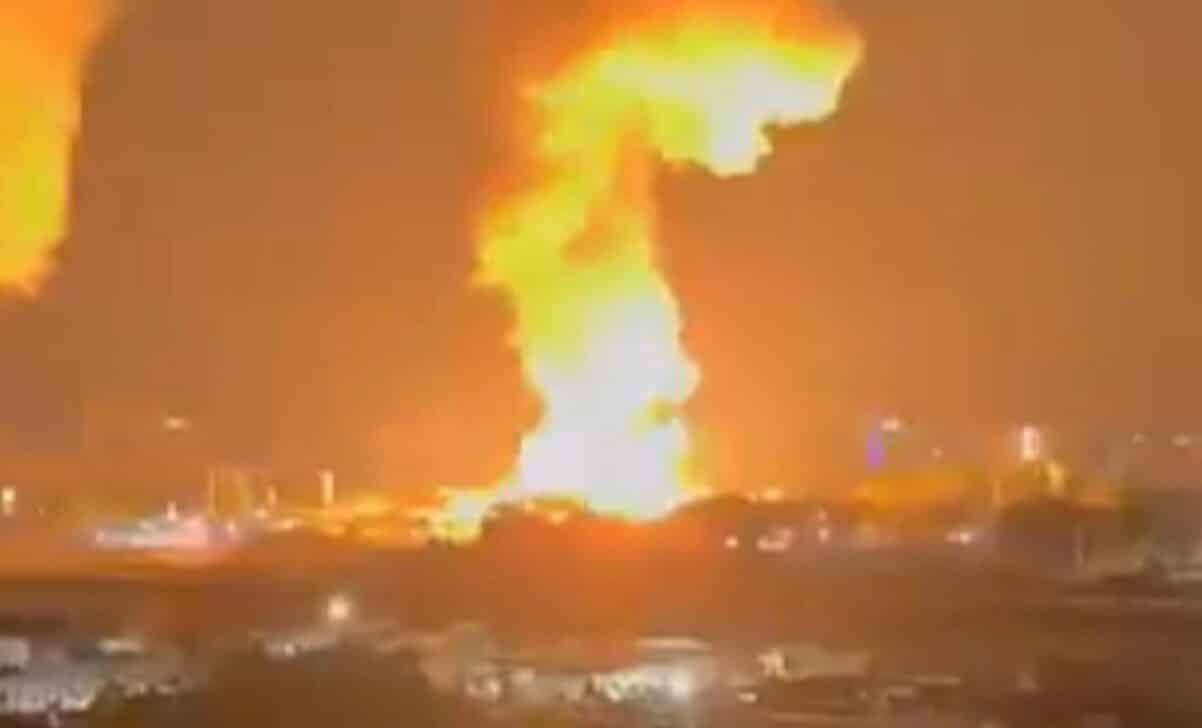
Caracas residents awoke to a dramatically altered political landscape this past weekend following a swift United States airstrike on the Venezuelan capital that led to the capture of President Nicolás Maduro. The operation, occurring during the early morning hours as Maduro slept, saw him swiftly transported across the Caribbean and ultimately detained in a correctional facility in Brooklyn, New York. This unprecedented event immediately sent ripples of uncertainty and apprehension across the nation, compelling many to venture out into the quiet streets, seeking answers and provisions amidst the sudden vacuum of power.
The immediate aftermath triggered a mix of fear and practical necessity for many. Judith Ledezma, a local resident, articulated a common sentiment while seated on a park bench in Caracas. Beside her sat her orange dog, with several shopping bags resting nearby, indicating an urgent errand. She explained, “Why did I have to go out? I have a pet that needs exercise, and I was really stressed staying at home.”

Ledezma, whose home lies close to one of the air bases impacted by the U.S. strikes, described being awakened by the forceful sounds of the attack. “I thought it was an earthquake,” Ledezma recalled, describing the jarring experience. “I was scared and ran out with my daughter and the dog.” The suddenness of the events left her, like many, grappling with an unknown path ahead for Venezuela.
Immediate reactions ripple through Caracas
Ledezma expressed profound confusion regarding the nation’s direction. “We have no idea what our destiny will be now with this new situation,” she stated, emphasizing a widespread sense of disorientation. “I am completely in the dark. I have no idea what will happen to the country, to us.” The government in Caracas has since urged citizens to resume normal activities, though the streets remain largely subdued, save for scattered militia members gathering on their motorcycles.
Minister of Defense, Vladímir Padrino López, publicly appealed on Sunday for people to “resume their economic, work, and all other activities, including educational activities, in the coming days.” This plea underscored a desire for normalcy even as the nation navigated its new political reality.
Uncertain future sparks public concern
Olga Jimenez shared her experience of finally leaving her home on Sunday after spending the entirety of Saturday glued to news updates. She conveyed a prevalent feeling of uncertainty, noting that despite Maduro’s capture, she did not anticipate immediate, significant changes in Venezuela. Her primary concern revolved around potential disruptions to daily life, particularly the resurgence of queues at commercial establishments.
Jimenez lamented the closure of many businesses, leading to long lines for essential goods. “What is happening to us is that places are not open, and you have to queue for everything, as if we were going back to Chávez’s time, when you had to queue everywhere just to buy things,” she elaborated. She further expressed a desire for a more comprehensive shift in power, stating, “I don’t know how to say it – it was Maduro’s government, and they should have taken everyone, not just Maduro.”
Economic anxieties and a return to past challenges
The immediate economic impact and a return to older challenges weigh heavily on many. Mario Valdez, another Caracas resident, voiced hopes for the rejuvenation of Venezuela’s economy, specifically through the return of international oil companies. He criticized previous agreements, stating his country had been exploited for years by nations like Russia, China, and Iran, which, he argued, offered little in return for Venezuela’s vast oil wealth.
Valdez pointed to the tangible consequences of past policies: “They stole all the money from this country to build large projects and did absolutely nothing,” he asserted. “The highways are unfinished.” His sentiments reflect a broad aspiration for a more equitable economic future, free from the perceived plundering of national resources.
Divergent views on political transitions
Maria Azocar, a seasoned observer of Venezuelan politics, offered a perspective shaped by decades of experience. “After having lived so much, nothing worries me anymore,” she told reporters, reflecting a sense of weary resilience. She contextualized Maduro’s capture within a broader historical pattern of leaders being overthrown or displaced, referencing figures such as Marcos Pérez Jiménez, Isaías Medina Angarita, Rómulo Gallegos, and Juan Vicente Gómez.
Azocar did not mince words regarding the U.S. operation. “I’m going to tell you something directly: it was really an abuse on the part of the Americans,” she declared, describing the attack as an act of intimidation against the Venezuelan populace with their missiles. This viewpoint highlights a strong undercurrent of nationalist sentiment and skepticism towards foreign intervention among some segments of the population.
Interim leadership and the path forward
Despite her criticism of the U.S. intervention, Azocar expressed a measure of confidence in the interim president, Delcy Rodríguez. She described Rodríguez, whom she believes U.S. President Donald Trump “appointed” to lead the country, as “a woman of real strength.” Azocar suggested that Rodríguez’s leadership could “calm people’s hearts a little, on both sides,” indicating a hope for stability. The United States has seemingly signaled its tolerance for Rodríguez remaining in charge for the time being; President Trump remarked on Saturday that he did not believe opposition leader María Corina Machado commanded the necessary “respect” or “support” to govern the nation effectively.
Mario Valdez voiced concerns that an immediate and forceful transition to an opposition government could precipitate widespread violence. He drew parallels to past conflicts, stating, “That would mean the reds leave only for the blues to take over,” referring to the left and right political factions, respectively. He argued that after 26 years of a Chávez-era government, the country could not withstand another “bloodbath.” Valdez, however, remains hopeful for a democratic transition eventually. “I believe that this democratic transition must happen, and we will all participate in it,” he affirmed. He outlined key initial steps for a new leader, emphasizing the release of all political prisoners as a primary concern, asserting, “There is no reason whatsoever for them to remain imprisoned.”
Valdez further expressed that he was not surprised by Maduro’s capture, suggesting the former president had ample opportunities for a more peaceful resolution. He believed Maduro should have acted prudently, accepting one of the multiple offers made to him. “He should have called new elections,” Valdez stated, alluding to the 2024 election which most observers contend Maduro lost despite maintaining power. Valdez envisioned a scenario where Maduro would have convened fresh elections with a new National Electoral Council, fostering “a spirit of concord” where all organizations could participate. “But that didn’t happen, and so there are consequences – without making value judgments about whether all that was right or wrong,” he concluded.
The call for democratic reforms and economic revival
Amidst the political turmoil, a clear demand emerges from the Venezuelan populace for comprehensive democratic reforms and a robust economic revival. Citizens underscore the urgent need for a transparent electoral process, the liberation of political dissidents, and a return to stable economic conditions that alleviate daily struggles and attract international investment. The capture of Maduro has, for many, amplified existing hopes for a future where national resources benefit all citizens and a climate of political conciliation prevails.