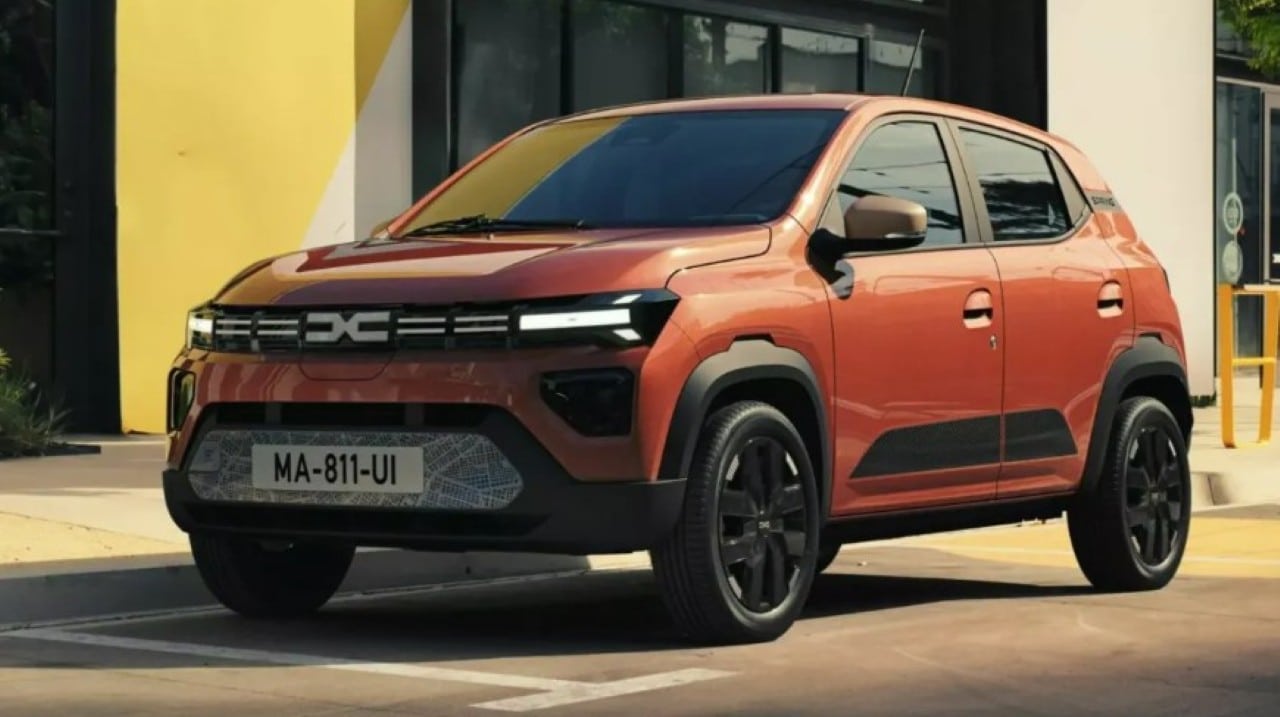
The Romanian manufacturer Dacia, a subsidiary of the Renault group, announced a drastic reduction in the market price of the Spring model, consolidating the vehicle as the most affordable electric option on the entire European continent. With the application of its own incentive bonus of 5,000 euros, the final value of the car fell from 16,900 euros to just 11,900 euros on the German market. Esta movimentação estratégica ocorre em um momento em que as vendas de veículos movidos a bateria apresentaram sinais de estagnação no encerramento de 2025. A empresa decidiu antecipar as medidas de auxílio governamental previstas para 2026, oferecendo o desconto diretamente ao consumidor final de forma imediata e simplificada.
The automotive scenario in the Alemanha registered a significant change with this price list, as the Spring now costs less than the Sandero, a combustion model that traditionally occupied the position of cheapest car in the country. Segundo brand spokespersons, the campaign titled “Electromobility for Todos” aims to democratize access to sustainable technology even before the full implementation of new federal subsidies. The local government plans to introduce aid ranging between 3,000 and 5,000 euros, depending on family income, but Dacia chose to guarantee the benefit now to prevent the brand from losing competitiveness against competitors who are also preparing aggressive offers for the first quarter of 2026.
Technical modernization and performance of the new engine set
The Dacia Spring update was not just limited to the financial aspect, bringing important improvements to the powertrain to meet the demands of a more dynamic urban public. The power of the electric motor increased from 45 hp to 71 hp in the Essential Electric 70 version, which guarantees superior agility in traffic in large cities and a more immediate response when speeding up. Apesar of the increase in strength, the vehicle’s compact structure and lightweight philosophy have been maintained to preserve overall energy efficiency.

- Maximum power updated to 71 hp in entry-level versions.
- Charging capacity of 7 kW in alternating current (AC).
- Support for 40 kW direct current (DC) fast charging.
- Maintenance of the exterior design without profound changes to the bodywork.
This new mechanical configuration puts the model in a prominent position, as it offers an optimized balance between acquisition cost and practical utility for everyday life. The manufacturer reinforces that, although fast charging is available, most current users prefer the convenience of charging from conventional household sockets. Esse The domestic charging process, although slower, takes around ten hours and is enough to cover the daily commuting needs of most European drivers.
Sales strategy and conditions for acquiring the bonus
The price reduction promotion is valid for private customers and covers different types of acquisition, including cash purchase, financing and leasing contracts. The 5,000 euro discount is applied as a fixed price recommendation from the manufacturer, eliminating excessive bureaucracy for buyers interested in switching to electric mobility. The deadline established to take advantage of these special conditions ends on February 28, 2026, which generates a sense of urgency in the local consumer market.
The decision to launch the campaign at the beginning of January was calculated to prevent the announcement from being overshadowed by the holiday season. Dacia seeks to stay ahead of the market curve, competing directly with Volkswagen, which has also shown similar movements recently. The automaker’s focus is to guarantee the sales volume necessary to meet emissions targets and maintain leadership in the entry-level segment, where price is the determining factor for consumer choice.
Comparison between electric mobility and combustion models
The Dacia Spring now occupies a space that previously belonged exclusively to compact gasoline-powered cars, challenging the perception that electric cars are necessarily luxury products. Enquanto or Sandero continues to be a viable option for long distances, the Spring stands out as the logical choice for those seeking operational savings and sustainability in the city environment. The cost per kilometer driven in the electric model remains significantly lower, especially when fueled during reduced energy tariff times.
Market studies indicate that interest in small vehicles has increased following the volatility in fossil fuel prices in recent months. The mechanical simplicity of the electric motor also reduces long-term maintenance costs, a strong argument used by the brand’s dealers. Dacia is betting that the combination of a more powerful engine with a price of 11,900 euros will be enough to attract drivers who were still hesitant about the financial viability of changing technology.
Winter efficiency and real range challenges
A constant point of attention for electric vehicle owners at Europa is battery behavior during the harsh winter months. Testes recent studies indicate that many models on the market lose significant autonomy when subjected to temperatures below zero, due to the need to heat the cabin and energy cells. The Dacia Spring, although focused on urban use, has undergone rigorous evaluations to determine its performance in adverse weather conditions, revealing important data about its thermal resistance.
The brand advises users to pre-condition the vehicle while it is still connected to the electricity grid to maximize the autonomy available during the journey. While some competing models have failed winter range tests, the simplicity of the Spring system helps mitigate catastrophic load losses. Energy efficiency remains the pillar of the project, ensuring that even in non-ideal conditions, the car fulfills its basic function of urban transport without compromising driver safety.
Charging infrastructure and home ease of use
The infrastructure network for electric vehicles continues to expand in Alemanha, but Dacia emphasizes that its model was designed not to depend exclusively on public payphones. The ability to be charged from a standard 230V socket allows the user to manage their supply independently, transforming overnight parking into productive recharging time. The Esta feature is fundamental to the success of the Spring in regions where the installation of wallboxes may be limited due to structural or financial reasons.
For those who need more agility, the 40 kW direct current system allows you to recover a significant portion of the charge in just over an hour using fast highway chargers. However, Dacia’s strategy is to focus on simplicity, reinforcing that the vehicle is an efficient mobility appliance. The absence of complex and cumbersome systems helps the car maintain its low price and unparalleled ease of operation in the entry-level segment.
Expansion of the electric market and environmental goals
The price reduction practiced by Dacia reflects a necessary trend for automakers to achieve the decarbonization targets imposed by União Europeia. With pressure to reduce fleet average emissions, selling electric cars in volume has become an operational priority above even immediate profit margins in some cases. The Spring acts as the main ambassador of this transition to the Dacia, attracting new customers to the brand’s ecosystem.
- Reduction in the manufacturer’s average CO2 emissions.
- Compliance with European environmental regulations of 2026.
- Customer loyalty in a new propulsion technology.
- Encouraging the renewal of the urban fleet with zero-emission vehicles.
The success of this campaign could dictate the direction of other manufacturers operating in the European market, forcing a general readjustment of prices for compact models. The competitiveness generated by such aggressive discounts directly benefits the end consumer, who now has real options to choose between different technologies with acquisition cost parity. Dacia demonstrates that production scale and component simplification are essential keys to making electric mobility financially viable for the middle class.
The future of accessible urban mobility in Europa
The automotive market is now awaiting the practical results of this promotion in the registration numbers for the first half of 2026. If the Dacia strategy converts the stagnation of 2025 into a new cycle of growth, we are likely to see an acceleration in the retirement of old combustion vehicles in urban centers. The simplicity of the Spring, now combined with a more robust engine and an unbeatable price, redefines what is expected from a popular car in the electric age.
The next few months will be crucial to observe how the federal government will react to this private initiative, possibly adjusting the terms of state subsidies to complement manufacturers’ efforts. Enquanto that, Dacia Spring stands alone as the most aggressive value proposition in the sector, proving that it is possible to offer modern technology without the prohibitive costs that marked the beginning of the energy transition. The industry is closely watching whether the “cost pricing” strategy will be sustainable in the long term or whether it merely serves as a tactic to occupy territory in a market increasingly contested by global brands.
