

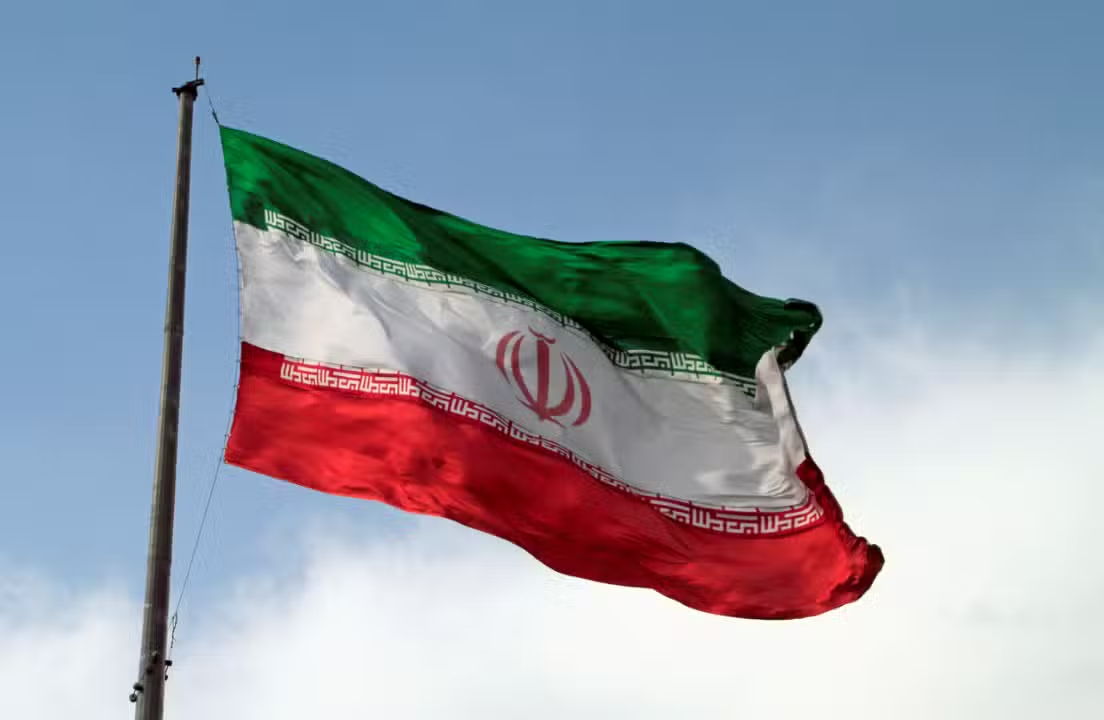
A nationwide internet blackout across Iran has entered its third day in early January 2025, severely crippling communication channels as anti-government protests intensify across the country. The prolonged disruption, confirmed by cybersecurity watchdog NetBlocks, has seen connectivity plummet to just 1% of normal levels, effectively isolating Iranian citizens from the outside world while authorities intensify efforts to suppress mounting dissent against the current Islamic regime.
Telemetry data from NetBlocks confirmed that the nationwide internet block remains firmly in effect, corroborating reports from residents in major cities like Tehran, who noted the complete unavailability of cellular services across the capital. This strategic disruption mirrors past tactics employed by the Iranian regime during periods of significant unrest, aiming to control information flow.

The internet cutoff appears to have had an unintended inverse effect, according to a 47-year-old Tehran resident who spoke anonymously. This communication blackout has inadvertently fueled a deeper sense of frustration among the populace, leading to several critical consequences:
– Increased boredom and frustration among citizens.
– Driving more individuals to participate in street protests.
– Highlighting the government’s attempts to control information.
Widespread internet blackout deepens crisis
The pervasive internet blackout has become a key tool for the Iranian government to control the narrative surrounding the widespread protests. Experts highlight that such national outages are a preferred strategy when there is a perceived risk of using lethal force against demonstrators, effectively creating an information vacuum.
Alp Toker, director of NetBlocks, indicated that while the national block is significantly effective, some resourceful Iranians have managed to communicate. They utilize contraband Starlink terminals or tap into cellular signals from neighboring countries, demonstrating a persistent effort to bypass the stringent state controls.
Regime issues severe warnings to protesters
In response to the escalating unrest, the Islamic Revolutionary Guard Corps issued a stark warning earlier this week, declaring national security a “red line” that will not be crossed. Military forces pledged to protect public property, signaling an intensified crackdown on the anti-government demonstrations across various cities.
Adding to the regime’s firm stance, the Iranian Prosecutor-General stated that actions against protesters would be “implacable,” reinforcing the government’s resolve to quash the dissent through severe measures. This stern rhetoric underscores the authorities’ determination to restore order by any means necessary.
These domestic warnings were delivered as international condemnation mounted. US President Donald Trump issued a fresh warning to Iranian leaders, while Secretary of State Marco Rubio affirmed that “The United States supports the brave people of Iran,” signaling international scrutiny and backing for the protesters.
Escalating clashes and casualty reports
The protests, now entering their third week in early January 2025, have tragically resulted in a significant human cost. The US-based Human Rights Activists News Agency (HRANA) reported that at least 65 individuals have been killed and over 2,300 arrested across the country since the demonstrations began.
Reports of ongoing unrest highlight the volatile situation on the ground. State media documented a municipal building being set ablaze in Karaj, west of Tehran, attributing the act to “violent protesters” in a narrative that often frames dissent as lawless behavior.
Further underscoring the severity of the clashes, state television broadcast images of funerals for members of the security forces. These individuals were reportedly killed during protests in cities such as Shiraz, Qom, and Hamedan, emphasizing the dangerous confrontations between demonstrators and state authorities.
Human rights organizations have meticulously documented dozens of deaths among the protesting population, painting a grim picture of the government’s response to the widespread call for change. The discrepancy in reported casualties between official and independent sources highlights the challenges in obtaining accurate information during the blackout.
Citizen resistance despite communication blackouts
Despite the extensive efforts to cut off communication, the will to resist among many Iranians appears to have strengthened, leading to innovative methods of bypassing state censorship. The strategic use of smuggled Starlink terminals by some citizens represents a potent symbol of defiance against the state’s pervasive control over information flow and access to global networks.
This ingenious workaround, coupled with attempts to access neighboring countries’ cellular signals, demonstrates the resilience of the Iranian people in their pursuit of communication and information sharing. Such innovative tactics fundamentally undermine the regime’s objective of complete informational isolation, proving that total control remains elusive and challenging to maintain indefinitely.
Roots of the two-week unrest
The current wave of protests, which has now spanned two weeks, initially ignited as a response to soaring inflation and deepening economic hardships across the nation. However, the demonstrations rapidly transformed into a broader political movement, with participants increasingly voicing demands for a fundamental overhaul and the ultimate dissolution of the existing Islamic regime. The escalating grievances reflect deep-seated discontent with governance, economic stagnation, and perceived social restrictions, leading to a widespread call for systemic change rather than merely addressing specific economic complaints. Authorities, meanwhile, have been quick to attribute the “disturbances” to external influences, specifically accusing the United States and Israel of fomenting the unrest to destabilize the nation.
International concern for human rights
The escalating situation in Iran has drawn considerable international attention, with governments and human rights organizations closely monitoring the developments. Concerns continue to mount regarding the severe restrictions on fundamental freedoms, particularly freedom of expression and assembly, amid reports of state-sponsored violence against demonstrators.