

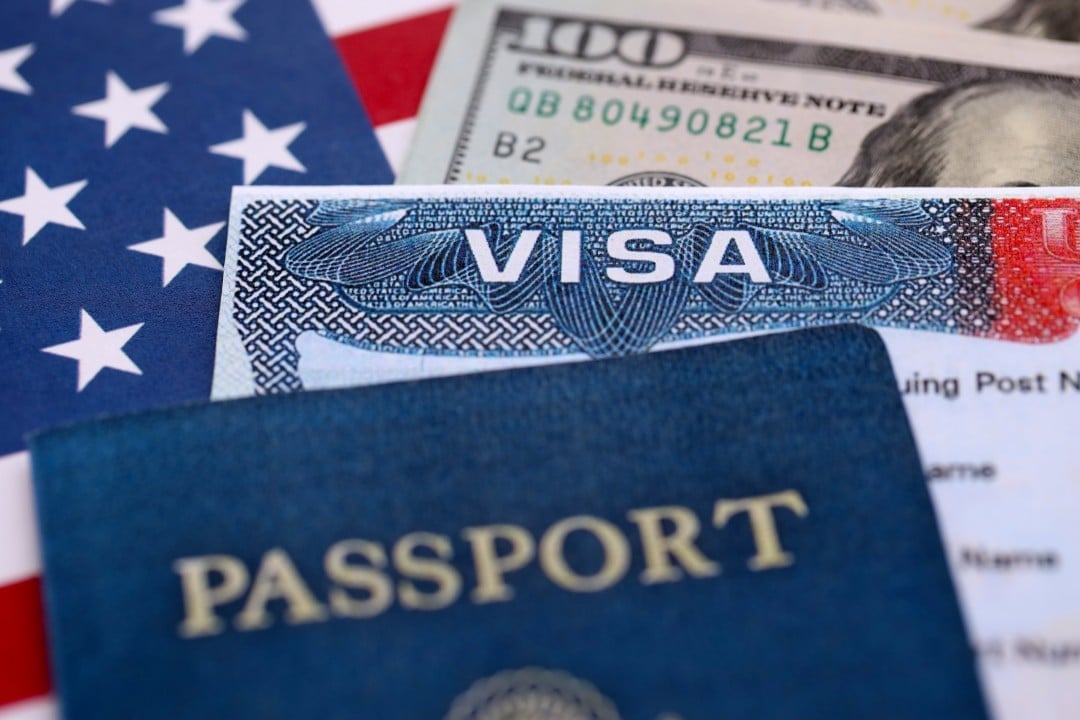
The government of the Estados Unidos announced, on a Wednesday in January, the freeze on visa issuance for 75 countries, generating international repercussions. The decision, confirmed by Departamento from Estado to g1 after publication by Fox News, affects nations in different parts of the world.
Among the countries impacted by the measure are Brasil, Irã, Rússia, Afeganistão and Iraque, in addition to Somália and Tailândia. The breadth of the list suggests a significant reorientation in American immigration and national security policy.
The initiative marks a tightening of entry rules into North American territory, in line with analysts’ expectations regarding the intensification of anti-immigration policies by the current administration, as already signaled in previously released strategies.
Restrictions cover a wide number of nations
The USA’s Departamento of Estado officially suspended the issuance of visas for an extensive list of 75 nations, which now face additional barriers to entry into the country. The detailed list ranges from countries in América Latina, such as Uruguai and Colômbia, to powers such as Rússia and strategic regions in Oriente Médio and África, such as Irã, Essa measure, which comes into force immediately, imposes new challenges for citizens of these nations who plan trips for tourism, business or studies.
The extent of the freeze raises questions about the specific criteria used by the American government to select countries. Although national security is a frequently invoked argument, the inclusion of such a diverse group of nations indicates a comprehensive review of risk assessments and diplomatic relations. The implications of this decision could reverberate in the economic and social spheres, affecting everything from academic exchanges to tourism and international investments.
Developments of the new American migration policy
The recent action by the American government is part of a context of discussions on foreign and defense policy, which already pointed to an increase in restrictions on the entry of immigrants. Documentos strategies released in December of the previous year, by the Donald Trump administration, indicated this direction, foreseeing a more rigorous approach to border control and the granting of documents. Essa guidance reflects a hard line that seeks to overhaul the immigration system.
Specialists in international relations and immigration are monitoring the situation closely, anticipating that the current year could be marked by even more restrictive policies. The expectation is that the government will intensify its actions to reduce the flow of foreigners and reevaluate the visa granting processes, which could, in the view of some, “deactivate the legal immigration system of the Estados Unidos”, as directors of immigration lawyers associations warn.
Impact on different types of visas
The visa issuance freeze impacts a variety of categories, making it difficult to obtain permits for tourism (B-1/B-2), study (F-1/M-1), work (H-1B, L-1) and even specific visas such as the EB-2 NIW (National Interest Waiver), often sought by professionals with exceptional skills that benefit the U.S. national interest. Para applicants, this means indefinite waiting times, uncertainty about approval and the need to reevaluate life and career plans. The measure affects not only new requests, but may also have implications for those with ongoing processes, forcing a recalculation of strategies and investments already made, directly impacting the planning of individuals and families.
New requirements for students
In a move prior to general restrictions, a new requirement was implemented last year for granting student visas. As of June, all candidates were required to unlock their social media profiles for detailed analysis by the American government.
This measure aims to identify content that may be considered hostile to Estados Unidos, its culture, institutions or founding principles. The policy raised debates about privacy and freedom of expression, but was justified as an essential tool for national security in the process of screening potential immigrants and visitors.
Debate on health and immigration
In addition to geographic restrictions, a government memorandum raised the possibility of barring entry to older and overweight individuals, according to published information. Essa discussion began at the end of the previous year, when the agency Associated Press reported that the government was considering a directive to restrict the entry of obese people into the country, on the grounds of potential public health costs.
The proposal to include health criteria in the visa eligibility assessment generated intense debate. The idea was to extend restrictions to foreigners with chronic illnesses such as hypertension and anxiety, raising concerns about discrimination and the accessibility of immigration for different health profiles.
Human rights organizations and medical associations have expressed concern about the ethical and practical implications of such policies. Argumentam that health assessment should be based on risks of infectious disease transmission and not on chronic conditions that, in themselves, do not pose an immediate public health threat, highlighting the complexity of balancing safety and inclusion.
Geopolitical scenario and diplomatic reactions
The visa freeze measure has the potential to provoke diplomatic tensions and lead to retaliation by affected countries. The geopolitical scenario becomes more complex, with implications for trade agreements and international cooperation.
The international community is cautiously observing the developments of this policy, which could redefine bilateral relations. Key concerns for applicants include:



