
President Lula sanctions 2026 budget, imposing significant vetoes on congressional amendments
Brazil’s President Luiz Inácio Lula da Silva formally sanctioned the Annual Budget Law (LOA) for 2026 on Wednesday, February 14, following a period of anticipation. The crucial financial document, which outlines the federal government’s spending and revenue plans for the upcoming year, received presidential approval just before the legal deadline.
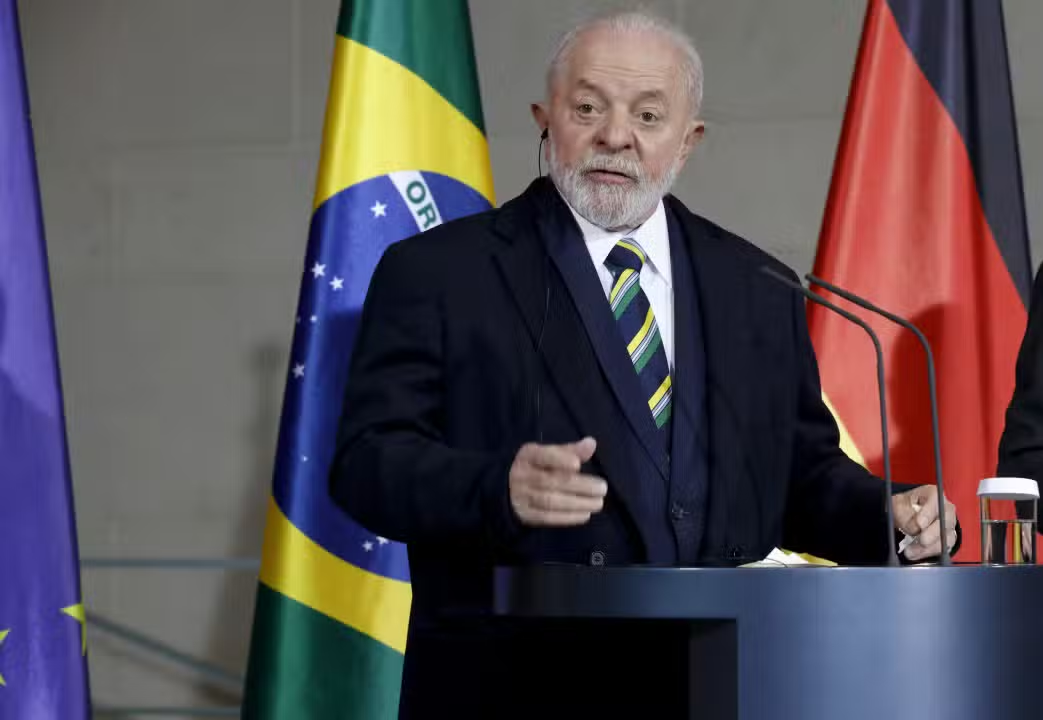
However, the sanction was not without modifications. The chief executive exercised his prerogative to veto several provisions within the text that had been previously approved and forwarded by the National Congress in December of last year. These presidential actions have implications for the allocation of public funds and the implementation of various government initiatives.
The LOA is a cornerstone of federal administration, dictating how public resources will be collected and disbursed over a fiscal year. Its approval sets the financial framework for government operations, public services, and infrastructure projects across the nation, making presidential intervention a critical legislative moment.
Executive Vetoes Target Key Programs
The presidential vetoes specifically targeted parliamentary amendments, a common area of contention between the executive and legislative branches. These amendments often reflect local and regional interests championed by lawmakers, seeking to direct funds to specific projects or areas. The rejection of these proposals signals a clear stance from the Planalto on spending priorities.
Among the programs directly impacted by these cuts are several initiatives considered “showcase” policies of the Lula administration. These include the Auxílio Gás, a social welfare program designed to assist low-income families with the cost of cooking gas, reflecting the government’s social agenda.
Legislative Clash over Spending Priorities
The Congress had originally approved a budget anticipating a surplus of R$ 34.5 billion for 2026, aiming for fiscal responsibility while accommodating various spending demands. This figure represented a careful balance achieved through extensive negotiations among different political factions.
However, the legislative body also moved to reallocate funds, leading to cuts in some of the government’s prominent social programs. This action set the stage for the presidential review, highlighting the ongoing tension between legislative proposals and executive fiscal planning.
The Financial Outlook for 2026
The sanctioned budget for 2026 will now guide the federal government’s financial management, influencing everything from public debt to social investments. The contained spending and revenue projections are crucial for maintaining economic stability and investor confidence in the nation.
Presidential decisions on budget allocation are closely watched by economic analysts and public service providers alike. The overall fiscal health of the country depends significantly on the judicious implementation of the LOA as approved by the executive branch.
The administration’s focus remains on navigating economic challenges while delivering on its promises, even with the adjustments made through the veto process. The refined budget reflects the executive’s vision for fiscal discipline and targeted social support.
Key Programs Affected by the Cuts
The programs facing reductions represent significant pillars of the government’s social safety net and educational outreach. The Auxílio Gás, for instance, has been instrumental in alleviating poverty and ensuring access to essential energy for vulnerable households. Its modification will require careful management to minimize adverse effects on beneficiaries.
Similarly, the Programa Pé-de-Meia, an initiative aimed at providing financial incentives to high school students to prevent dropout, has seen adjustments. This program is critical for fostering educational attainment and improving future job prospects for young Brazilians, particularly those from disadvantaged backgrounds.
Furthermore, the Farmácia Popular program, which facilitates access to essential medicines at reduced costs or for free, also experienced cuts. This program is vital for public health, especially for chronic disease management, and any changes will have broad implications for patient access and affordability of crucial medications. The government will need to clarify how these programs will proceed with reduced allocations while still striving to meet their objectives.
Presidential Prerogative and Legislative Response
The president’s power to veto parts of legislation is a fundamental aspect of the Brazilian political system, designed to ensure a balance of power. These vetoes can be overridden by a majority vote in both chambers of Congress, setting up a potential new round of legislative debate.
The administration emphasizes that such decisions are made with the broader national interest and fiscal responsibility in mind, often to prevent overspending or to align the budget with executive policy goals. This constant interplay between the branches is characteristic of democratic governance.
Understanding Brazil’s Annual Budget Law
Brazil’s Annual Budget Law, or LOA, is not merely a financial document; it is a policy statement reflecting the government’s priorities and strategies. It details where public money will come from, primarily through taxes and other revenues, and how it will be spent across various sectors, including education, health, infrastructure, and social welfare. The sanctioning process, including potential vetos, is a crucial step in formalizing these plans, ensuring legal compliance and executive alignment. It dictates the financial parameters within which all federal agencies and ministries must operate for the entire year, influencing resource allocation for essential public services and long-term national development projects.
Looking Ahead at Fiscal Stability
The sanctioned 2026 budget, with its presidential vetos, marks a definitive step in Brazil’s fiscal planning. It underscores the administration’s commitment to managing public finances while navigating complex social and economic demands. The coming year will reveal the full impact of these budgetary decisions on both government operations and the lives of Brazilian citizens.
Lula, 2026 budget, presidential vetoes, parliamentary amendments, Brazil economy
