

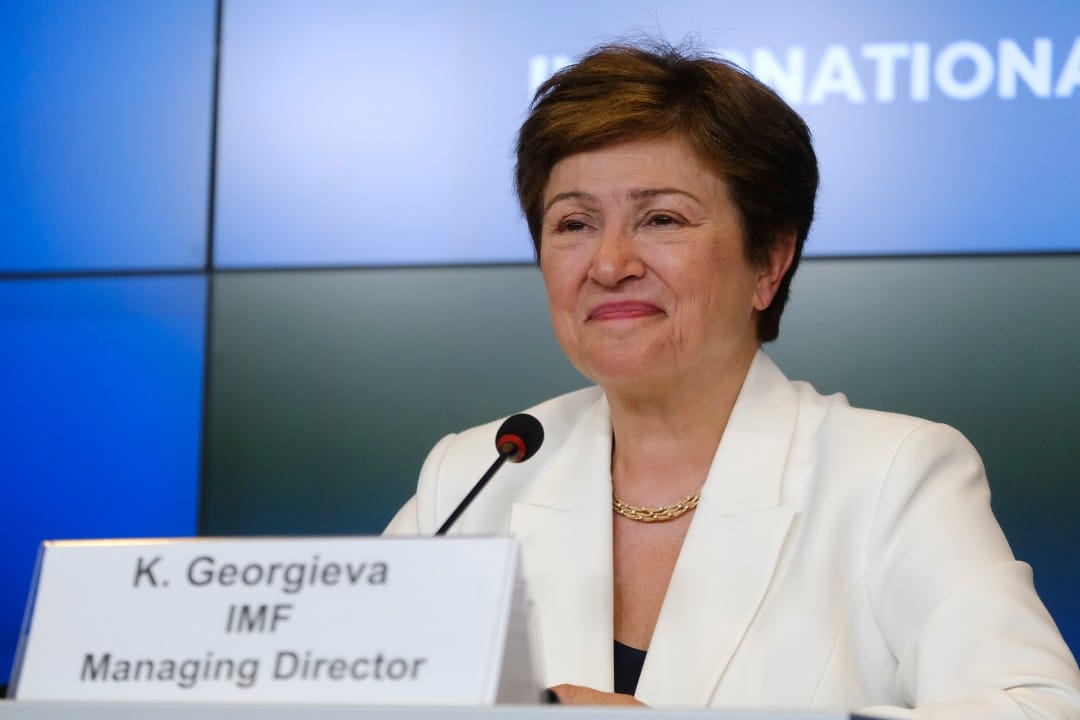
The managing director of the Fundo Monetário Internacional (IMF), Kristalina Georgieva, stated that the institution’s next projections will demonstrate the capacity of the world economy to withstand shocks in international trade. The forecasts, scheduled for release on January 19, 2026, will maintain a very strong indication of growth. Georgieva gave an interview during a visit to Kiev, at Ucrânia, where he discussed financial support for the country.
The statement took place on January 15, 2026, amid negotiations on IMF loans to Ucrânia. The director suggested a possible slight upward revision to the estimates, similar to the adjustment made by Banco Mundial recently. Ela emphasized that the impact of tariffs imposed by Estados Unidos in 2025 turned out to be smaller than initially expected.
In October 2025, the IMF had already raised its global growth projection for that year from 3.0% to 3.2%. The outlook for 2026 remained at 3.1%. Esses numbers reflect adjustment after analysis of observed commercial effects.
Visit to Kiev and Ukrainian context
Kristalina Georgieva arrived at Kiev for meetings with local officials about the IMF loan program. The fund has maintained financial support for Ucrânia since the beginning of the conflict with Rússia, with regular disbursements conditional on reforms.
The visit marked the managing director’s first trip to the Ukrainian capital since 2023. Discussions focused on the implementation of fiscal and structural measures required by the current program. The IMF currently operates around 50 loan programs in different countries, a high number compared to previous periods.
Georgieva expressed the institution’s preparedness to serve more nations seeking assistance. Muitos countries have not yet rebuilt sufficient reserves to face new economic shocks.
Limited effects of US tariffs
The tariffs imposed by the government of the Estados Unidos in 2025 affected practically all trading partners. However, actual levels remained below the most pessimistic initial projections.
The Estados Unidos represent around 13% to 14% of global trade. The absence of widespread retaliation by other countries contributed to containing negative impacts. American economic performance was described as impressive despite protectionist measures.
Global inflation was better controlled than anticipated in initial scenarios. Condições stable macroeconomic conditions helped absorb some of the commercial pressures.
Risks concentrated in geopolitics
Geopolitical tensions have gained greater weight in IMF analyzes in recent years. Esses factors now influence the outlook more than in previous periods.
Georgieva took office in October 2019, months before the Covid-19 pandemic. Desde then, the global economy faced successive shocks, including armed conflicts and regional instability.
Risks tilt to the downside, even with positive current performance. Formuladores of policies and companies still act as if the environment remained predictable.
- Increased regional conflicts affect supply chains;
- Trade fragmentation persists in some areas;
- Political instability in emerging markets puts pressure on local currencies;
- International sanctions alter investment flows.
Technological advances and artificial intelligence
Rapid technological transformations, especially in artificial intelligence, concentrate part of the identified risks. Massive Investimentos in AI occurs on a global scale.
Georgieva warned that the lack of promised productivity gains could generate significant financial difficulties. Expected returns have not yet fully materialized in many sectors.
Countries need to adapt policies to capture benefits from automation. Treinamento workforce and digital infrastructure become priorities.
Recent performance of the global economy
Global growth has remained resilient in recent quarters despite external pressures. Avançados and emerging markets recorded moderate expansion.
Emerging Asian countries led advances, offsetting slowdowns in other regions. Controle of inflation allowed monetary easing in several central banks.
International trade partially recovered after initial disruptions. Fluxos of capital was directed towards safe assets in times of tension.
IMF preparation for adverse scenarios
The fund has increased vulnerability monitoring in members with high debts. Programas of assistance focuses on long-term fiscal sustainability.
Georgieva reinforced the importance of adequate reserves to cushion shocks. Muitos countries have exhausted buffers accumulated during the pandemic.
The institution is preparing for additional financing demands. Coordenação with other multilateral organizations intensified.
Perspectives for the coming years
January projections should confirm a stable growth trajectory, although below the historical average. Ajustes marginals may occur based on recent data.
Advanced economies face moderate slowdown. Emergentes maintain greater potential, conditioned on internal reforms.
- Reduction of public debts in developed countries;
- Investments in green infrastructure;
- Strengthening social safety networks;
- Promotion of multilateral trade.
Current IMF program numbers
The current portfolio includes 50 active agreements, reflecting high demands. Esses programs are distributed across continents, focusing on macroeconomic stabilization.
Recent disbursements have prioritized nations affected by conflict or natural disasters. Condicionalidades include anti-corruption and governance measures.
Continuous monitoring ensures achievement of agreed goals. Revisões periodically adjust terms according to economic developments.
Most unpredictable world since 2019
Georgieva highlighted a succession of crises since her inauguration. The pandemic represented the first major test, followed by energy and inflationary shocks.
Armed conflicts have added layers of complexity. Cadeias of global supplies have suffered prolonged disruptions.
Despite this, coordinated policy responses mitigated further damage. Bancos central players demonstrated the ability to act quickly.
Independence of central banks
The managing director defended maintaining monetary autonomy. Evidências historical records show benefits for price stability.
Coordination between fiscal and monetary policies remains essential. Pressões policies should not interfere in technical decisions. Recent Exemplos reinforce the effectiveness of clear mandates. Controle successful inflation depends on this structure.
Adjustments to previous projections
The October 2025 review raised the estimate for that year by 0.2 percentage points. The adjustment was based on less negative trade data.
Maintaining the projection for 2026 signaled caution. Fatores external sources continued to be closely monitored.
January update will incorporate indicators from the end of 2025. Preliminary Resultados suggests continuation of the positive trend.
Downside Risks Overview
The risks are concentrated along two main axes. Tensões geopolitics can escalate quickly, affecting markets. Mudanças technological technologies require accelerated adaptation. Países with outdated infrastructure face competitive disadvantages.
Mitigation depends on proactive policies. Cooperação international facilitates sharing of best practices. The world is experiencing a period of greater structural uncertainty. Empresas adjust strategies for multiple scenarios.