Iran’s Supreme Leader, Ayatollah Ali Khamenei, on Saturday, December 13, 2025, vehemently labeled Donald Trump a “criminal” in a pointed address, directly attributing the former U.S. President’s support for recent anti-government demonstrations to ongoing unrest within the Middle Eastern nation. Khamenei’s pronouncements underscore a deepening chasm between Tehran and Washington, reflecting persistent geopolitical tensions exacerbated by internal challenges and external perceptions of interference. The comprehensive condemnation from Iran’s highest authority marks a significant escalation in rhetoric, placing direct blame on Trump for the casualties and material damage incurred during the widespread protests, alongside what Khamenei termed “accusations” levied against the Iranian state.
The protests, which initially emerged from economic grievances, quickly morphed into broader anti-regime demonstrations across Iran, representing the most formidable challenge to the ruling establishment in recent years. This internal turmoil has drawn international attention, with various global actors observing the developments closely and weighing their potential regional and global implications. The leader’s forceful statements highlight the perception within Iran’s highest echelons that foreign actors, specifically the United States under Trump’s previous presidency and his continued influence, are actively stoking dissent and attempting to destabilize the Islamic Republic.
Throughout the disturbances, Donald Trump had publicly encouraged protesters to persist in their actions and “take control” of the country’s institutions, famously adding that “help is on the way.” These remarks were widely interpreted by Iranian authorities as direct incitement, further fueling the narrative of external meddling in domestic affairs. The supreme leader’s call for accountability signals Iran’s intent to confront perceived foreign aggressors on the international stage, asserting that the United States must face consequences for its actions and pronouncements concerning the Islamic Republic.
Leader’s strong condemnation
Khamenei articulated a firm stance against both external interference and internal dissent, stating unequivocally that while Iran does not seek to ignite a full-scale war, it will not tolerate “internal criminals” escaping justice. This dual message underscores the regime’s determination to quell unrest through domestic security measures while simultaneously pushing back against perceived foreign instigators. The supreme leader’s comments were delivered amidst a backdrop of severe economic challenges, which he acknowledged are “challenging,” pointing to the complex interplay of internal and external factors driving the current crisis.
The government’s response has included urging officials to redouble efforts, particularly in critical sectors vital for public welfare. Khamenei specifically highlighted the necessity of ensuring a consistent supply of essential goods, livestock feed, and other basic necessities for the population, emphasizing the need for greater determination from public servants. This directive suggests a recognition from the top leadership that addressing the foundational economic complaints of the populace is crucial for restoring stability and trust, even as they condemn external influences.
Escalating protest dynamics
Anti-government protests swept across Iran starting in late 2025, marking an extensive period of national agitation that has presented the most significant domestic challenge to the regime in years. These demonstrations, characterized by their rapid spread and evolving demands, have deeply shaken the political landscape. What began as targeted grievances in Tehran’s bustling bazaars against rampant inflation quickly proliferated nationwide, transforming into broader, more encompassing anti-regime rallies.
Concerns over inflation reached a critical point in the preceding weeks, as prices for staple commodities like cooking oil and chicken surged dramatically overnight, with some products completely disappearing from store shelves. This economic instability created a fertile ground for public discontent, galvanizing various segments of society to voice their frustrations. The abrupt increase in living costs disproportionately affected ordinary citizens, intensifying an already strained economic situation and pushing many to the brink of desperation.
The precarious economic situation was further aggravated by the central bank’s decision to discontinue a program that had allowed certain importers access to U.S. dollars at more favorable rates compared to the open market. This policy shift directly led to a sharp increase in prices by shopkeepers and compelled some businesses to temporarily close their doors, effectively triggering the initial wave of protests. The decision by the bazaaris, a traditionally conservative and influential merchant class often aligned with the Islamic Republic, to protest marked a drastic and unusual measure, signaling the depth of the prevailing dissatisfaction.
Roots of widespread discontent
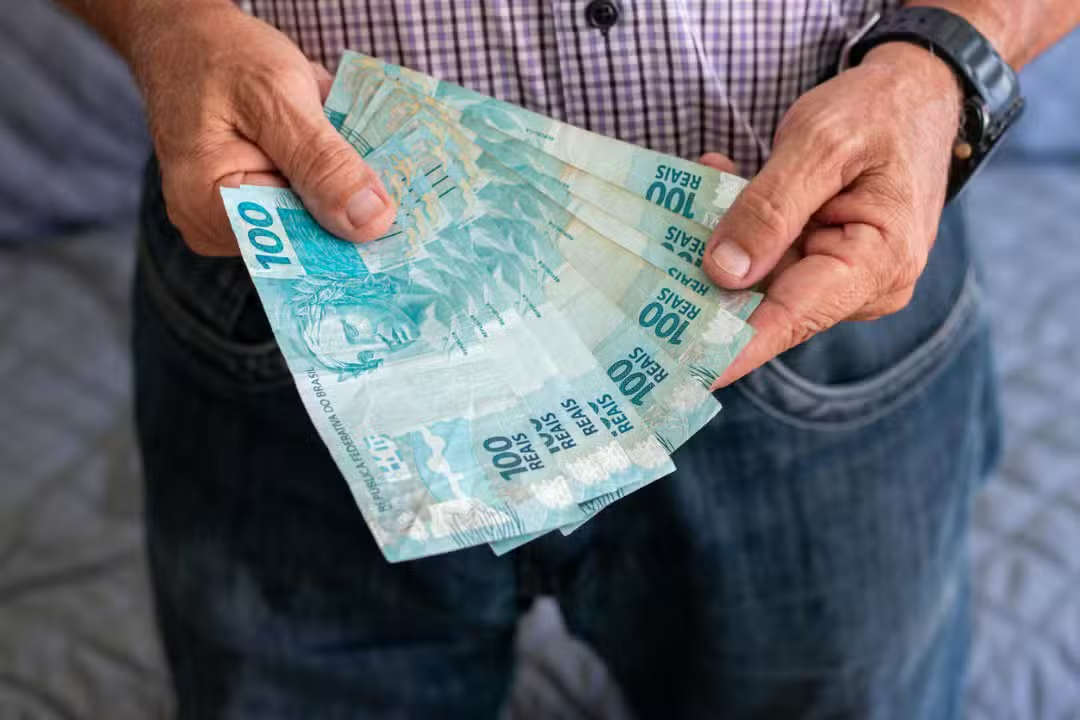
The government, under its reformist leadership, attempted to alleviate mounting pressure by implementing direct cash transfers of nearly $7 per month to citizens, aiming to cushion the impact of rising costs and quell public anger. However, this measure proved insufficient to contain the widespread dissatisfaction, as the economic hardship and deeper systemic issues continued to fuel the protests. The symbolic and material impact of such a small sum failed to address the core grievances related to inflation, unemployment, and corruption that had become central to the demonstrators’ demands.
The Iranian authorities took drastic measures to control the flow of information and communication, cutting off internet access and telephone lines in late 2025, which coincided with one of the largest nights of national demonstrations. This move effectively isolated Iran from the outside world, making it difficult for both protesters to coordinate and for international observers to accurately assess the situation. Such actions reflect the government’s perceived need to manage narratives and prevent further mobilization in the face of widespread unrest.
Human rights organizations have reported a substantial number of casualties since the inception of the protests, with hundreds of individuals allegedly killed during the crackdown. These reports underscore the severe human cost of the conflict and highlight the volatile nature of the confrontations between protesters and security forces. The allegations from rights groups paint a grim picture of the government’s response, drawing international condemnation and concern over human rights abuses.
US role and accountability demands
Donald Trump’s pronouncements during the protests included warnings of potential attacks on Iran should its security forces respond with excessive force, creating a highly charged international atmosphere. This rhetoric further intensified the already strained relationship between Washington and Tehran, raising fears of a broader regional conflict. The supreme leader, Ayatollah Ali Khamenei, specifically urged Trump to “focus on his own country,” explicitly blaming the United States for inciting the protests and demanding accountability for these alleged provocations.
The Iranian leadership views such statements and actions as direct infringements on its sovereignty and as part of a long-standing pattern of American interference in its internal affairs. Khamenei’s call for accountability is not merely rhetorical but reflects a strategic effort to frame the protests as externally driven, thereby delegitimizing the domestic grievances of the demonstrators. This narrative serves to consolidate internal support against a perceived foreign threat, diverting attention from the regime’s own policy shortcomings and economic mismanagement.
Tehran has consistently accused Washington of pursuing a hostile policy aimed at regime change, pointing to various sanctions and covert operations as evidence of this intent. The supreme leader’s latest accusations against Trump are thus integrated into a broader ideological framework that posits the United States as an enduring adversary. This deeply rooted mistrust shapes Iran’s foreign policy and its internal security strategies, leading to a zero-tolerance approach towards any perceived collaboration with foreign entities.
Official responses and economic pressures
The government’s strategy for managing the crisis involves a combination of repression and attempts at economic alleviation, though the latter has largely failed to curb public anger. Efforts to address the spiraling inflation and commodity shortages have been insufficient, leaving a significant portion of the population struggling with daily living costs. This ongoing economic struggle forms the bedrock of popular discontent, presenting a persistent challenge to the regime’s legitimacy and stability.
Officials face immense pressure to stabilize the economy and restore public confidence, yet external sanctions and internal inefficiencies complicate these endeavors. The interconnectedness of global markets means that even without direct foreign intervention, Iran’s economy is vulnerable to international pressures, exacerbating domestic issues. Khamenei’s direct acknowledgment of the economic hardships, coupled with calls for greater governmental efficiency, indicates a recognition of the deep-seated structural problems that fuel public resentment.
Impact of connectivity blackouts
The widespread internet and communication blackouts implemented by the authorities during the protests severely hampered information dissemination and coordination among demonstrators, yet they also drew sharp criticism from international human rights organizations. Such measures, while designed to control dissent, often lead to increased isolation and further alienate the population from the government. The cutting off of communication channels highlights the regime’s willingness to employ drastic tactics to maintain control amidst escalating internal challenges.