

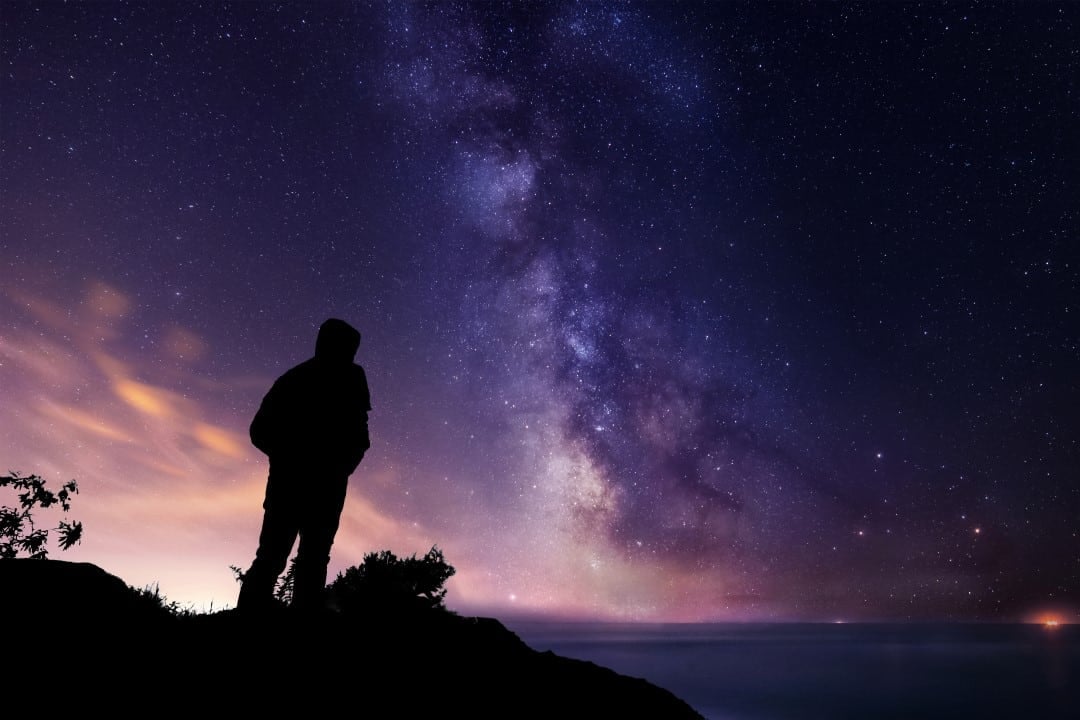
Summer nights in the Southern Hemisphere provide a prime setting for amateur astronomy, with clearer skies and iconic constellations in the spotlight. Durante In January 2026, enthusiasts and casual observers will have the opportunity to view five notable celestial objects without the need for advanced equipment, taking advantage of the period of darkness that sets in approximately 90 minutes after sunset.
The main protagonist of the month is the planet Júpiter, which will reach its opposition on the 10th, when it becomes especially bright and visible throughout the night in the constellation of Gêmeos. Este event serves as an excellent reference point for locating other targets, which include nebulae, open star clusters and distinct formations that make up a true observation route.
For an optimized experience, it is essential to look for locations with low light pollution, far from large urban centers. Condições favorable climate conditions, with cloudless skies, and the absence of light from the full Lua are factors that significantly amplify the visibility and quality of observation of these cosmic phenomena.

The Orion nebula as a stellar nursery in the summer sky
One of the most photographed and studied objects in the night sky, Nebulosa of Orion, cataloged as Messier 42 (M42), dominates the constellation of the same name. Localizada just below the famous Três Marias, which form the belt of
When using binoculars or a small telescope, M42 reveals its spectacular nature. Trata is an immense stellar nursery, a cloud of gas and dust where new stars are in the process of forming. At its heart lies Aglomerado of Trapézio, a collection of hot, young stars whose intense ultraviolet radiation ionizes the surrounding gas, making it shine.
Located approximately 1,500 light-years from Terra, the nebula is approximately 30 light-years long. Sua appearance on amateur equipment is that of an ethereal cloud with grayish tones, although long exposure photographs reveal vibrant colors, such as pink and violet, originating from the emission of hydrogen and oxygen.
The ease of location and the wealth of visible detail make Nebulosa of Orion an ideal starting point for astronomy beginners, offering a direct look at one of the most fundamental processes in the universe: star birth.
The Plêiades and Híades in the context of the Touro constellation
In the constellation Touro, two open clusters stand out like celestial jewels, easily visible and filled with cultural significance. The most famous of them is das Plêiades, or Messier 45 (M45), popularly known in some cultures as “as Sete Irmãs”. Este star cluster appears as a small “pot” or a cluster of sparkling grapes. With the naked eye, in a dark sky, it is possible to distinguish between six to seven main stars, but binoculars reveal dozens of luminous points, most with a characteristic bluish hue. Essas stars are young and hot, and the light they emit reflects off a cloud of dust left over from their formation, creating a bluish nebulosity visible in astrophotographs. Localizado At around 440 light-years away, the cluster is one of the closest to Terra and a stunning visual spectacle. Próximo to Plêiades, we find Híades, the closest open star cluster to our Sistema Solar, just 150 light years away. Suas stars form a “V” pattern that outlines Touro’s face. The brightest star in the constellation, the red giant Aldebaran, appears to be part of the group, marking the animal’s eye. However, Aldebaran is a foreground star, located 65 light years away, and is not gravitationally bound to the cluster. The joint observation of Plêiades and Híades offers a beautiful contrast of stellar shapes and densities in the same region of the sky.
The concentrated glow of the double cluster in Perseus
In the northwest direction, between the constellations of Perseus and Cassiopeia, there is one of the most magnificent objects for observation with binoculars: the Aglomerado Duplo. Composto by the open clusters NGC 869 and NGC 884, this pair of star clusters appears as a fuzzy blur to the naked eye in very dark places, but transforms into a dazzling star field with minimal optical assistance.
Each of the clusters contains hundreds of young, massive stars, and together they occupy an area of the sky larger than that of the full Lua. Viewing through binoculars or a low-magnification telescope is particularly rewarding, as it allows you to frame both objects in the same field of view, revealing a veritable carpet of cosmic diamonds against the dark background of space.
Messier 35 and the brilliant reference of Júpiter in Gêmeos
The presence of Júpiter in the constellation of Gêmeos during January 2026 makes locating the open cluster Messier 35 (M35) a simpler task. Este beautiful star cluster is situated near the “feet” of Castor, one of the stars representing the mythological twins. Para To find it, simply scan the area with binoculars from the giant planet.
Messier 35 is a rich and extensive cluster, with hundreds of stars spread out in curving, flowing patterns. Seu combined brightness makes it visible as a small mist to the naked eye on exceptionally dark, clear nights. With optical instruments, it reveals itself as a dense, uniform star field, filling the field of view.
For observers with telescopes, an additional and interesting challenge is trying to locate the NGC 2158 cluster.
Other astronomical phenomena in the first month of the year
In addition to the five main targets, the January sky holds other events. Nos days 3 and 4, the peak of the Quadrântidas meteor shower occurs. Embora its radiant is better positioned for observers in the northern hemisphere, it is still possible to record dozens of meteors per hour from dark locations in Brasil, especially in the hours before dawn.
The opposition of Júpiter on the 10th is the great planetary event. Nessa date, Terra is positioned exactly between Sol and Júpiter, making the gas giant appear at its closest and brightest point of the year. With powerful binoculars or a small telescope, you can distinguish its four largest moons, known as Galilean moons: Io, Europa, Ganimedes and Calisto.
Recommendations for successful astronomical observation
To make the most of your observation nights, it’s crucial to follow some practical tips. The main one is to move away from the light pollution of cities, looking for rural areas or parks. It is important to allow your eyes to adapt to the darkness for at least 20 minutes, avoiding the use of white lights, such as cell phone screens. Consultar the weather forecast to guarantee a cloudless night and checking the phases of Lua, preferring nights close to the new Lua, are also essential steps for the success of the astronomical endeavor.
Top astrotourism destinations in Brasil
Brasil has several locations that stand out for the quality of their night sky, becoming coveted destinations for astrotourism. The Chapada of the Veadeiros, in Goiás, and the Chapada Diamantina, in the Bahia, are known for their low light pollution and altitude, which provide a clear view of the
Mountainous regions such as Serra of Mantiqueira, on the border between São Paulo, Minas Gerais and Rio of Janeiro, and Serra of Parque Nacional of Itatiaia and cities such as Campos of