

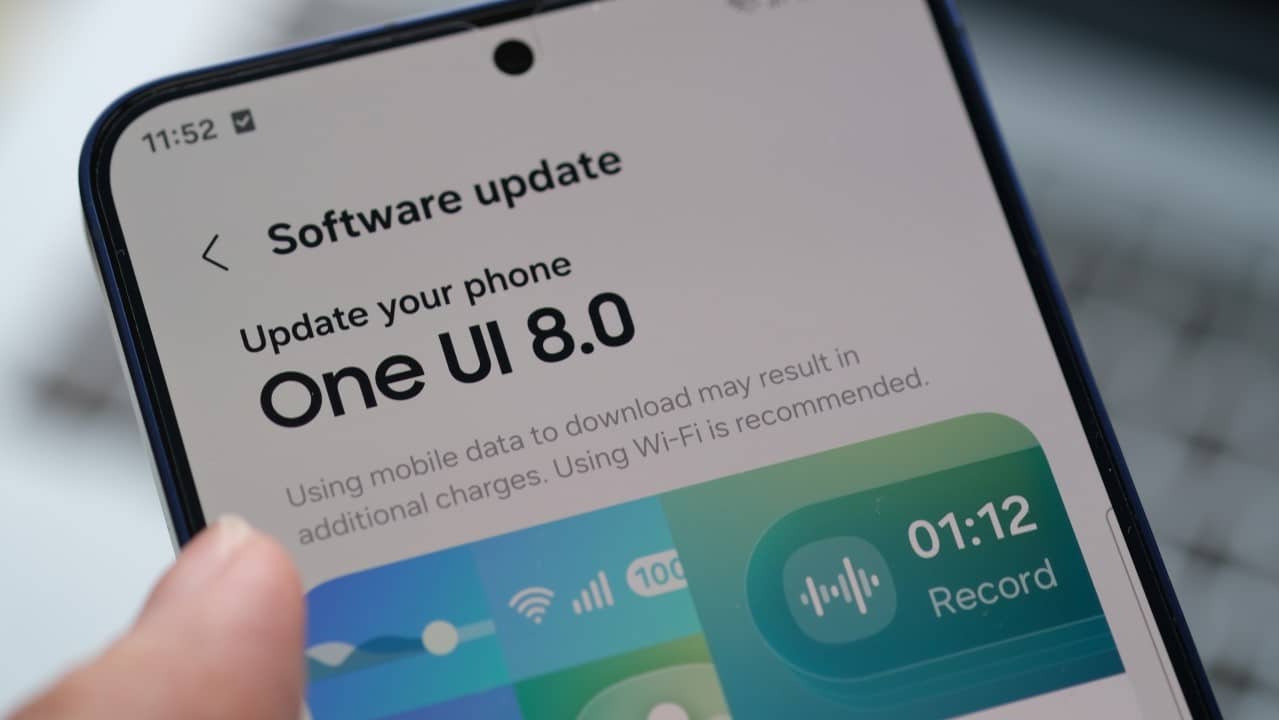
Samsung has begun the advanced testing phase of One UI 8.5, the next major update to its user interface, but preliminary results on Galaxy Z foldable devices point to significant challenges. Relatos of users participating in the beta program indicate notable inconsistencies in the functionality of the Quick Panel (Panel Rápido) and the camera app, areas crucial to the user experience on premium devices. The flaws appear to be specific to the flexible format, which requires more refined software adaptation.
While the update promises performance improvements and new animations across the entire Galaxy lineup, the current implementation on the Z Fold and Z Flip models has led to a fragmented browsing experience. The changes, which work fluidly on smartphones with a traditional format, have not yet been fully optimized for expandable screens, which are the main differentiator of these devices. The expectation is that the company will use the feedback collected during this phase to apply corrections before the official launch.
The release schedule for the stable version is maintained for the first quarter of 2026, but Samsung faces the pressure of adjusting the interface to justify the added value of its foldable devices. Multitasking usability, one of the pillars of the Z Fold line, is directly impacted by reported navigation issues, which makes resolving these issues a priority for the development team.

Inconsistencies in gesture navigation
The main sticking point in One UI 8.5 for foldables lies in the renewal of Quick Panel. The new version allows deeper customization of shortcuts, but introduced problematic behavior in navigation gestures. When swiping from the top left corner to view notifications, the system blocks side access to quick shortcuts, requiring a new gesture from the right corner. Da Likewise, when opening the shortcuts panel, it is no longer possible to swipe sideways to return to the notifications area, breaking an interaction flow that was intuitive in previous versions.
This change creates an unnecessary barrier to everyday usability, especially on a device like the Galaxy Z Fold, designed for quick switching between apps and functions. Interrupting the navigation flow goes against the idea of agility and productivity, forcing the user to perform more steps for simple tasks. Especialistas point out that this regression in the user experience needs to be reversed or rethought, as it directly affects the efficiency of multitasking, one of the main selling points for consumers who invest in a foldable device.
Camera features are transferred
Another controversial change in One UI 8.5 affects the camera app, with the removal of important features from the main interface. Popular Ferramentas like Single Take (Única Capture) and dual recording, which allows you to shoot with the front and rear cameras simultaneously, have been moved into Camera Assistant, an add-on module that needs to be downloaded and activated separately through the Galaxy Store. The Essa modular approach, already used in other lines of the brand, such as the Galaxy S, creates an extra layer of complexity to access features that were previously available with a simple touch. Para owners of foldable models, who frequently use the devices for content creation due to their versatility, the change represents a loss of agility in quick capture scenarios. The need to open a secondary module to activate essential features negatively impacts spontaneity and convenience, making the recording process less integrated and more time-consuming.
What’s positive about the update?
Despite issues specific to foldables, One UI 8.5 introduces important technical advancements that will benefit the entire line of compatible Galaxy devices. The main improvement is the complete renewal of the system kernel, which optimizes resource management and increases the overall fluidity of the interface.
This change results in faster responses, smoother application transitions, and a significant reduction in latency. Preliminary Testes indicate that the new kernel resolves performance bottlenecks that accumulated in previous versions, providing a feeling of greater agility.
In addition to internal optimization, the update introduces hundreds of new unlock animations and visual transitions, enriching the user’s interaction with the device. Esses aesthetic improvements, combined with performance gains, position One UI 8.5 as one of the most robust updates to Samsung in recent years.
Compatible Schedule and Devices
Samsung maintains the expected release of the stable version of One UI 8.5 to the general public in March 2026.
The distribution plan will follow the company’s standard, starting with the most recent and top-of-the-line models.
The Galaxy Z Fold 6 and Z Flip 6 series devices are on the priority list to receive the update in the first wave.
The update will later be rolled out in waves to other compatible devices, including older and mid-range models, over the following months.
Specific challenges for the foldable format
Adapting software for flexible displays remains a complex challenge. The interface needs to be smart enough to behave differently when the device is closed, open, or in Flex mode, and the inconsistencies in the One UI 8.5 show that there is still room for improvement.
The user community expects Samsung to pay special attention to these details, as the software experience is what ultimately defines the value of innovative hardware. Resolving these problems will be crucial to maintaining the brand’s leadership in the foldable segment.
The role of Camera Assistant
The decision to move features to Camera Assistant is part of a strategy by Samsung to make the main camera app cleaner and offer advanced functionality on an optional basis. However, the execution needs to be calibrated so as not to harm the usability of features that have become standard for many users, especially in the premium segment.