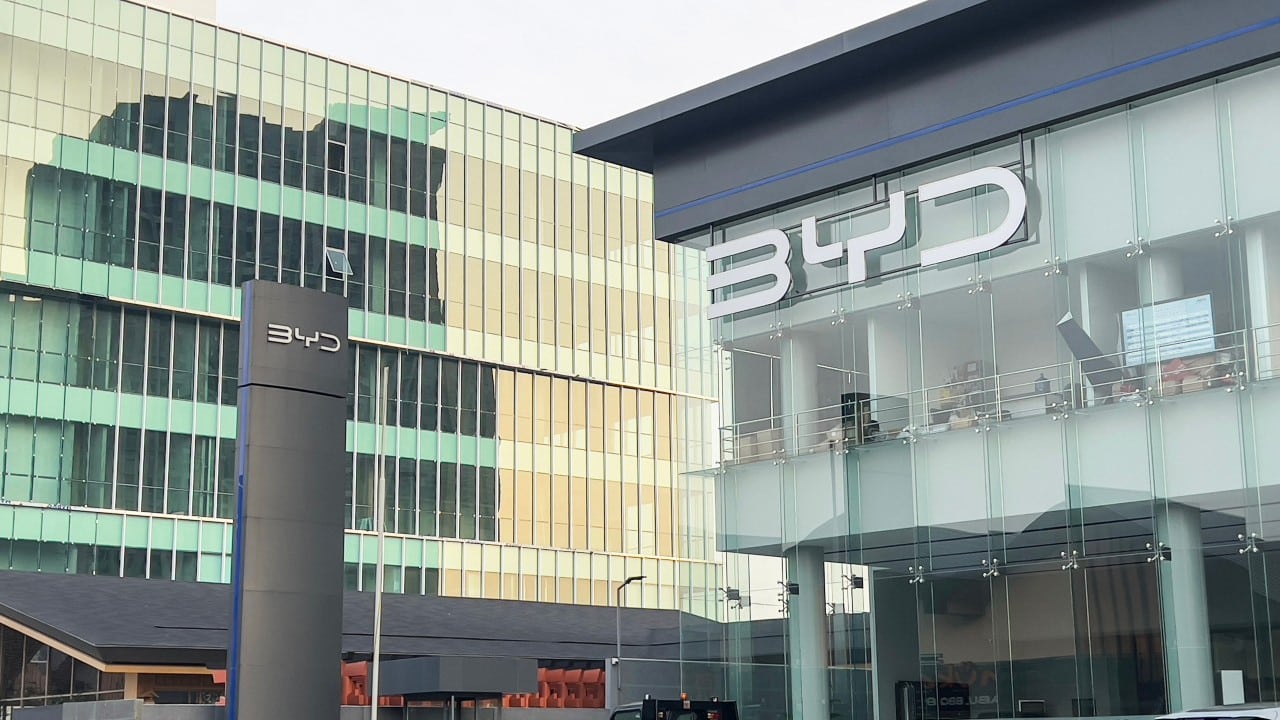
BYD adopted an aggressive strategy of reducing prices on specific versions of its models to increase its share of direct sales. The focus is on the Dolphin Mini GL, which is now offered at prices close to those of entry-level combustion cars, such as the Renault Kwid E-Tech. Essa initiative aims to serve fleet owners, taxi drivers, app drivers and PCD customers.
The Chinese automaker recorded significant growth in retail in 2025, reaching fifth position in the year to date. Agora, directs efforts to the direct sales channel, which represents almost half of the Brazilian automobile market. The goal is to reach 10% share in this segment in 2026.
National production at Camaçari, at Bahia, allows for more competitive commercial conditions. Discounts reach 15% on GL versions, without advanced driver assistance systems, but maintaining essential features for intense use.
Strategy aimed at corporate clients
BYD identified a clear opportunity in the direct sales segment, where it had a low share despite its success in retail. Fábio Lage, the company’s commercial director at Brasil, highlighted that the channel represents around 50% of total light vehicle sales. The company seeks to balance both channels to sustain projected growth.
The GL versions prioritize economic rationality for those who travel long distances daily. Elas do without items like the complete Adas, reducing costs without compromising basic safety or electrical performance. The adjusted prices place the models in ranges disputed by combustion competitors.
- Dolphin Mini GL: from R$118,990 to R$101,141 with standard discount;
- BYD King GL: from R$169,990 to R$144,491;
- Song Pro GL: from R$189,990 to R$161,491.
For taxi drivers and PCDs, with exemptions from IPI and ICMS, the Dolphin Mini GL may fall below R$99 thousand in some configurations. The Essa range positions it directly against the Kwid E-Tech, priced at R$99,990.
Benefits of Total Cost of Ownership
BYD’s central argument is based on the lower total cost of ownership than equivalent combustion vehicles. Revisões occur at longer intervals, and energy consumption represents a fraction of that spent on gasoline or ethanol. Diversos states offer exemption or reduction of IPVA for electric vehicles, expanding savings.
App drivers and taxi drivers find the Dolphin Mini a compact and efficient option for intense urban use. The model maintains sufficient autonomy for daily journeys, with a 30.08 kWh battery that reaches up to 250 km for the Inmetro. Compatible fast charging helps with continuous operation.
Corporate customers receive additional conditions, such as guaranteed buyback in some cases. The automaker maintains profitability similar to that of retail even with high discounts. Essa approach allows for economies of scale in national production starting in 2025.
The Dolphin Mini established itself as the best-selling electric car compared to the Brasil in the previous year, surpassing direct rivals. The GL version extends this success to audiences that prioritize rational calculation of operating expenses.

Recent performance in direct sales
In December 2025, BYD sold around 5,400 units in the direct channel alone. Desse total, 1.8 thousand were Dolphin Mini GL, demonstrating immediate acceptance of the new version. Total monthly volume reached 16.7 thousand vehicles, an increase of 70% over previous months.
Fenabrave recorded an almost balanced division between retail and direct in the general market in 2025. The 47.2% share in direct sales reinforces the strategic importance of the segment. BYD took advantage of the beginning of local assembly to accelerate its presence in this channel.
The consolidated leaders maintain a significant advantage:
- Fiat: 20.89%;
- Volkswagen: 20.43%;
- Chevrolet: 11.93%;
- Hyundai: 10.03%.
BYD’s aggressive entry puts pressure on these brands in entry and mid-range categories. The focus on electric and plug-in hybrids differentiates the Chinese offer in the corporate segment.
Network expansion and future projections
BYD plans to increase total volume to around 240,000 units in 2026, doubling that recorded in 2025. The intended division is close to the national standard, with 55% in retail and 45% in direct. Growth depends on expanding the dealership network.
Currently with 200 points, the brand intends to reach 300 by the end of the year. Essa expansion facilitates service to regional fleet owners and PCD customers in different states. The nationalized logistics structure reduces delivery times.
Production in Camaçari covers Dolphin Mini, King and Song Pro, the main bets for volume. The Bahian factory operates with increasing capacity, benefiting from local incentives. The strategy combines residual imports with national assembly to optimize costs.
Comparison with direct competitors
The Dolphin Mini GL competes in a range occupied by models such as the Fiat Mobi and Renault Kwid in basic versions. Para intense use, the tram offers superior space and more complete standard equipment. The King GL is close to mid-size combustion sedans at an adjusted price.
Compact SUVs like the Volkswagen Tera face the Song Pro GL in the same price range. BYD argues that the mid-size plug-in hybrid provides more comfort and technology than an equivalent entry-level SUV. Essa rationality attracts small companies when renewing their fleet.
Renault maintains the Kwid E-Tech as a direct reference in the affordable electrical segment. Outras Chinese brands advance, but BYD leads in pure electric volume. The combination of competitive pricing and an expanding network consolidates its position.
Advantages for different buyer profiles
Small business owners find Dolphin Mini GL a viable option for urban deliveries. The autonomy covers daily routes without frequent recharging in optimized operation. Low energy costs reduce monthly operating expenses.
Taxi drivers benefit from specific tax exemptions in several cities. The compact model makes maneuvering in heavy traffic easier, while the electric silence improves comfort on long journeys. The durability of the Blade battery reinforces reliability.
PCD customers access even lower values with adequate documentation. BYD structures simplified processes at dealerships to speed up approvals. Essa inclusion expands the reach of electric mobility.
Midsize fleet owners gradually incorporate electric units to test real savings. Guaranteed repurchase minimizes risk in traditional fleet transition. BYD’s strategy facilitates this migration with dedicated conditions.
Positioning in the national electricity market
BYD ended 2025 as the absolute leader in 100% electric vehicles in the Brasil. The 72% share in the segment reflects broad acceptance of the portfolio. Dolphin Mini contributed decisively to this result.
The energy transition gains strength with more affordable prices in corporate channels. Governos states maintain tax incentives that favor adoption. Public charging infrastructure expands in parallel in urban centers.
The automaker invests in network training for specialized service in direct sales. Esse differential improves the experience of large customers and reinforces loyalty. The combination of a competitive product and structured support supports the projected advancement.
