

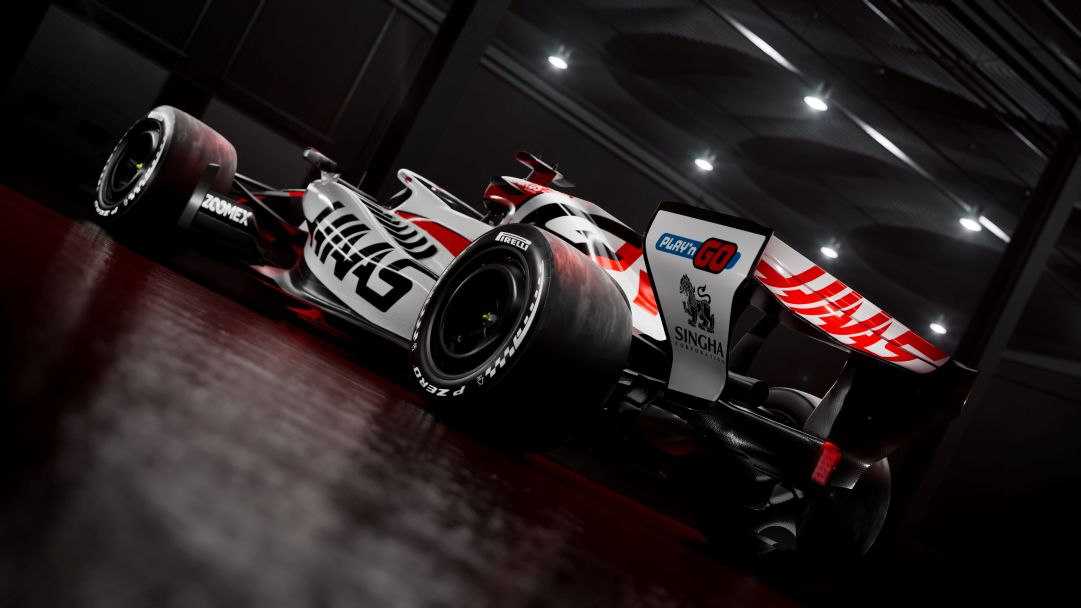
The Haas F1 Team kicked off its preparations for the new era of the The single-seater is the American team’s response to the drastic regulation changes that promise to redefine competition in the category.
The new design draws attention to its aggressive aerodynamics and more compact dimensions, in line with the Federação Internacional and Automobilismo (FIA) guidelines for more agile and efficient cars. Sendo the third team to reveal its project, Haas seeks a strategic advantage in development, optimizing time for pre-season tests that will be crucial for adapting to new power units and hybrid systems.
The partnership with Toyota, which has deepened over the last year, now manifests itself prominently on the car. The Gazoo Racing (GR) brand occupies prime spaces on the fairing, symbolizing an integration that goes beyond sponsorship and encompasses fundamental technical support for the team’s ambitions in the new F1 cycle.
The new visual identity with the brand Toyota
The VF-26’s livery represents a break with the team’s recent past, although it maintains the traditional black and white base. The big news is the strong presence of the Toyota’s vibrant red, which runs along the sides and the engine cover, creating a striking and dynamic visual identity. The aesthetic change signals the strength of the alliance between the Haas’s American engineering and the Japanese manufacturer’s high-performance competition expertise, reflecting a significant investment in the project.
The emphasis given to the Gazoo Racing logo consolidates Toyota’s strategy of unifying its motorsport operations under a single banner. The agreement grants Haas access to valuable resources such as Toyota’s wind tunnel and composites manufacturing facilities at Alemanha. Essa technical synergy is the team’s bet to gain competitiveness and establish itself consistently in the upper intermediate pack of the grid from this season onwards.
Technical adaptations for the new era of F1
The VF-26 project was conceived based on the pillars of the new regulation: energy efficiency and reduction of aerodynamic drag. Para meet these requirements, the car features a reduced wheelbase and narrower tires, which required a complete redesign of the suspensions and internal cooling architecture. The main structural changes confirmed for the model include a shortened chassis to favor agility on low-speed circuits, front and rear wings with active adjustments to reduce turbulence in pursuits, a reduction in the vehicle’s total weight to compensate for the increase in electric batteries and a cooling system optimized for the new thermal demands of the power unit. Although the presented model is the basis for the competition, the engineering team has already confirmed that aerodynamic modifications will continue to be implemented until the first race, reflecting the fluid nature of development in F1.
Stability and focus according to leadership
Gene Haas, founder of the team, highlighted that the development of the new car was a parallel project that ran throughout the 2025 season.
The combination of Bearman’s youth and Ocon’s vast experience is seen as the ideal basis for accelerating data collection and understanding of the new technical package during winter testing, which will be key to the team’s initial success.
Intense preparation for pre-season testing
The team leader, Ayao Komatsu, stated that the entire focus of the operation is on the first week of collective testing in Barcelona. Ele admitted that the production schedule was extremely challenging, requiring maximum effort from the factories in Banbury and Kannapolis.
Before heading to Espanha, the team will conduct a day of filming, known as shakedown, for an initial check of all of the VF-26’s critical systems. Este first contact with the track is vital to ensure the basic reliability of the car.
After Barcelona, final preparation will take place at Bahrein, where teams will find more representative heat conditions. Essas sessions will be essential for drivers to adapt to the behavior of the new cars, which should generate less downforce.
Structural strengthening with the Japanese partnership
The collaboration between Haas and Toyota Gazoo Racing goes beyond the technical aspect, also involving the exchange of work methodologies and qualified personnel. Essa integration signals a new phase for the team, which seeks to consolidate itself as a more robust operation in the paddock.
The strategic alliance aims to strengthen the brand’s presence in key markets, such as Asia and America, where Fórmula 1 is experiencing significant growth. The new structure also makes the team more attractive to new business partners.
With financial and technological support from Toyota, Haas was able to invest in cutting-edge development tools, including new simulators and CFD software. Essa infrastructure modernization is considered vital to compete under the spending cap.
The internal expectation is that the results of this investment will become visible in the first stages of the championship, with the team fighting for positions in the scoring zone more consistently.
Projections for the start of the championship
The team maintains a transparent stance by stating that the car that will debut at the Grande Prêmio of Austrália, in March, may present significant differences in relation to the launch model. Aerodynamic development is an ongoing process, and the discoveries made in the simulators throughout February will be quickly incorporated into the racing package, demonstrating the agility required to succeed in the top category of motorsport.