

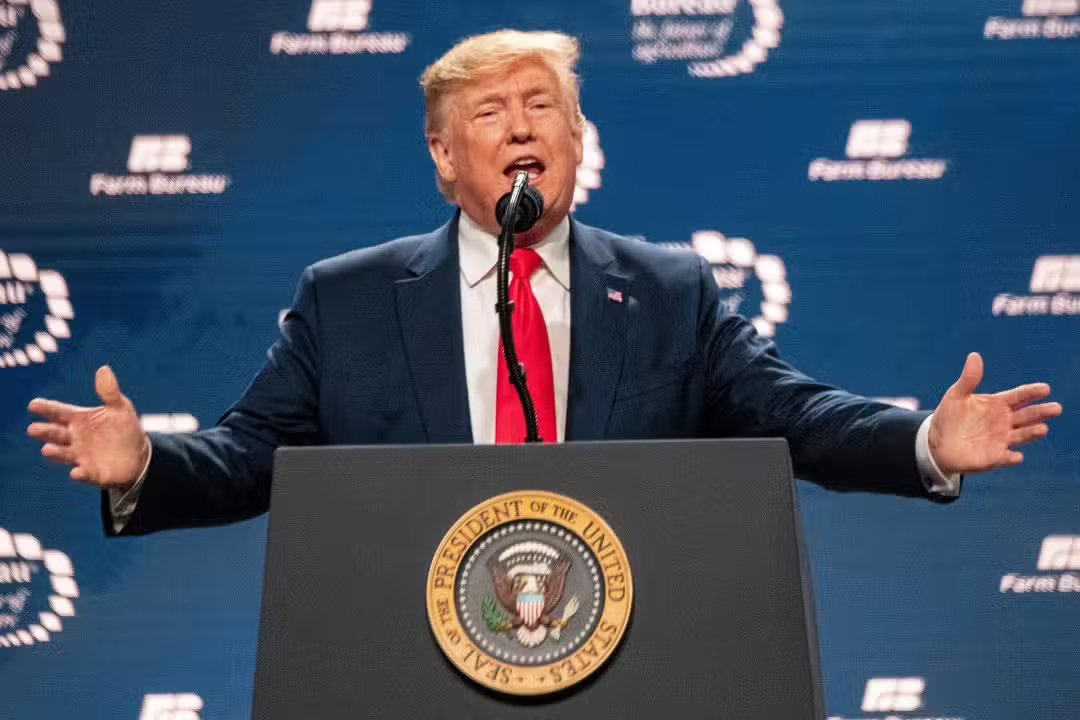
Europe weighs diplomatic and trade options against Trump’s Greenland tariffs impacting allies
European Union leaders are currently evaluating a robust array of strategic responses to potential tariffs imposed by former US President Donald Trump targeting Greenland. The discussions come amidst growing concerns over economic repercussions for several close American allies.
The complex geopolitical landscape of 2025 necessitates a unified approach from Brussels to safeguard European interests and maintain stability within established international trade frameworks.
This proactive stance aims to mitigate any destabilizing effects on transatlantic relations, which remain a cornerstone of global security and economic cooperation, particularly concerning critical resources.
European strategy against trade pressures
Brussels is actively formulating comprehensive strategies to address renewed protectionist measures that could emanate from Washington, particularly those affecting key resource-rich regions like Greenland. The emphasis is on preparing for scenarios that could disrupt global supply chains and impact European industries reliant on specific imports. Officials are analyzing previous trade disputes to extract lessons and refine their defensive and offensive tools within international trade law.
The European Commission, in coordination with member states, is prioritizing the development of a flexible response mechanism capable of adapting to various forms of economic pressure. This includes legal assessments of potential World Trade Organization (WTO) challenges and the exploration of new bilateral trade agreements designed to circumvent future tariffs. Ensuring internal cohesion among the 27 member states remains a critical objective, as a united front amplifies Europe’s negotiating power on the global stage.
Diplomatic channels and multilateral engagement
Engaging through established diplomatic channels forms a primary pillar of Europe’s preventative and responsive strategy. High-level envoys are exploring avenues for dialogue with US counterparts to de-escalate potential trade tensions before they fully materialize. The goal is to articulate European concerns clearly and seek mutually beneficial resolutions that uphold the principles of fair and open trade.
Furthermore, strengthening multilateral institutions like the WTO remains a cornerstone of European policy. Efforts are underway to push for reforms that enhance the WTO’s dispute settlement mechanisms, providing a more reliable framework for resolving international trade disagreements. A robust multilateral system is seen as essential for managing global trade effectively and preventing unilateral actions from destabilizing economic relations.
These diplomatic initiatives aim to foster greater understanding and cooperation, underscoring the interconnectedness of global economies and the shared interest in maintaining stable, predictable trade environments for all participants.
Economic countermeasures considered
Should diplomatic efforts prove insufficient, European policymakers have a range of economic countermeasures under serious consideration for 2025. These include the implementation of retaliatory tariffs on specific American goods, carefully selected to minimize harm to European consumers while maximizing pressure on US industries and political constituencies. Such actions would be proportionate and adhere strictly to international trade rules to maintain Europe’s credibility. Additionally, the EU is examining legal avenues within its own legislative framework to protect companies affected by extraterritorial measures, potentially offering subsidies or other forms of state aid to buffer the immediate economic shock. The aim is to send a clear message that unilateral trade actions carry significant reciprocal costs, encouraging a return to negotiation and mutual respect in trade relations.
Strengthening arctic security and partnerships
The strategic importance of the Arctic region, including Greenland, has prompted Europe to intensify its focus on regional security and partnerships in 2025. Discussions with Nordic countries, Canada, and other Arctic stakeholders are deepening to ensure shared understanding and coordinated approaches to resource management and environmental protection. These collaborations are vital for asserting a collective presence and deterring any attempts at exclusive economic exploitation in the region.
Investment in Arctic infrastructure and scientific research also forms a key part of this strategy. By supporting sustainable development and fostering robust local economies, Europe aims to contribute to the long-term stability and resilience of the region. This multifaceted approach reinforces European commitment to the Arctic’s peaceful and cooperative future, directly addressing underlying tensions related to resource access and geopolitical influence.
Long-term resilience and resource independence
Building long-term economic resilience and reducing reliance on potentially vulnerable supply chains is a core objective for Europe in 2025. The discussions around Greenland tariffs have accelerated initiatives aimed at diversifying sources for critical minerals and rare earths essential for European industries, including electric vehicles and renewable energy technologies. Investing in domestic extraction capabilities and exploring new trade partnerships with stable, reliable nations are priorities.
Furthermore, the European Commission is exploring innovative recycling technologies to recover valuable materials from waste streams, lessening the need for new imports. This circular economy approach not only bolsters economic independence but also aligns with Europe’s ambitious environmental goals. The emphasis on self-sufficiency is a strategic response to global uncertainties and potential weaponization of trade by major powers.
Europe is also fostering closer industrial alliances within the bloc, encouraging joint ventures and shared infrastructure projects that strengthen internal market capabilities. This collaborative effort is designed to create more robust supply chains that are less susceptible to external pressures, fostering greater economic stability and strategic autonomy across the continent. These efforts represent a significant pivot toward proactive economic planning.
Unifying transatlantic alliance efforts
A unified stance across the transatlantic alliance, involving key European nations and potentially other US allies, is being explored to present a strong, cohesive front against unilateral trade measures.
Palavras-chave mais pesquisadas sobre a notícia criada e de acordo com o Seo e o rankeamento do google:
europe trump tariffs, greenland trade dispute, eu us trade policy, transatlantic relations
Europe’s response to US tariffs 2025