Dacia plans to launch a new electric car based on the Renault Twingo by the end of 2026, with an estimated price below 18 thousand euros. The model, which measures around 3.80 meters in length, is positioned as an affordable option in the electric urban vehicle segment at Europa.
Executives from the brand, which belongs to the Grupo Renault, indicate that the new vehicle will coexist with the Dacia Spring for an initial period. The differences in size, design and positioning allow for the temporary maintenance of both in the portfolio.
The announcement reinforces Dacia’s strategy to expand the supply of cheap electric vehicles produced in Europa. Essa approach avoids tariffs applied to imports from China and meets the demand for compact and economical models.
The development of the new model took place in record time, using synergies with the AmpR Small platform from the Grupo Renault. Essa base already equips the electric Renault Twingo and other compact vehicles from the French brand.
Coexistence with Dacia Spring
The Dacia Spring underwent a recent update, including a new battery positioned low on the chassis. Essa change improves weight distribution and keeps the model competitive in the current market.
Patrice Lévy-Bencheton, product director at Dacia, stated that the two trams could share the catalog for around a year. The distinctions in shape and dimensions justify the parallel offering strategy.
The Spring measures 3.70 meters in length and offers a lower starting price in several European markets. Já, the new model derived from the Twingo, features a slightly larger structure and a design adapted to the style of the Dacia.
Differences in dimensions and capacity
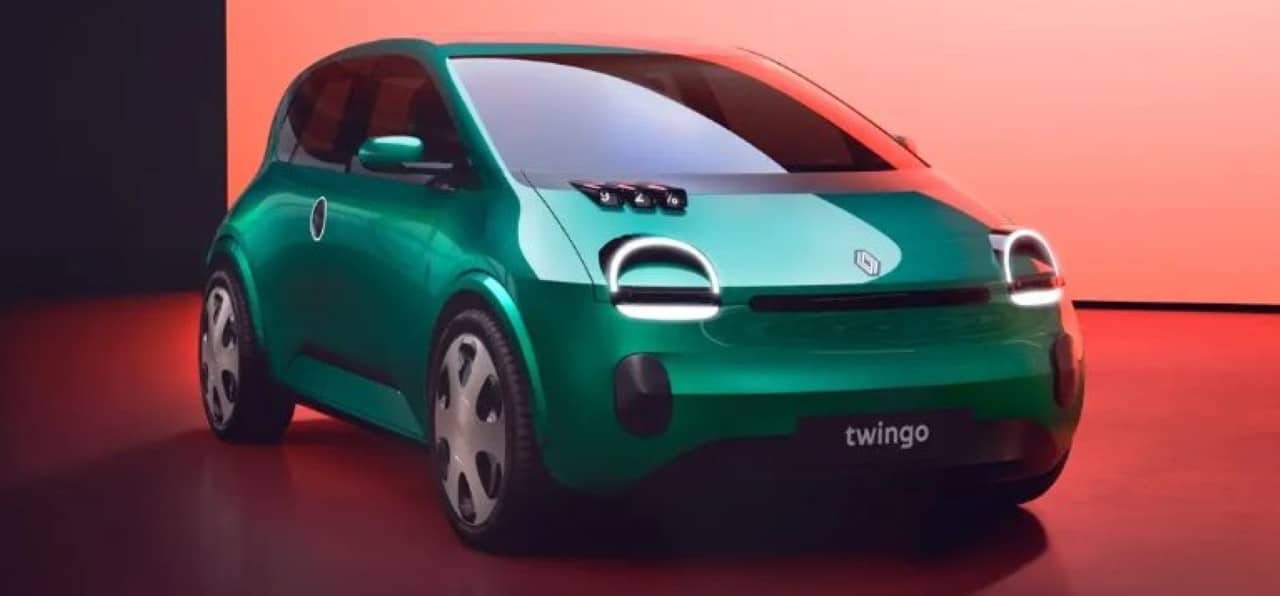
The new Dacia tram features measurements close to those of the Renault Twingo, with a length of approximately 3.79 meters. Essa configuration provides greater internal space than the current Spring.
- Dacia
- Renault
These variations allow for different positions in the A segment. The Dacia model receives the brand’s characteristic front end, less robust than recent SUVs, but in line with the current visual identity.
Cargo capacity and passenger space benefit from the longer wheelbase on the Twingo derivative. Esses aspects serve drivers who seek urban practicality without giving up versatility.
AmpR Small platform and technical advantages
The AmpR Small platform, developed by Ampere, the electrical division of Grupo Renault, serves as the basis for the new Dacia. Essa architecture optimizes costs and performance in compact electric vehicles.
The electric Twingo achieves a range of up to 263 km in the WLTP cycle, higher than the 225 km of the current Spring. The Dacia model should come close to this mark, offering a significant improvement over its indirect predecessor.
Production takes place at Europa, probably at Eslovênia, next to Twingo. Essa location avoids European restrictions applied to electric vehicles imported from China.
The rapid development, completed in around 16 months, demonstrates the efficiency of Grupo Renault. The approach allows for an agile response to competition from Chinese brands in the entry-level segment.
Design and market positioning
The design of the new Dacia maintains robust elements, but adapts to the city format of the Twingo. The front follows the brand’s recent pattern, with angular lines and an accessible look.
The target price below 18 thousand euros positions the model as an alternative to the Twingo, which starts at a slightly higher value. Essa difference of around 2 thousand euros reinforces Dacia’s focus on maximum accessibility.
European markets receive local incentives for vehicles produced on the continent. Essa competitive advantage benefits the new electric car compared to imported options.
The Dacia strategy includes keeping Spring updated for a transitional period. Após Therefore, the portfolio focuses on European models with greater technological integration.
Autonomy and expected performance
The new model’s autonomy exceeds the 225 km of the Spring, approaching the 263 km of the Twingo in the WLTP cycle. Essa evolution stems from the optimized battery and efficiency of the AmpR Small platform.
The electric motor delivers performance suitable for urban use, with sufficient acceleration for city traffic. The reduced height contributes to stability when cornering and maneuvering.
Safety tests must improve compared to the current Spring, which has limitations in collisions. The European framework incorporates more stringent protection standards.
Controlled energy consumption keeps operating costs low. Essa feature attracts consumers sensitive to recharging and maintenance expenses.
European production and tariff impact
Manufacturing at Europa avoids punitive tariffs applied to Chinese electric vehicles. The Spring, produced at China, faces restrictions that increase costs in some markets.
The Slovenian unit, responsible for Twingo, also hosts the new Dacia. Essa concentration optimizes logistics and reduces delivery times to dealers.
Grupo Renault invests in local capacity to meet emissions targets at União Europeia. Power line expansion contributes to regulatory compliance.
This decision reinforces competitiveness against Asian rivals. Continental production guarantees eligibility for government subsidies in several countries.
Launch and presentation outlook
The official presentation will take place in the coming months, possibly on Salão of Automóvel of Paris. The commercial launch is focused on the end of 2026, aligned with the Grupo Renault schedule.
The model arrives before the third generation of the electric Sandero, scheduled for a later period. The Essa sequence gradually expands the zero-emission range of the Dacia.
European consumers await final equipment and version details. The basic configuration prioritizes essentiality, with options for connectivity and comfort.
The arrival reinforces the brand’s commitment to accessible mobility. The new electric vehicle complements the current portfolio and prepares the ground for future transitions.
