

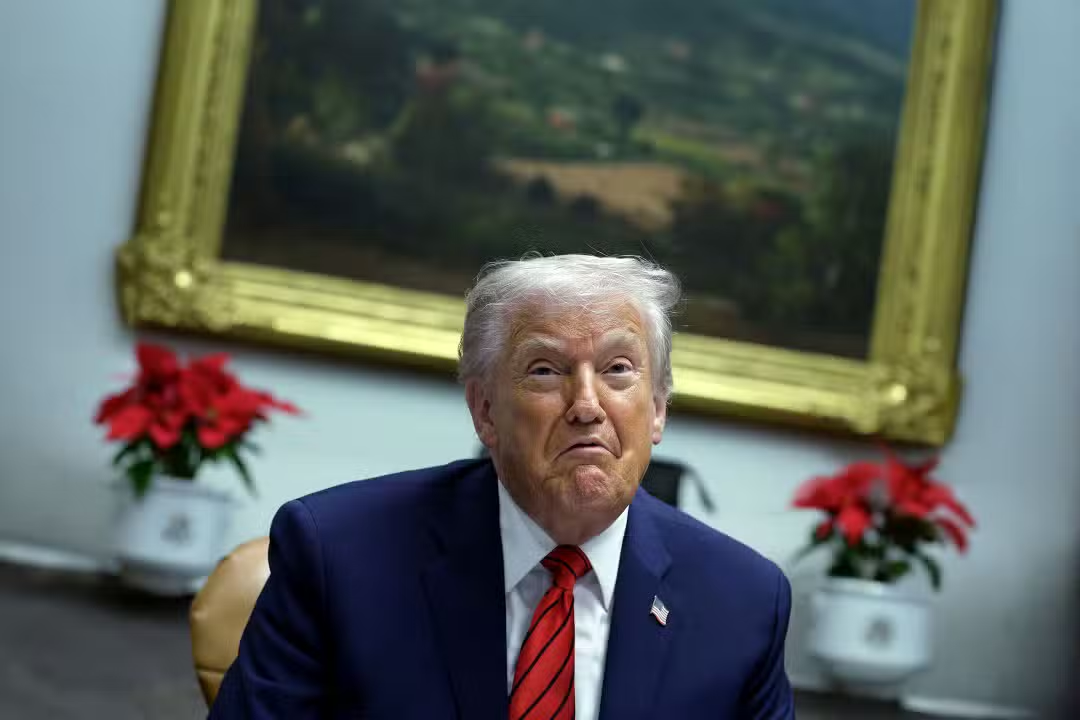
President Trump intensifies Greenland acquisition discussions at Davos summit, declaring ‘no going back’ on nation’s strategic agenda
President Trump arrived at the World Economic Forum in Davos, Switzerland, reiterating his firm stance on the United States’ strategic interest in Greenland. The leader stated unequivocally that there is “no going back” on the nation’s ambitious agenda regarding the vast Arctic territory, signaling a persistent focus on its potential acquisition or enhanced influence. His remarks underscore a continued commitment to exploring opportunities for the U.S. in a region increasingly vital to global geopolitics and economic strategy.

The president also revealed that his schedule at the prestigious forum includes “a lot of meetings scheduled on Greenland,” indicating a high-level diplomatic and economic push. These discussions are expected to delve into various facets of U.S. engagement, ranging from resource access to military presence and economic partnerships with the autonomous Danish territory. The statements have rekindled debates surrounding sovereignty, international relations, and the future of Arctic development.
Trump’s renewed emphasis places Greenland at the forefront of international discourse, prompting leaders and policymakers to closely observe the evolving dynamics. The potential ramifications extend beyond bilateral relations, touching upon the broader strategic competition among global powers in the rapidly changing Arctic landscape.
Renewed strategic focus on Greenland’s future
President Trump’s persistent interest in Greenland reflects a long-standing pattern of strategic ambition by the United States to secure key territories for economic and national security reasons. The renewed push signals a belief within the administration that Greenland holds untapped value crucial for America’s geopolitical standing in the mid-21st century.
Greenland’s vast landmass and unique geographical position make it a critical asset, particularly in the context of emerging Arctic trade routes and resource exploration. Its location offers strategic advantages for military operations and scientific research, reinforcing its importance to the United States’ long-term Arctic strategy and defense posture.
Diplomatic implications and international reactions
Denmark has historically maintained its sovereignty over Greenland, consistently rejecting any notion of its sale or involuntary transfer. The Danish government reiterated its stance on the territory’s integral role within the Kingdom of Denmark, emphasizing that such discussions are not on the table.
Greenland, an autonomous territory, possesses significant self-governing powers, particularly over its natural resources and internal affairs. Any significant shift in its international status would require the consent of its local population and government, whose perspectives prioritize sustainable development and self-determination.
The president’s assertive declarations could potentially strain relations with Denmark and other European allies, who value stability in the Arctic region. International observers are closely monitoring how these discussions unfold, mindful of the delicate balance of power and alliances.
Arctic resources and global competition
Greenland is known to possess abundant deposits of rare earth minerals, a critical component in modern technologies ranging from electric vehicles to advanced defense systems. The global demand for these resources is escalating, making access to Greenland’s reserves a significant economic and strategic prize.
Nations worldwide are intensifying their efforts to secure supplies of these vital minerals, viewing them as essential for economic growth and technological independence. The competition for these resources adds another layer of complexity to the discussions surrounding Greenland’s future.
The accelerated melting of Arctic ice due to climate change is opening up new shipping lanes, significantly reducing transit times between continents. This development amplifies the region’s geopolitical and economic importance, transforming the Arctic into a new frontier for trade and strategic deployment.
Furthermore, countries like China have increased their investment and presence in the Arctic, establishing research stations and exploring resource extraction opportunities. This growing international interest positions Greenland as a central piece in a broader geopolitical chess match for Arctic dominance.
Economic discussions at the forum
Discussions at the World Economic Forum on Greenland’s economic potential centered on how investments could foster development while preserving its unique environment. Opportunities for infrastructure, tourism, and responsible resource extraction were highlighted as key areas for growth.
President Trump’s focus on economic benefits for the U.S. from greater engagement with Greenland underscores his administration’s “America First” approach. The prospect of significant U.S. investment packages could be presented as a means to stimulate Greenland’s economy and create jobs, potentially benefiting local communities.
Geopolitical chess in the Arctic
The Arctic region has rapidly evolved into a pivotal arena for geopolitical competition, intertwining military strategy, resource control, and adherence to international law. As ice melts and access increases, the stakes grow higher, with nations vying for influence over strategic waterways and vast, untapped natural resources. Greenland, situated at a critical crossroads, embodies the very essence of this intricate geopolitical landscape, representing both a territorial prize and a linchpin for future global power dynamics. Its fate directly impacts the balance of power among major players, making any discussions about its status subject to intense international scrutiny and strategic maneuvering.
The path ahead for US-Greenland relations
The future trajectory of U.S. engagement with Greenland, and by extension, with Denmark, remains complex and multifaceted. Ongoing diplomatic efforts and economic overtures will likely define the contours of this relationship, balancing strategic interests with sovereignty and local aspirations.
Trump Greenland, Davos 2025, Arctic strategy, geopolitical interests, rare earth minerals