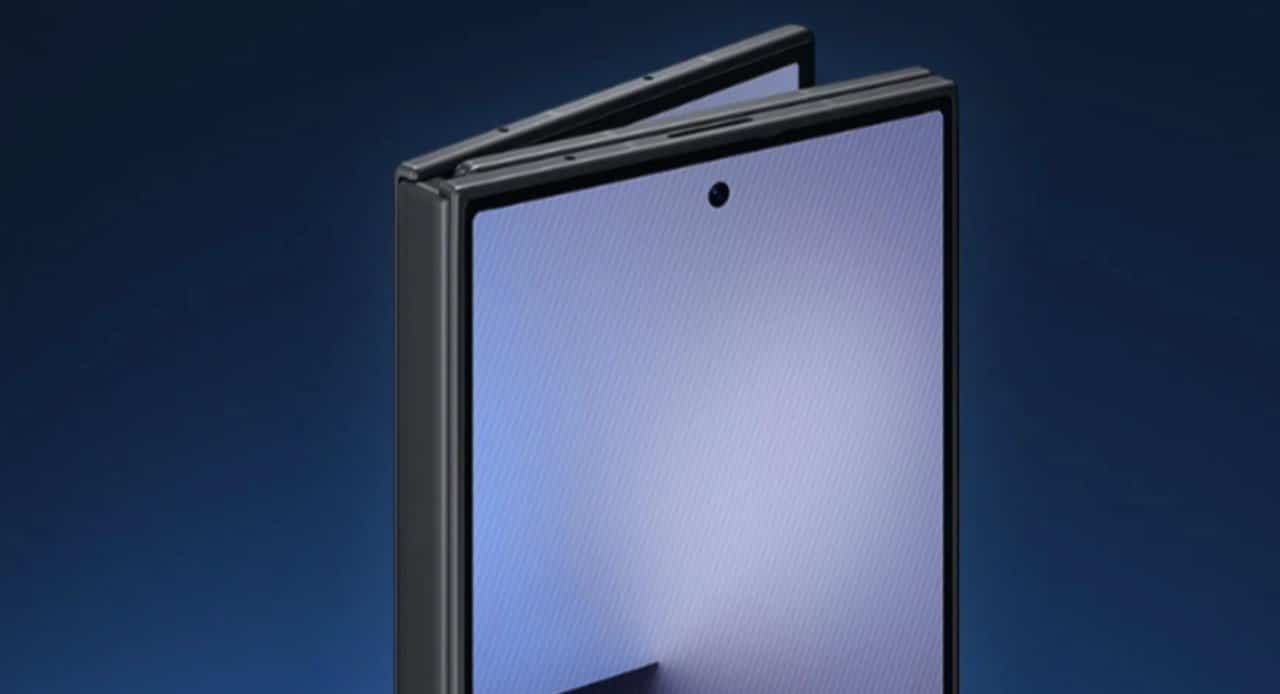
The innovative Samsung Galaxy Z TriFold, the brand’s first tri-fold smartphone, failed catastrophically in a rigorous durability test conducted by YouTuber Zack Nelson, from the JerryRigEverything channel. The device, which promises to redefine the market with its 10-inch screen and ultra-thin design, had its structure compromised during the reverse bending test, raising questions about the viability of its ambitious design.
The main failure occurred when pressure was applied in the opposite direction to the device’s natural bend. The aluminum chassis could not withstand the force and gave way, resulting in the frame breaking and the internal panel becoming completely unusable. The incident casts a shadow over a device that, despite its cutting-edge specifications such as the Snapdragon 8 Elite processor and 16 GB of RAM, demonstrated worrying fragility for a premium category product.
The complexity of the two-hinge mechanism, coupled with the search for minimum thickness, appears to have sacrificed structural integrity. Este event represents a pivotal moment for the foldable smartphone industry, which continues to explore the limits of engineering and materials.
]
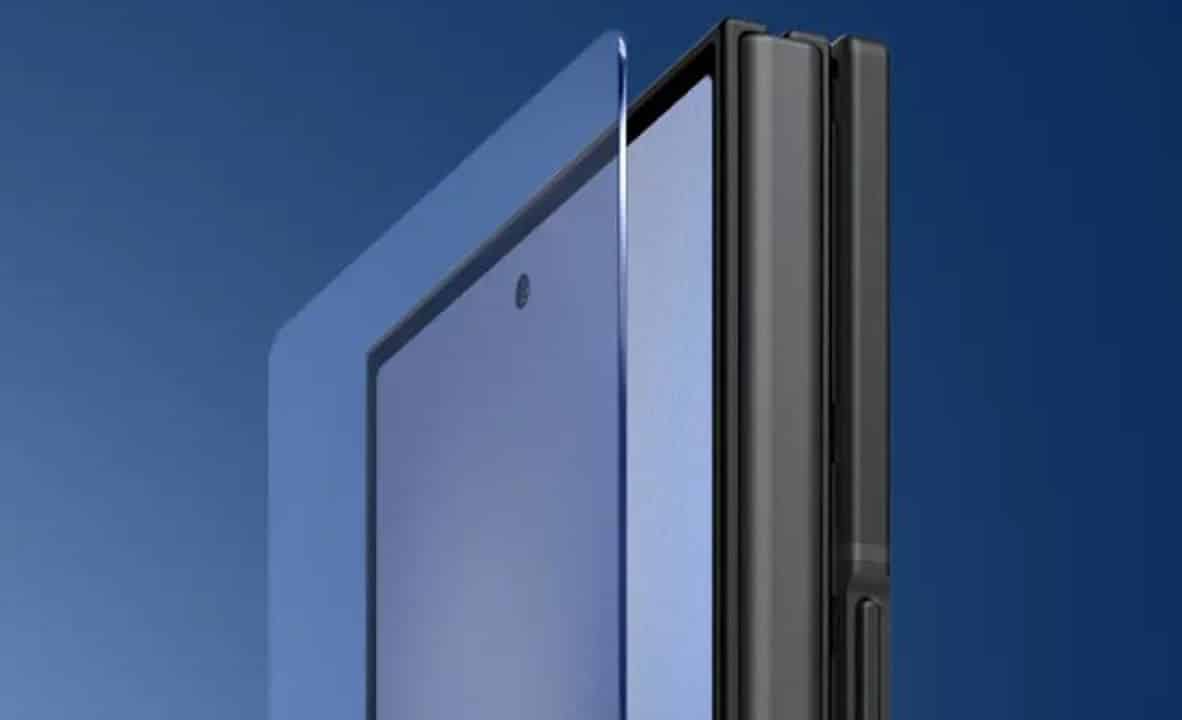
Screen scratch test details
In the scratch resistance assessment, the Galaxy Z TriFold showed mixed results. The external screen, protected with Gorilla Glass, performed as expected for a high-end smartphone, exhibiting light scratches at level 6 of the Mohs hardness scale and deeper marks at level 7.
In contrast, the flexible internal display proved extremely susceptible to damage. Because it was made from a plastic polymer, the surface was easily scratched even with a fingernail. Essa vulnerability indicates that contact with everyday objects, such as keys or coins, can cause permanent damage to the device’s main screen.
Heat and dust resistance in check
The device also revealed weaknesses when exposed to external elements. In the flame test, the external screen lasted for 17 seconds before suffering permanent damage to the pixels, a result considered standard for OLED panels. Já the more sensitive internal screen suffered irreversible burns in just 10 seconds, with the damaged pixels not recovering after cooling.
The double-hinge mechanism also proved vulnerable to particle ingress. Após being subjected to dust and sand, the device started to emit creaking noises during opening and closing. Apesar of IP48 certification, which offers limited protection, practical testing suggests that use in harsh environments may compromise the life of the smartphone’s joints.
The critical moment of structural failure
The most alarming point of the test was the flexion assessment. By applying force in the opposite direction to the projected bend, Zack Nelson exposed the fundamental weakness of the chassis. The thin aluminum frame deformed quickly, and a crack confirmed the structure’s breakage, especially at the antenna lines, which are points of least resistance.
Remarkably, both hinge mechanisms remained intact, highlighting their individual robustness. Contudo, the chassis failure was enough to erase the internal screen instantly, confirming irreparable damage to the electronic components. Este is the first foldable smartphone from Samsung to fail so decisively in this specific test, contrasting with the greater resistance of previous models in the Z Fold line.
Internal analysis reveals complexity and design sacrifices
Disassembling the device after testing revealed the complex internal engineering. Para power the device, the Samsung used an arrangement of three battery cells distributed across the chassis segments, totaling 5,600 mAh. Embora optimize space, this configuration increases the difficulty of repairs and introduces more potential points of failure. The layout highlights the challenge of powering such a large screen while maintaining a slim profile.
Another detail observed was the absence of more advanced heat dissipation systems, such as vapor chambers. The design relies primarily on the aluminum frame to manage temperature, a choice that helps reduce thickness but can limit performance in demanding and prolonged tasks, making a clear sacrifice in the name of design and portability.
The dilemma of innovation versus durability in the foldable market
The case of the Galaxy Z TriFold illustrates the central challenge of the foldable category: balancing innovative designs with the durability needed for everyday use. By adding a third panel and a second hinge, the Samsung has pushed technological boundaries, but the stress test serves as a warning that each new joint and reduction in thickness can introduce new vulnerabilities. The structural flaw of the TriFold, especially compared to the resilience of previous models, suggests that the quest for a thinner design may have compromised the integrity of the device, fueling the debate about the maturity of foldable technology.
Implications for consumers and future launches
For potential buyers, the test results serve as a clear warning that the Galaxy Z TriFold is a piece of advanced technology that demands extremely careful handling. Failing durability testing could impact purchasing decisions and will likely force Samsung to strengthen communication about device care, as well as possibly revise the design of future generations to strengthen weaknesses identified in this rigorous evaluation.
