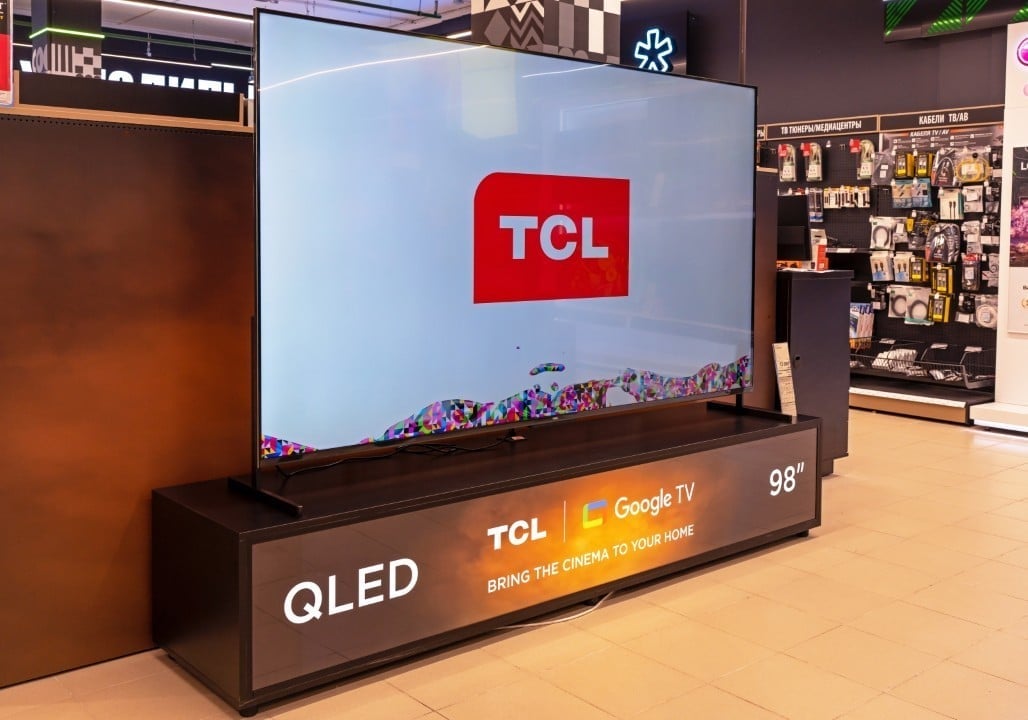
Sony and Chinese electronics giant TCL announced the signing of a memorandum of understanding to create a new joint venture focused on the home entertainment segment. The measure represents one of the most significant restructurings in the television sector in recent decades, transferring control of the iconic Bravia brand and other audio products to the new company, which will be majority-owned by TCL.
Under the preliminary agreement, TCL will hold 51% of the new company’s shares, while Sony will maintain a strategic stake of 49%. All legal and regulatory procedures are expected to be completed by the end of the first quarter of 2026, with the official start of operations scheduled for April 2027. The alliance seeks to combine TCL’s mass production efficiency with Sony’s renowned image and sound processing technology.
This strategic union emerges as a direct response to transformations in the global market, where the scale of production has become a critical factor for competitiveness. Fabricantes that can produce panels in large volumes and at reduced costs gain a substantial advantage, especially with the growing demand for larger screens, a segment that requires heavy investments in infrastructure and logistics.

The new scenario of the global electronics market
For more than a decade, the global television market has been dominated by conglomerates from Coreia, Sul and China. Empresas like Samsung and LG have set a standard of continuous innovation and strong brand presence, while Chinese manufacturers, led by TCL and Hisense, have aggressively expanded their global share through a combination of competitive pricing and vertical supply chain control.
In this highly competitive environment, traditional Japanese brands, which previously led the sector, faced difficulties competing in volume and price. The survival strategy began to depend on cost optimization, mainly in the acquisition of panels, which correspond to the majority of the manufacturing cost of a television. The partnership with TCL allows Sony to directly benefit from this efficiency without compromising its technological heritage.
The growing demand for super-large screens
In recent years, consumer preference has shifted sharply towards large and super-large televisions. Modelos with 85, 98 and even more than 100 inches, previously considered niche and extreme luxury items, are becoming increasingly common in homes, driven by the popularization of high definition content and the search for a cinema experience at home.
This trend poses significant challenges for the industry. The production of giant panels requires specialized factories, known as “fabs” of generation 10.5 or higher, which require billion-dollar investments. Além Furthermore, the logistics for transporting and delivering these products are complex and expensive, favoring companies with global and efficient distribution networks.
The massive presence of 98-inch TVs at international technology fairs, such as CES, illustrates how these formats have become central pieces in the portfolios of major brands. The ability to offer a varied range of sizes, from compact models to huge panels, is now a requirement to meet the expectations of a diverse and demanding market.
The competitive advantage of TCL’s vertical integration
One of TCL’s key differentiators is its vertically integrated business structure, a feat achieved through its subsidiary, CSOT (China Star Optoelectronics Technology). CSOT is one of the largest display panel manufacturers in the world, supplying components not only to TCL itself, but also to other brands on the market. Esse direct control over a vital part of the production chain offers immeasurable strategic advantages.
Unlike competitors who need to negotiate the purchase of panels from external suppliers, TCL is able to manage its costs more effectively, guarantee the supply of components even during periods of high demand and accelerate the development of new display technologies. Essa autonomy allows the company to quickly respond to market changes, such as the transition to larger screens or the adoption of new technologies such as the Mini LED.
The operational efficiency derived from this business model was fundamental to TCL’s rise to the position of one of the largest television manufacturers in the world. The ability to produce on a large scale, control costs and innovate in panel technology made the company an ideal partner for Sony, which was looking for a solution to strengthen its competitiveness in hardware without diluting the value of its brand and intellectual property in software and image processing.
This structure allows TCL to offer products with an excellent cost-benefit ratio, expanding its penetration in emerging markets and, at the same time, competing robustly in the more developed markets of América, Norte and Europa. The joint venture with Sony is a logical step to consolidate this position, adding Japanese prestige and engineering to its powerful Chinese production machine.
The strategic reasons behind the alliance
Sony’s decision to ally with TCL was motivated by a scenario of limited options and the clear synergy between the two companies. The main Korean players, Samsung and LG, are direct competitors and have their own vertically integrated operations, not requiring partnerships for their main brands. Dentro of the Chinese ecosystem, TCL stood out for its direct control over panel production through CSOT, a crucial differentiator in relation to other competitors such as Hisense. The Essa feature aligned perfectly with Sony’s need to ensure a stable, low-cost supply of high-quality panels, allowing the Bravia brand to continue to compete in the premium segment, but now with a more sustainable and scalable cost base. The Bravia brand, despite market challenges, still carries enormous value and recognition for its superior image quality, and the creation of the joint venture at a strategic time allows Sony to preserve its technological influence and legacy of innovation in the new structure, focusing its efforts on developing image processors and audio technologies that will continue to differentiate its products in the market.
Preservation of the excellence of the brand
Despite the change in share control, the expectation is that the quality and identity of the Bravia brand will be preserved. The agreement is structured so that Sony continues to lead the development of crucial technologies such as its renowned image processors and innovative audio systems. The new company will combine this Japanese expertise with TCL’s industrial capacity.
For consumers, this means that the brand’s future televisions will continue to offer the premium experience associated with the Bravia name. The collaboration ultimately aims to strengthen the brand’s presence on a global scale, making it more competitive in price without compromising the quality standards that have consolidated it as a reference in the market for decades.
Details of the new operational structure
The joint venture will be responsible for all stages of the business: development, design, manufacturing, sales and marketing of Sony’s televisions and audio products. Enquanto TCL will contribute its vast production capacity and advanced display technology, Sony will contribute its consolidated global distribution network, its strong brand reputation and its intellectual property in signal processing.
The established schedule foresees a period of detailed negotiations in the coming months to finalize the terms of the definitive agreement. The completion of the deal will depend on the approval of competition regulatory bodies in several countries, a standard process for mergers and acquisitions of this magnitude. Essa strategic restructuring will allow Sony to reallocate capital and focus on its highest growth divisions, such as games (PlayStation), image sensors and entertainment.
