

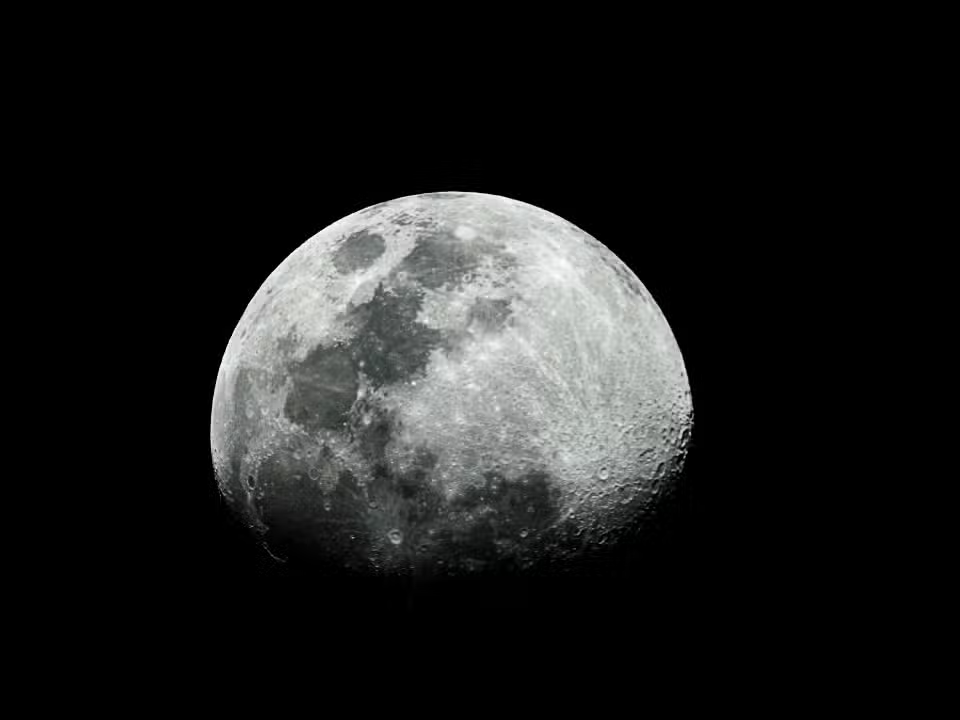
Scientists published a study in the journal PNAS based on samples collected by the Chinese mission Chang’e-6 on the far side of Lua. The research reveals that a colossal impact in the South Pole-Aitken basin permanently altered the interior of the satellite and explains the geological differences between the two faces.
The rocks analyzed present heavier isotopes of potassium and iron. Esses data suggests significant loss of volatile elements due to the extreme heat generated by the collision. The phenomenon known as lunar dichotomy characterizes the visible side as vast volcanic plains and the hidden side as mountainous terrain with a thicker crust.
The Chang’e-6 mission made history by returning material from the distant hemisphere of Terra for the first time in 2024. The results reinforce the role of large impacts in the evolution of celestial bodies.
Details of the isotopic composition of rocks
Samples from Chang’e-6 exhibit enrichment in heavy potassium isotopes. Esse pattern indicates selective evaporation of lighter versions during high temperature event.
The researchers also identified variations in iron isotopes. Essas signatures clearly differ from those found in visible-side rocks collected by previous missions.
The direct comparison between the two hemispheres became possible thanks to the material brought back by the Chinese probe. The data provide concrete evidence of asymmetric modification in the lunar mantle.
Thermal effects of the impact on the South Pole-Aitken basin
The shock that formed the South Pole-Aitken basin occurred billions of years ago. Ele generated temperatures estimated at thousands of degrees Celsius in the lunar interior.
This extreme energy caused partial melting and redistribution of heat-producing elements. The resulting thermal asymmetry inhibited intense volcanism on the far side.
Unlike the Procellarum basin on the visible side, the region affected by the collision maintained an altered internal structure. Isso limited the formation of extensive basaltic seas on the far side.
Scientists estimate that the impact reached deep enough to affect the global mantle. However, the effects were more concentrated in the far side’s southern hemisphere.

Context of the lunar dichotomy observed decades ago
Astronomers have noticed the striking differences between the faces of Lua since the last century. The visible side concentrates around 30% of its surface in dark basalt plains.
The hidden side has a predominance of cratered highlands. The crust in this region is on average 10 to 20 kilometers thicker.
Missions such as Apollo and orbital probes have confirmed this disparity. Contudo, the exact cause remained debated until recent analyzes of direct samples.
Previous theories included mantle overturn or differences in magma ocean crystallization. The new data prioritizes the dominant role of giant impacts.
Characteristics of mission Chang’e-6
The Chinese probe landed in the Apollo basin within the South Pole-Aitken region. Ela collected approximately two kilograms of soil and rocks by surface drilling and excavation.
The samples were returned successfully after a complex trajectory. The mission overcame technical communication challenges due to the absence of a direct line to Terra.
Materials include basaltic fragments and crustal clasts. Esses components allow for precise dating and detailed chemical analysis.
Chang’e-6 represented a significant advance in the exploration of the far side. Ela paved the way for future collections in remote areas of the satellite.
Implications for planetary evolution
Large impacts profoundly influence the internal composition of rocky bodies. The lunar case demonstrates how a single collision can create lasting asymmetries.
The loss of volatiles affected the ability to generate magma on the far side. Isso explains the relative scarcity of late volcanic activity in this region.
- Selective loss of light isotopes during evaporation
- Redistribution of heat-generating radioactive elements
- Inhibition of partial fusion in the mantle of the affected hemisphere
- Maintenance of thick crust without extensive basaltic cover
Similar studies on other planets could apply these mechanisms. Mercúrio and Marte also display hemispheres with distinct characteristics.
Comparison with samples from previous missions
Rocks from the Apollo missions come exclusively from the visible side. Elas shows lighter potassium isotopic compositions compared to Chang’e-6.
Samples from Chang’e-5, collected in a nearby region, reinforce the contrast. Nearside basalts show patterns consistent with lower volatile loss.
This hemispheric variation supports post-impact modification model. The South Pole-Aitken basin represents the largest preserved event in the Lua.
Orbital data complement laboratory analyses. Eles indicate uneven distribution of thorium and other heat-producing elements.
Need for new collections for confirmation
The study authors highlight the importance of additional samples. Regiões not explored can refine the understanding of the extent of the effects.
Future Chinese missions plan returns from other areas of the dark side. International Colaborações also access some of the material from Chang’e-6.
The integration of geophysical and geochemical data remains essential. Modelos numerics simulate impact scenarios to validate observations.
The current research offers the most robust evidence to date. Ela consolidates the impact on the Aitken basin as the main driver of the observed dichotomy.
Technical details of isotope analysis
Laboratories used high-precision mass spectrometry. The measurements detected isotope fractions with minimal error.
The basalts of Chang’e-6 date back about 2.8 billion years. Eles originate from a mantle source highly depleted in incompatible elements.
Noritic clasts suggest impact-induced crustal remelting. Esses fragments preserve old thermal signature.
The inferred temperature exceeds 2,000 degrees Celsius in portions of the mantle. Esse landing allows extensive evaporation into the space.