
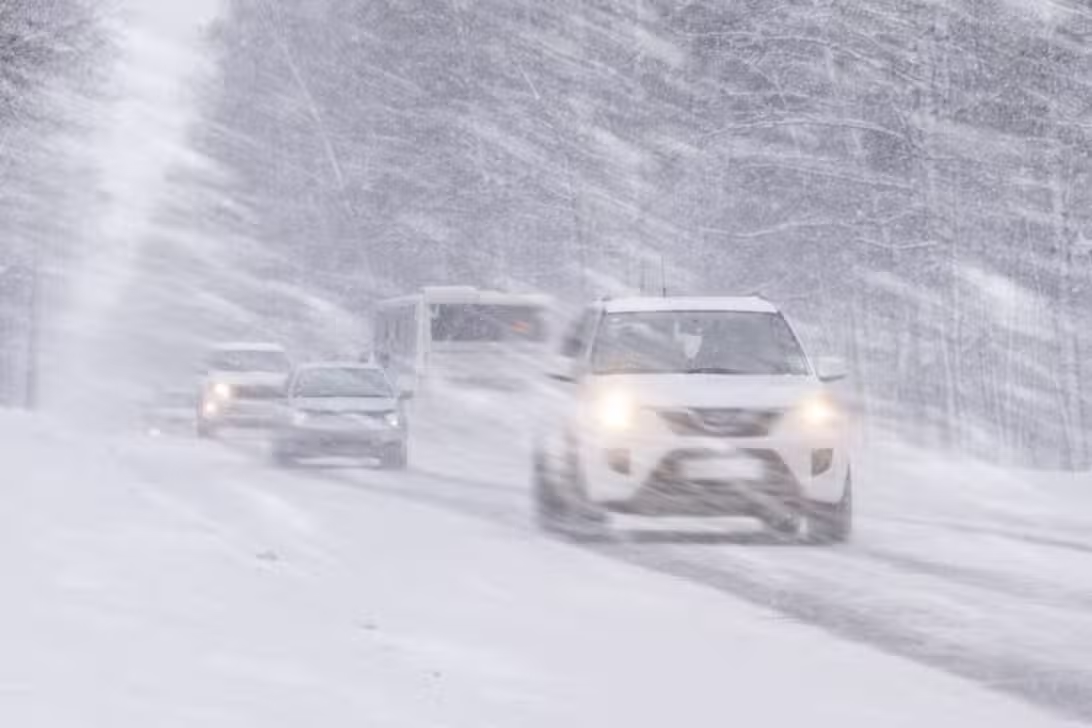
A mass collision involving more than a hundred vehicles paralyzed the highway Interstate I-196, in the west of Michigan,
Local authorities confirmed that the pileup resulted in an estimated number of injuries between nine and twelve people, all with injuries considered mild to moderate. Felizmente, there were no fatalities recorded at the site, despite the magnitude of the accident that completely blocked the road for approximately eight hours.
The emergency response was immediate, with crews using school buses to transport uninjured drivers to a local gymnasium that served as a temporary shelter. The accident, which began at around 10:20 am local time, exposed the vulnerability of road infrastructure in the face of sudden and extreme weather events.
The dynamics of the series pileup
Reports from witnesses and drivers involved describe a scenario of drastically reduced visibility, which dropped to close to zero in a matter of minutes. Muitos drivers stated that, even when reducing speed to less than 40 km/h, it was impossible to see the vehicles immediately ahead, which triggered a rapid succession of impacts. The chain of collisions involved everything from passenger cars to dozens of semi-trailer trucks, which, when stuck across the road (“jackknifed”), contributed to the total blockage and the complexity of the rescue and cleaning operation.
The operation to clear I-196 was a complex logistical effort that lasted all day. Dezenas of tow trucks were mobilized to remove the damaged vehicles, one by one, amid continuous snow and low temperatures. The highway, a vital artery connecting Grand Rapids to the coast of Lago Michigan, was only fully reopened in the late afternoon, after all debris had been removed and the runway had been checked for safety by maintenance teams.
The weather phenomenon behind the chaos
The main cause of the accident was lake effect snow, a localized and intense meteorological event that occurs when masses of cold air move over the warmer waters of the Grandes Lagos. In the case of I-196, the arctic air that passed over Lago Michigan generated narrow bands of extremely heavy precipitation, resulting in accumulations of 10 to 20 centimeters of snow within a few hours. Serviço Nacional of Meteorologia had previously issued warnings for the region, advising against non-essential travel due to dangerous conditions. Além heavy snow, strong winds caused the phenomenon of “blowing snow”, where loose snow is lifted off the ground, further reducing visibility and creating a disorienting landscape for drivers. Temperatures, which hovered around -10°C, accelerated the freezing of the runway, making braking extremely dangerous and ineffective, which amplified the scale of the pileup.
Coordinated response from authorities
Polícia Estadual of Michigan assumed coordination of the response to the incident, ordering the immediate closure of the highway in both directions to ensure the safety of rescue teams and those involved.
Delegates from Condado of Ottawa were instrumental in managing drivers who were trapped in their vehicles, advising them to remain sheltered until alternative transport arrived.
Firefighters and paramedics faced the challenge of providing first aid in adverse weather conditions, prioritizing care for the injured.
Most occupants were able to exit the vehicles without assistance, which facilitated rescue work and avoided the need for complex extrication operations.
Direct impact on regional traffic
The total blockage of I-196 caused a ripple effect throughout the region’s road network. Rotas alternatives, such as US-131, were severely congested, experiencing significant delays and even minor accidents resulting from the sudden increase in vehicle flow and the same adverse weather conditions. Empresas of logistics and freight transport reported substantial disruptions and delays in their operations, affecting the local supply chain.
Transport authorities worked to guide drivers through traffic applications and electronic signage, suggesting detours and informing them about the progress of road opening. The gradual reopening of the highway only occurred after a thorough safety inspection and the application of salt and sand to mitigate the formation of ice on the road, ensuring that conditions were safe for traffic to resume.
Reinforced security recommendations
Following the incident, public safety authorities tightened guidelines for winter driving, distributing warnings about the risks of sudden “whiteout.” Polícia Estadual emphasized the importance of drivers equipping their vehicles with emergency kits containing blankets, water, food and a cell phone charger, preparing for possible isolation situations on the road.
Support from local communities
Disaster response was not limited to government agencies. The communities of Hudsonville and Zeeland demonstrated great solidarity, offering crucial support to the relief operations. Escolas locations opened their doors to act as temporary shelters, welcoming hundreds of drivers displaced by the accident.
Volunteers quickly organized the distribution of water, snacks and hot drinks in the gymnasium that served as a meeting point, offering comfort and assistance to those waiting for the road to be cleared or news about their vehicles. Essa community mobilization was essential to mitigate the discomfort and anxiety of those involved.
Current status of the highway
I-196 has operated normally since its full reopening. Equipes maintenance personnel continue to monitor the state’s major highways as winter weather advisories remain in effect in several areas of Michigan, with the possibility of further lake-effect snow events in the coming days.