

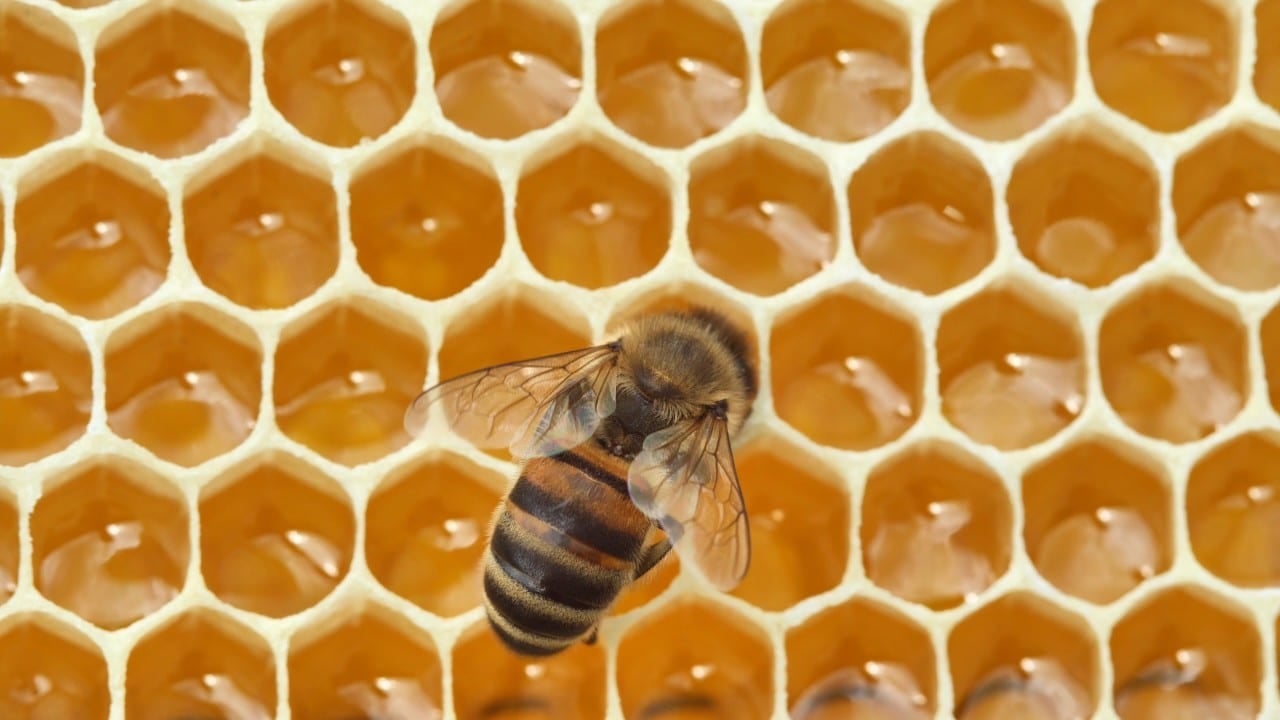
An unusual situation forced a family to temporarily abandon their apartment in an urban area of Espírito Santo. What began with the sporadic presence of bees evolved into a surprising discovery: a beehive of gigantic proportions was installed in the kitchen ceiling, containing a reserve of approximately 40 liters of honey. The incident, reported by Brenda Venturini, exposed the risks of living so closely with insects, especially given her daughter’s severe allergy to stings.
The family realized that the problem was more serious than they imagined when the insects began to appear from unlikely places, such as sockets and lamps. The frequency of the bites on the child, who required medical attention on more than one occasion, made staying in the property unsustainable. The decision to temporarily relocate was made to ensure the safety of residents while a permanent solution was sought.
The intervention of a professional beekeeper was crucial in resolving the impasse. Removing the hive required breaking part of the roof structure, revealing a swarm with thousands of individuals and impressive honey production for an urban environment. The case serves as a warning about the importance of building maintenance and correct action when identifying the presence of bee colonies in homes.

The first signs of the hidden colony
The initial signs of the invasion were subtle but worrying. Brenda’s daughter began to suffer recurring bites at home, a strange occurrence for an apartment without a yard or dense vegetation nearby. The family, initially, was unable to identify the origin of the insects, which seemed to appear out of nowhere. The persistence of the attacks and the child’s allergic reaction raised the alarm that something more serious was happening inside the structure of the property.
On closer inspection, Brenda’s husband located a small opening in the building’s exterior wall, where bees were coming and going in a constant stream. The situation worsened drastically when a neighbor, also bothered by the movement of insects, decided on his own to seal the passage. Essa action blocked the bees’ escape route, which, in search of a new exit, invaded the family’s apartment in large numbers, making the environment hostile and dangerous.
The complex bee rescue operation
Faced with the escalation of the problem, the family contacted a specialized beekeeper to safely remove the colony. The professional used appropriate equipment and specific techniques to manage the swarm without causing a major commotion or putting residents at risk. The first step was the use of a fumigator, which releases non-toxic smoke to calm the bees, reducing their aggressiveness and facilitating access to the hive.
The work was meticulous and lasted several days, given the complexity of accessing the colony housed between the ceiling and the slab. Foi necessary to carefully break the kitchen plaster to expose the honeycombs and nest structure. The main objective of the operation was not to exterminate the insects, but rather to rescue them and transfer them to an appropriate location, such as an apiary, where they could continue their ecological role without posing any danger.
Each part of the hive, including the brood combs and the queen bee, was carefully removed and packed in special boxes for transport. Esse procedure guarantees the survival and reorganization of the colony in its new habitat, a fundamental practice for the preservation of these important pollinators.
A surprising structure and honey production
When fully exposed, the size of the hive surprised everyone involved, including the beekeeper himself. The structure spanned a considerable area of ceiling, a complex wax construction that housed tens of thousands of bees. The amount of honey found, around 40 liters, is equivalent to approximately 54 kilos, an extraordinary volume for a colony that developed in an environment as restricted and atypical as the ceiling of an apartment. Essa massive production indicates that the swarm had been established at the site for a considerable time, possibly more than a year, working continuously and efficiently. Para If you have an idea, a single bee produces, in its entire life, less than a teaspoon of honey, which demonstrates the collective effort of an immense population of workers to accumulate such a reserve. The discovery transformed a risky situation into a fascinating example of nature’s ability to adapt and be productive.
Challenges after swarm removal
The removal of the hive was just the beginning of a new phase of challenges for the Venturini family. With the kitchen ceiling partially destroyed, reconstruction work was necessary to restore normality to the home.
Shortly afterwards, a strong odor began to emanate from the rooms, indicating that the problem had not yet been completely resolved. The origin of the bad smell was worrying and led to new intervention in the structure of the property.
When opening the walls of the rooms, residents were faced with another unexpected scene: thousands of dead bees were trapped inside the masonry. Esses insects probably got lost or got stuck during the confusion caused by blocking the external exit.
Removing dead insects and thoroughly cleaning the internal cavities were essential to eliminate the odor and prevent other problems from arising, such as attracting new pests. The cleaning and repair process lasted for weeks, delaying the family’s definitive return.
Expert advice for similar cases
Experts and authorities, such as Corpo of Bombeiros and Polícia Ambiental, are unanimous in their recommendations for situations involving swarms of bees in residential areas. The main advice is to never try to remove the hive yourself, as bees, especially the Africanized bees common in Brasil, can become extremely aggressive in defending their nest, resulting in massive and potentially fatal attacks.
When identifying a hive, the correct procedure is to isolate the area, keep children and pets away and immediately contact a professional beekeeper or the competent authorities. It is essential to avoid actions such as throwing water, poison or, as in the case reported, closing the insects’ access routes, as this only increases agitation and the risk of serious accidents.
The vital role of bees and the importance of conservation
Despite the disruption and danger that a beehive can pose in a home environment, it is crucial to remember the indispensable role that bees play in the environment. Elas are responsible for pollinating around 75% of the world’s agricultural crops, being essential for food production and maintaining the biodiversity of ecosystems.
For this reason, the most recommended approach is always the removal and relocation of the swarm, rather than its extermination. The work carried out by the beekeeper in the Venturini family’s apartment is an example of responsible management, which solves the residents’ safety problem while ensuring the survival of the colony, which was transferred to a suitable breeding facility, where it can prosper and continue its important work in nature.