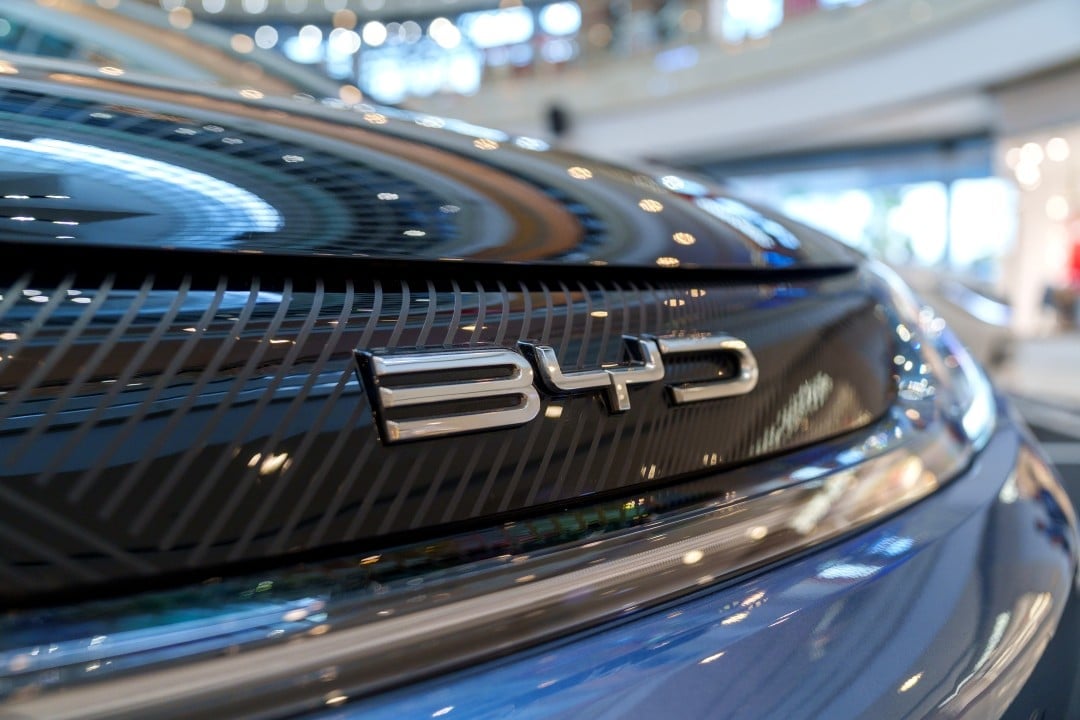
BYD established itself as a leader in the market for electric and plug-in hybrid vehicles in the México, controlling around 70% of sales in these segments. Mesmo with the entry into force of tariffs of up to 50% on imports from countries without a trade agreement, such as China, from January 1, 2026, sales continue to grow. Affordable prices and government incentives explain this rapid expansion among middle-class consumers.
BYD’s sales nearly doubled last year, driven by models like the Dolphin Mini. Esse electric compact attracts urban buyers looking for alternatives to the constant increase in fossil fuels. The share of electric and plug-in hybrid vehicles in new car sales reached 9% in the country.
The Mexican government approved the tariffs in December 2025 to protect local industry and meet external pressure. However, Chinese manufacturers absorb some of the additional costs to maintain competitiveness.
BYD’s dominance in the electrical segment
BYD accounts for seven in every ten electric or plug-in hybrid vehicles sold in the México. Essa leadership reflects the strategy of offering affordable models in a market still little explored by large traditional automakers.
The Dolphin Mini stands out as the brand’s most popular model. Ele costs about $2,000 less than direct competitors such as the Chevrolet Spark EUV and attracts price-sensitive buyers.

Limited impact of trade tariffs
The 50% tariffs came into effect at the beginning of 2026, but analysts point out that the effect on sales will be reduced. Fabricantes Chinese companies, including BYD, chose to absorb part of the extra costs rather than pass them on in full to consumers.
Sellers of the brand reported modest increases, of a maximum of 15 thousand pesos per unit. Essa strategy preserves the attractiveness of models in a price-sensitive market.
Industry executives say that large Chinese players continue to bet on México. Eles prioritize sales volume even with temporarily lower margins.
Government incentives favor adoption
The Mexican government offers tax exemptions for electric and plug-in hybrid vehicles. Esses benefits include federal tax exemption on purchase and income tax deductions.
Some states eliminate annual road taxes and emissions testing for these models. On days of vehicle restrictions due to air quality, trams circulate freely in large cities.
- Total exemption from federal tax on acquisition;
- Deduction of up to 86% on the value of the vehicle between 2025 and 2030;
- Reduced fees for installing public charging points;
- Commercial rate dedicated meter program for residential charging.
Affordable financing boosts sales
Low interest rates make it easier to buy Chinese vehicles. BYD offers financing with rates starting at 7.9% per year, below the market average, which varies between 13% and 14%.
More than 60% of Chinese car sales in México involve credit in the recent period. Bancos as BBVA and Banorte participate in these operations with advantageous conditions.
These lines of credit compensate for possible price adjustments resulting from tariffs. Consumidores maintain access to extended installments and reduced payments.
Limited presence of traditional automakers
American and Japanese automakers invest little in the Mexican electrical segment. General Motors, Ford and Nissan sell few electric models in the country, prioritizing combustion vehicles or conventional hybrids.
Ford sells the Mustang Mach-E at a premium of 10 thousand dollars in relation to the price in the Estados Unidos. Nissan discontinued the sale of Leaf three years ago.
Tesla recorded less than 4,000 units sold in 2024, a volume lower than that of BYD only in pure electric vehicles. Esse scenario opens up space for Chinese brands specializing in batteries.
Expansion of charging infrastructure
The charging network grows at México, supported by public and private investments. BYD plans to implement its fast charging technology from April 2026.
The brand’s flash charging system promises 400 kilometers of autonomy in five minutes of charging. Essa solution is equivalent to the supply time of fossil fuels.
Companies like Vemo, partner of Uber, expand their electric fleet with Chinese models. Most of the company’s electric taxis use vehicles from BYD and JAC.
Growth of Chinese imports
Imports of Chinese electric and plug-in hybrid vehicles jumped from less than 500 units in 2021 to almost 100,000 in 2025. BYD accounts for more than 80% of this total.
Brands such as Chery and Great Wall are also advancing in the battery segment. The Mexican market represents an opportunity in emerging economies with infrastructure challenges.
Mass production at China reduces unit costs. Subsídios Chinese government and focus on exports complement the low price strategy.
Profile of Mexican consumers
Urban middle class buyers concentrate the demand for Chinese electric vehicles. Residentes from Cidade from México highlight fuel savings and reduced maintenance.
A dubbing agent traded her gasoline pickup truck for a BYD plug-in hybrid worth 463,000 pesos. Ela cites significant savings and competitive pricing as the main reasons.
Another example involves a tour guide who researched models for his elderly mother. The technological reputation and performance convinced the rural family to opt for the Chinese brand.
BYD models circulate in upscale neighborhoods such as Condesa and Polanco. Concessionárias multiply in commercial districts and advertisements appear at international airports.
Outlook for the Mexican market
Analysts project continued growth in Chinese sales in 2026. The absence of direct competition from other automakers maintains the competitive advantage.
The Mexican electromobility association criticizes the lack of investment from non-Chinese brands. Elas claim low demand, but the limited supply of models is questioned.
The total new vehicle market records a Chinese share of 20% in 2025. Esse index also reflects progress in combustion models.
BYD consolidates its presence with crowded events and comparisons to premium stores. Executivos of the brand describe Mexican dealerships as busy spots on weekends.
