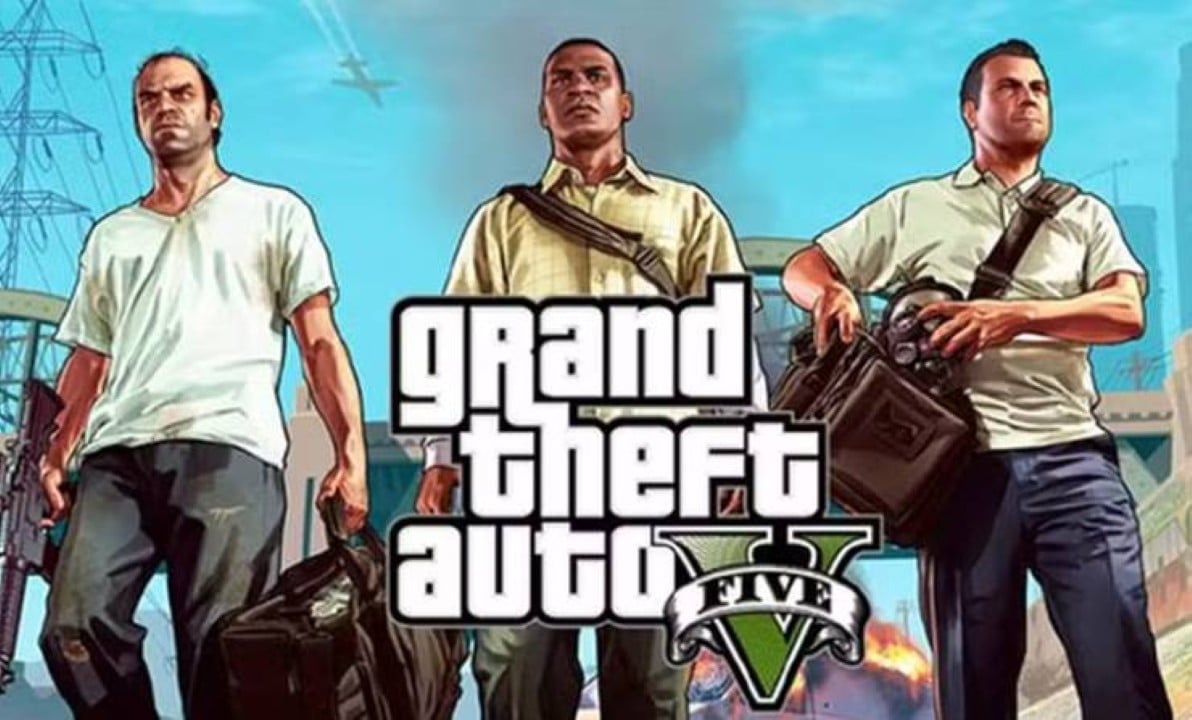
A 21-year-old developer from Rio called Wengel Hiago is recreating Rio from Janeiro within the GTA V universe with a high level of realism. The project began as a personal modification to the game and evolved into a larger ambition, encompassing not only the capital, but also neighboring metropolitan regions. Inicialmente focused on elements such as police vehicles and Brazilian uniforms, the work gained prominence on social media following test videos released in 2025.
The initiative uses public 3D scanning data from the city to ensure accuracy in the reproduction of streets, buildings and relief. The map in development allows players to explore the environment on a full scale, with special attention to the details of everyday urban life. The proposal is now moving forward to become an independent game, developed at Unreal Engine 5 and with free access planned.
Wengel Hiago identified gaps in previous modifications available for GTA V.
Project origin
Wengel Hiago’s work began about three years ago as studies and technical tests. Ele already produced smaller modifications, such as police cars and national uniforms, but lacked a map that adequately represented the urban space.
The decision to move forward occurred in January 2025, when the developer chose to start by reproducing the Irajá neighborhood, at Zona Norte. Initial Testes showed feasibility to expand the scope, leading to the inclusion of larger areas.
Evolution into independent game
The project is no longer just a mod for GTA V after repercussions on social media. Vídeos statements reached millions of views, raising the creator’s profile to almost 50 thousand followers on Instagram.
A partnership signed with a specialized platform accelerated development. Migrating to Unreal Engine 5 allowed greater control over graphics and optimization of unique details.
The new format provides for a 100% online title, with no fixed narrative imposed. Jogadores will be able to define different roles in the virtual environment, generating community interactions.
Technical details of the recreation
The base of the map comes from scanning carried out by Instituto Pereira Passos in 2019. Esses data generates a 3D point cloud that reproduces buildings, roads and relief with high precision.
The team corrects Earth’s curvature through cartographic projections to adapt the model to the games’ flat environment. Elementos such as street signs, sidewalk textures and poles receive individual treatment to avoid excessive repetitions.
Interiors of public places, such as bus stations and airports, are prioritized in the initial phase. Common Residências may be added in later updates.
Everyday elements represented
The focus remains on fidelity to the daily aspects of the city. Veículos circulating, correct uniforms and urban ambiance form the core of the experience.
- Police cars with official livery
- Local security force uniforms
- Common national vehicles on the streets
- Authentic signs and road signs
- Varied facade and sidewalk textures
These items contribute to the feeling of immersion recognizable by residents.
Expanded geographic scope
The recreation extends beyond the municipal limits of Rio to Janeiro. Regiões as well as Baixada Fluminense, Niterói and Petrópolis are part of the current planning.
Mangaratiba and Itaboraí also appear on the extended map. Essa approach seeks to represent the state more completely.
A detailed neighborhood requires months of work even with a dedicated team. With ten focused professionals, it is estimated six months to complete a specific area.
Distribution platform
Access will occur via the Helix platform, available free of charge on Steam. Inicialmente restricted to PC, the title may gain console versions in future stages.
The online structure allows the community to define game culture. Papéis as a police officer, street vendor or train conductor are the participants’ choice.
Repercussion on the gaming community
Initial videos generated high engagement on social networks. The rapid growth of followers confirmed interest in the project among Brazilian players.
The expectation involves the release of a minimum playable version before the arrival of GTA VI. Esse schedule keeps attention on independent development.
The work highlights the technical capacity of national modders. Representação needs local settings attracts audiences seeking cultural identification in games.
Development challenges
Maintaining unique details takes considerable production time. Modularidade helps with repeatable objects, but much of it requires individual modeling.
Constant optimization ensures performance on varied hardware. Testes regulars adjust the balance between visual quality and fluidity.
Expansion prospects
Future updates may include more accessible interiors. Locais of large circulation remain priority for immediate immersion.
The community actively participates in the process through feedback. Sugestões help refine map elements under development.
The project demonstrates the potential of Brazilian mods on a global scale. Fidelidade to everyday life in Rio differentiates the initiative from other available recreations.
