

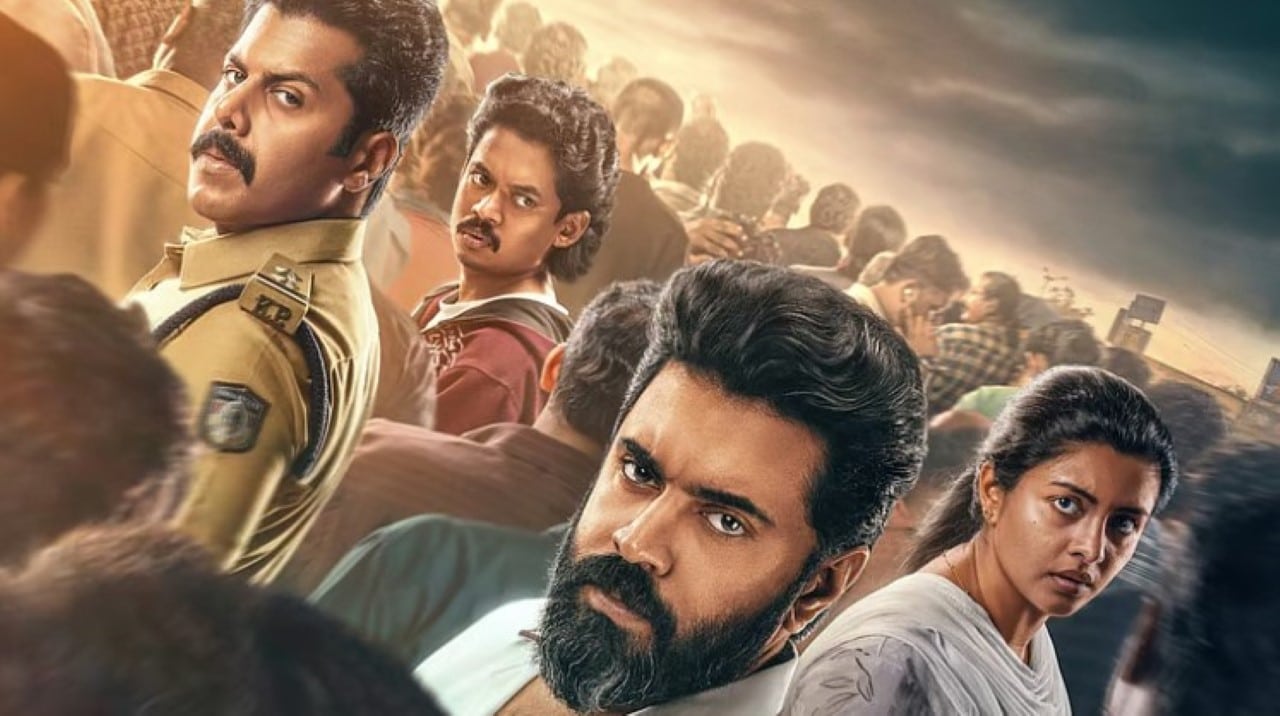
The highly anticipated thriller Baby girl, directed by Arun Varma and starring Nivin Pauly, debuted in theaters generating a wave of debate among critics and viewers. The production, which narrates the desperate search for a newborn missing from a hospital, has been the target of reviews that indicate a strong dependence on already known narrative formulas, compromising the suspense and originality of the work.
The plot unfolds in Hospital Good Shepherd, in Trivandrum, where the disappearance of a baby triggers a high alert and mobilizes a complex police operation. The script, written by the duo Bobby and Sanjay, tries to build an environment of tension and urgency, connecting different characters in a race against the clock. Contudo, the execution fails to deliver the depth expected for a psychological thriller.
From the opening moments, the narrative establishes a rhythm that, although it seeks to capture attention, ends up revealing its intentions in advance. The attempt to explore personal dramas and systemic failures within the health institution and the police force loses strength in the face of a structure that prioritizes clichés of the genre to the detriment of a more organic and surprising development of events.
The shadow of a previous success
Comparisons with the acclaimed film Traffic, also written by Bobby and Sanjay, became the main point of criticism. The structure of
Analysis of the script for Bobby and Sanjay
The script for Baby girl suffers from a predictability that underestimates the intelligence of contemporary spectators, already familiar with complex narratives available on various platforms. The clues about the central mystery are presented in an obvious way, and the twists can be anticipated long before they are realized on screen. Essa approach removes the element of surprise, essential to maintain engagement in a suspense film, transforming the experience into a journey without major tension spikes.
Furthermore, the subplots that should enrich the main story lack development and sound artificial. The connection between the different groups of characters seems forced, and their motivations are superficially explored. What should be a realistic thriller about a kidnapping ends up being diluted into a conventional hospital drama, where easy and convenient resolutions compromise the credibility of the narrative and the emotional impact of the search for the child.
The Cast in Focus: Standout Performances and Limited Roles
Nivin Pauly, one of the most celebrated actors of Malayalam cinema, has his role in the film classified as underutilized. Sua presence seems to function more as a commercial attraction than as an essential pillar for the plot.
The actor’s screen time is notably fragmented, and his character, Sanal, who leads a parallel quest for justice, does not receive the development necessary for his personal redemption arc to be convincing.
In stark contrast, actress Lijomol Jose delivers a powerful and authentic performance. Ela manages to convey her character’s anguish and despair with great precision, becoming one of the film’s main emotional support points.
Sangeeth Prathap also receives praise for his performance, demonstrating versatility by moving away from his usual comedic roles. Ele stands out in scenes of greater psychological tension and action, proving its ability in a dramatic register.
The technical conduct of Arun Varma
The direction of Arun Varma displays competence in technical aspects, with framing and a visually polished aesthetic. However, his direction cannot overcome the weaknesses of the script, resulting in a work that does not reach its maximum potential.
At several moments, the dramatic load is excessive, bordering on melodrama and weakening the urgency that a kidnapping thriller needs to work. The lack of a striking visual identity makes the film look like a collage of other productions of the genre.
Visual and sound aspects of the thriller
The cinematography uses cold tones to create the sterile and tense atmosphere of the hospital environment, a choice that works well in the first act. Contudo, this color palette remains unchanged even when the action moves to other locations, which creates visual monotony.
The soundtrack, in turn, uses generic compositions from thriller films, with intense beats that try to create a tension that the scenes themselves cannot build organically, resulting in an artificial effect.
The editing also presents problems, with abrupt transitions between the groups of characters that break the fluidity of the narrative. Temporal logic is occasionally ignored, with characters moving in implausible ways, which affects the audience’s suspension of disbelief.
Public reception and comeback attempts
Although the main plot is largely predictable, the script for Baby girl inserts some moments of red herring, known as misdirection, in an attempt to confuse the viewer. Essas sequences, when analyzed in isolation, are technically well executed, but their impact is neutralized by the general context of the work, which is already saturated with cliché elements. Quando the final revelation takes place, the predominant reaction is indifference, as the construction of the mystery was done in a simplistic and uninvolving way. Nas social networks and film forums, the general perception is one of frustration, with many comments pointing out that the film has good intentions, but fails to deliver high quality entertainment, leaving a social message that sounds forced and superficial.
Challenges for the genre in Malayalam cinema
The release of Baby girl serves as an important case study for the Malayalam film industry, known for its innovation and realism. The film demonstrates that the presence of big names in the cast and writing team is not enough to guarantee success if the story does not seek new paths and dare to move away from worn-out formulas.
The production reinforces that the public is increasingly demanding and resistant to narratives that rely excessively on past structures. Para thriller enthusiasts seeking originality and an intellectual challenge, Arun Varma’s work represents a missed opportunity to raise the standard of the genre and deliver a truly memorable experience.



