
A recent analysis by astrophysicist Avi Loeb, of Universidade Harvard, has brought to light a mystery involving the interstellar comet 3I/ATLAS, the third object confirmed to come from outside our solar system. The investigation focuses on a peculiar feature observed by space telescopes, which has fueled debates about its origin.
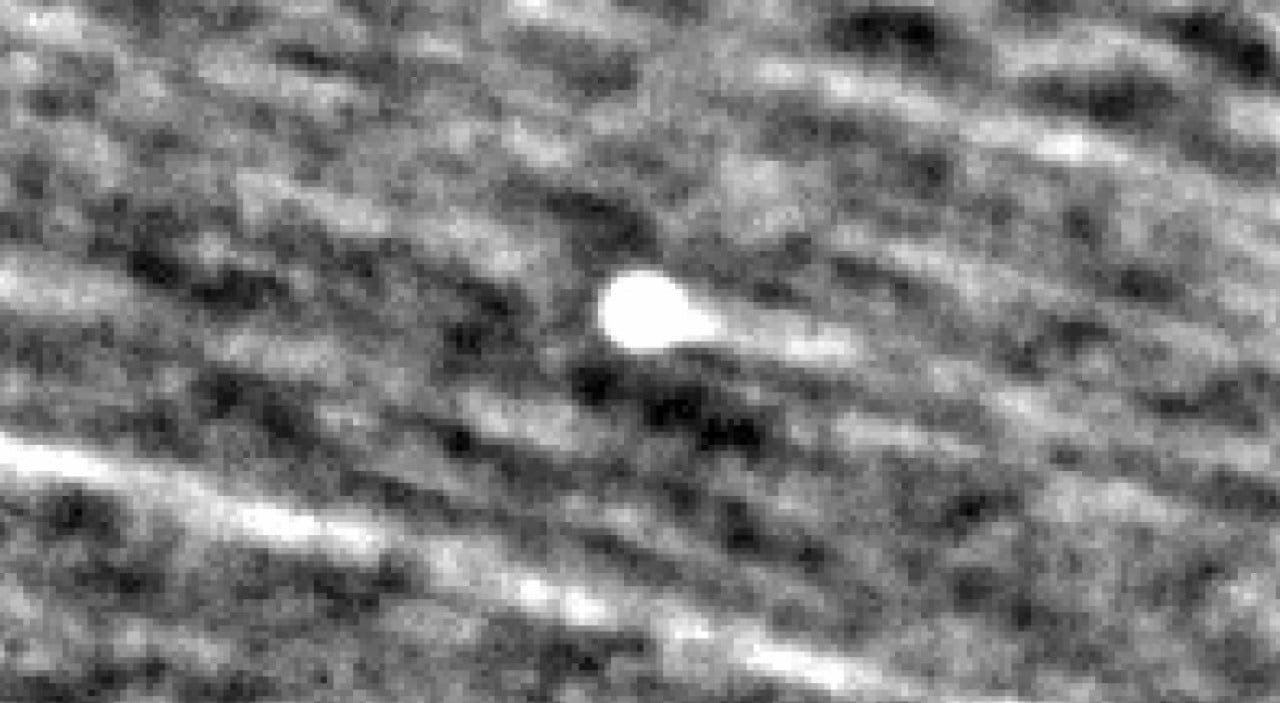
The observations, carried out by Telescópio Espacial Hubble, revealed the presence of three mini-jets of matter emanating from the comet’s nucleus. What makes the phenomenon extraordinary is its geometric arrangement, with an exact separation of 120 degrees between each jet, forming a symmetry that is rarely found in known natural processes.
This geometric configuration led Loeb to hypothesize that the jets could be a “technological signature”, suggesting that the structure could be artificial. The symmetry raises questions about whether the jets would be the result of a propulsion system designed for attitude control, similar to that used in human spacecraft for precise maneuvers in space.
Context of interstellar objects
3I/ATLAS was confirmed as the third visitor of extrasolar origin to be detected in our solar system, following a hyperbolic trajectory that proves its origins from another star. Sua identification occurred after the passages of 1I/’Oumuamua in 2017 and 2I/Borisov in 2019, each presenting unique features that challenged astronomers. ‘Oumuamua, for example, exhibited non-gravitational acceleration without the gaseous coma typical of a comet, sparking speculation about its nature, while Borisov behaved in a more conventional manner, with a pronounced tail of gas and dust.
Comet 3I/ATLAS, in turn, adds a new layer of complexity to this growing catalog of cosmic travelers. The object reached its perihelion, the point of closest approach to Sol, on October 29, 2025, and its closest approach to Terra occurred in December of the same year. Foi during this period of greatest activity, stimulated by solar heat, Hubble managed to capture detailed images of its jets and the luminous halo that surrounds it, providing crucial data for the analysis of its composition and dynamic behavior.
Details of observations at Hubble
The crucial images that revealed the jets’ symmetry were captured in a series of observations of Telescópio Espacial Hubble between November 30, 2025, and January 14, 2026. During this period, astronomers identified three distinct linear structures, or mini-jets, that extended up to 25,000 kilometers from the comet’s nucleus. Analysis of the projection of these structures on the sky confirmed that they maintained a consistent angular separation of 120 degrees from each other. Além of these three symmetrical jets, a fourth structure was detected, an anti-tail jet that extended approximately 250 thousand kilometers in the opposite direction to the main tail, pointing towards the Sol. Para To isolate and highlight these shapes, scientists applied advanced digital filters, such as Larson-Sekanina and a rotational filter, which removed the diffuse glow of the comet’s symmetrical halo, highlighting the linear features. The analysis also revealed that the jets exhibited a periodic oscillation of about 20 degrees, a movement consistent with the so-called “lighthouse effect”, caused by the object’s 7.1-hour rotation on its axis, tilted between 10 and 20 degrees with respect to Sol.
Technological signature hypothesis
The central argument of Avi Loeb lies in the statistical improbability of macroscopic natural processes generating such perfect symmetry. Ele maintains that the equidistant arrangement of the jets is a significant anomaly.
Loeb compares the configuration to a thruster system on a spacecraft. Três thrusters arranged at 120 degrees represent the minimum and most efficient arrangement for controlling the orientation of a rotating object in three dimensions.
Within an anomaly classification scale that the astrophysicist himself developed, 3I/ATLAS accumulates points for its multiple unusual characteristics, reinforcing the need for further investigation into its nature.
Natural explanations considered
The conventional explanation for jets in comets involves the sublimation of ices on the surface of the nucleus. Solar radiation heats the ice, which goes directly from a solid to a gaseous state, expelling gas and dust in directional jets.
However, these processes often result in irregular and asymmetrical structures. Fenômenos such as nucleus fragmentation or very rapid rotation can create complex patterns, but exact and persistent symmetry is considered rare.
Well-studied comets from our solar system, such as Hale-Bopp, have exhibited multiple jets with very irregular emission patterns. The persistence and equidistance observed in 3I/ATLAS challenge conventional models of cometary outgassing.
More skeptical scientists point out that the digital filters applied to enhance the images could have introduced or exaggerated optical artifacts, creating a false impression of symmetry. Além Furthermore, spectroscopic analyzes of the comet indicate a typical chemical composition, which strengthens the argument for a natural origin.
Reactions in the scientific community
The interpretation of Loeb has generated considerable skepticism among many astronomers. The prevailing view is that 3I/ATLAS is a fascinating interstellar comet, but that there is no conclusive evidence to justify the artificiality hypothesis.
Independent studies, some published on the arXiv preprint platform, sought to deconstruct the anomalies highlighted by Loeb, arguing that they are compatible with natural phenomena already observed, although rare. The total absence of radio signals or any other form of communication from the object reinforces the more conservative position.
Planned future observations
An astronomical alignment scheduled for January 22, 2026 will position 3I/ATLAS in an ideal configuration for observation, with an angle of just 0.69 degrees between Sol and Terra as seen from the comet. Essa geometry will allow telescopes to obtain sharper and more detailed images of the nucleus and its jets, helping to clarify its true three-dimensional structure and distinguish between natural oscillations and possible artificial modulations.
Importance for astrobiology
Each discovery of an interstellar object significantly expands understanding about the distribution of matter between stellar systems. Esses visitors offer a unique opportunity to study the chemistry and composition of other planetary systems without the need to send probes to interstellar distances.
Proposals like Avi Loeb, although controversial, encourage the scientific community to maintain an open approach to anomalies and prioritize the collection of high-quality data. The debate surrounding 3I/ATLAS drives the development of new observation and analysis techniques to characterize future extrasolar travelers, the number of which detected is expected to increase exponentially with the operation of new observatories, such as Vera Rubin.
