

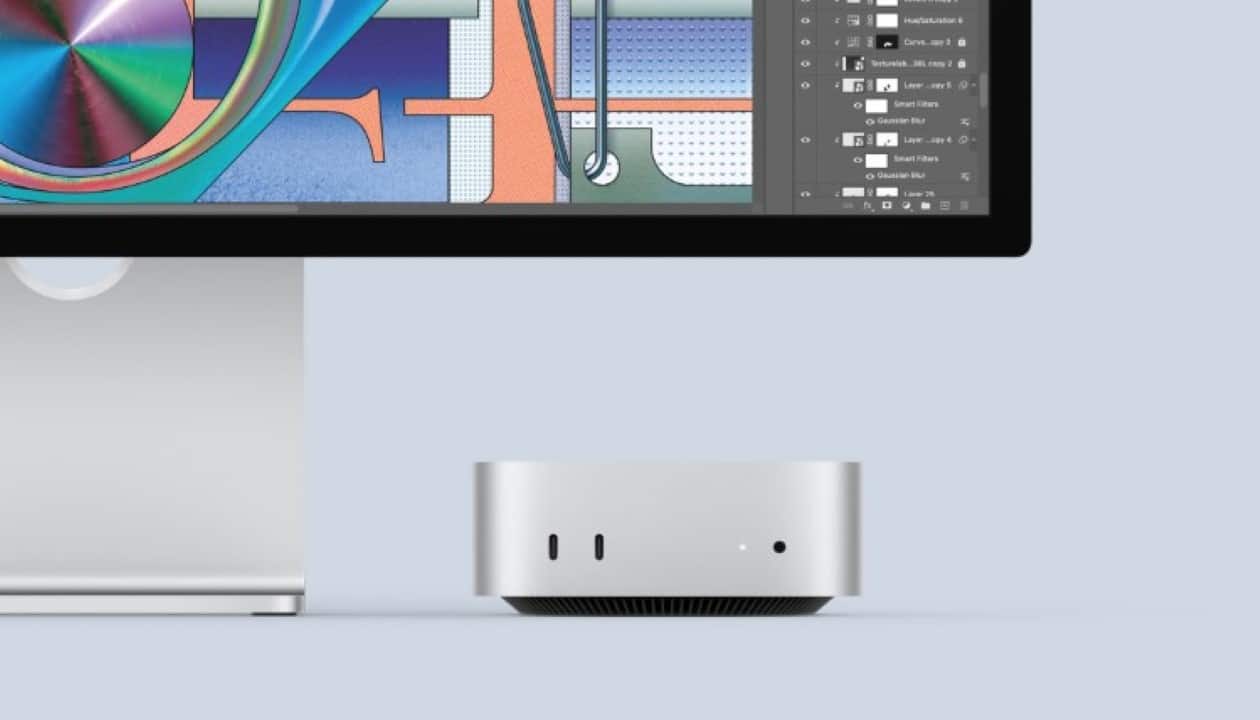
The high demand for the Apple Mac mini transformed the hardware scenario focused on artificial intelligence and advanced programming this week. The device is experiencing an accelerated sales pace in several global markets after the discovery that the Clawdbot, the autonomous agent of the Claude Code, can carry out the portability of complex codes with extreme ease. The movement occurs at a time of technological transition, where developers are looking for viable alternatives to the closed Nvidia ecosystem.
Several experts point out that the integration between Apple hardware and new code automation tools is changing the perception of cost-benefit in the sector. Anteriormente, Nvidia’s dependence on the CUDA architecture was seen as an insurmountable barrier for those who wanted to use the macOS ecosystem in heavy artificial intelligence workflows. With the new conversion facility, the Mac mini has become the preferred choice for its energy efficiency and technical robustness.
Efficiency of Clawdbot in converting architectures
The technical capacity demonstrated by Clawdbot surprised the developer community by porting an entire backend from Nvidia to other compatible languages in just thirty minutes. Este process, which previously required weeks of specialized manual work, can now be executed almost instantly and with high logical precision. The change directly impacts the need to maintain high-cost graphics cards just to ensure compatibility with specific parallel processing libraries.
The tool’s success lies in its ability to replace technical terms and adjust processing cores without compromising the integrity of the original data. By eliminating the need for complex translation environments, the Clawdbot allowed the Apple hardware to be tested in high-demand scenarios that were previously exclusive to CUDA-enabled servers. Esse technical advancement generated a wave of migration among professionals who prioritize the portability and stability of the Apple operating system.
- Accelerated processing of complex machine learning tasks.
- Drastic reduction in multiplatform software development time.
- Improved compatibility with modern open source libraries.
- Ease of executing language models on local hardware.

Competitive advantage of Apple Silicon and unified memory
The big difference that supports this explosion in sales is the unified memory architecture present in the M series chips. Isso means that tasks that require large volumes of data can be performed more fluidly than in systems assembled from separate components.
Recent performance comparisons show that the Mac mini equipped with the M4 Pro chip offers up to 64GB of unified memory, surpassing the capacity of dedicated memories on elite graphics cards that only offer 24GB. Essa technical difference is crucial for artificial intelligence developers working with extensive language models or high-resolution image processing. The device’s efficiency per watt also contributes to it being a quiet and powerful workstation for continuous use.
Learn more: PlayStation 5 Pro price drop accelerates digital retail sales and eliminates global stocks
Apple has invested heavily in optimizing its operating system to support these new market demands natively. The release of macOS Tahoe 26.2 brought specific drivers for the MLX platform, focused on high-performance machine learning within the Apple ecosystem. With support for Thunderbolt 5, data transfer bandwidth has reached unprecedented levels for compact devices, making it easy to connect to high-performance peripherals and speedy external storage.
Transformation in developer workflow
Professionals who adopt the Mac mini highlight the versatility of the Metal Performance Shaders (MPS) for graphics and computational acceleration tasks. The Essa library allows popular frameworks like PyTorch and TensorFlow to run with maximum efficiency on the Apple hardware, taking advantage of every processor core. The combination of optimized software and the ease of portability brought by the Clawdbot removed the last resistance that prevented the mass adoption of the Mac mini line in technology laboratories.
The renewed interest is also due to the device’s thermal stability, which maintains constant performance even under intense load for long periods. Diferente of built-in computers that require complex liquid cooling systems, the Apple’s compact design manages heat intelligently and efficiently. Isso attracts not only programmers, but also content producers and data engineers looking for reliable equipment to deliver critical projects within established deadlines.
- Increase in the daily productivity of software and data engineers.
- Reduction of operational costs with energy and hardware maintenance.
- Full integration with the brand’s mobile device ecosystem.
- Extended equipment life cycle due to construction quality.
Apple’s marketing strategy also quickly adjusted to capitalize on this new technology trend seen in the global community. The company began to highlight in its informative materials the ability of its processors to handle end-to-end artificial intelligence flows. Developer-focused Campanhas now emphasizes ease of setup and raw power available in a chassis that takes up little desk space.
Impact on the hegemony of Nvidia in the technology sector
The breaking of the exclusivity of the CUDA architecture represents an important milestone for the semiconductor and high-performance software industry. For years, Nvidia has maintained near-absolute dominance in the artificial intelligence processing market due to its library of proprietary tools. With Clawdbot proving that migration to other platforms is viable and fast, the market begins to diversify, benefiting manufacturers who invest in alternative and efficient architectures.
This paradigm shift forces fiercer competition, which tends to result in more affordable prices and faster innovations for the end consumer. The success of the Mac mini in this context serves as a clear sign that raw performance is not the only determining factor when choosing professional hardware. Ease of use, software integration and the ability to adapt to new standalone tools have become fundamental pillars for the commercial success of any modern computing platform.
On the same topic: New Apple system update optimizes urgent task management for iPhone users
The sales movement observed in recent days indicates that the global stock of the Mac mini may soon be restricted due to high demand. Revendedores Authorities report that demand for models with advanced memory configurations has tripled since tests with the Clawdbot were released. Essa trend is expected to remain stable as more professionals discover how to work around the software limitations that once tied them to a single brand of graphics processors.
Technical structure and support for artificial intelligence
Apple’s native support for artificial intelligence accelerators has been a key point in maintaining this continued sales growth. Através of frequent updates, the company ensures that the most used open source tools in the world have optimized performance on its chips. The commitment to privacy and local data processing also resonates positively with users who do not want to rely exclusively on cloud processing services for their daily tasks.
Engineers working on computer vision and deep neural networks are migrating their test environments to the Mac mini due to the reduced latency between components. Direct communication between memory and processing cores eliminates bottlenecks common in traditional PC architectures, where data needs to travel over slower buses. Essa technical advantage translates into faster results and a much more agile development experience for those dealing with large data sets.
Expanding specialized hardware market
The Clawdbot phenomenon and the resulting appreciation of Apple hardware mark the beginning of a new era in high-performance personal computing. Dispositivos that were once seen as just design or video editing tools now take center stage in cutting-edge technology development. The ease with which autonomous tools can adapt different operating systems for common tasks shows that interoperability will be the big theme of the coming years in the technology industry.
Analysts predict that other software companies will follow Claude Code’s example, creating even more powerful assistants to make the modern developer’s life easier. Enquanto this, Apple consolidates its position as a reliable hardware supplier for a new generation of professionals who are not tied to old standards. The Mac mini, with its small size and high firepower, symbolizes this change where efficiency and software intelligence go hand in hand to deliver superior results.
Full coverage: News (EN)
Official stores and logistics partners are already working to reinforce product supply before shortages affect the schedule of large technology companies. Interest is not just limited to individuals, but also entire IT departments looking to modernize their development infrastructure at controlled costs. The current scenario demonstrates that innovation often emerges from where it is least expected, combining quality hardware and artificial intelligence to solve historical compatibility problems.