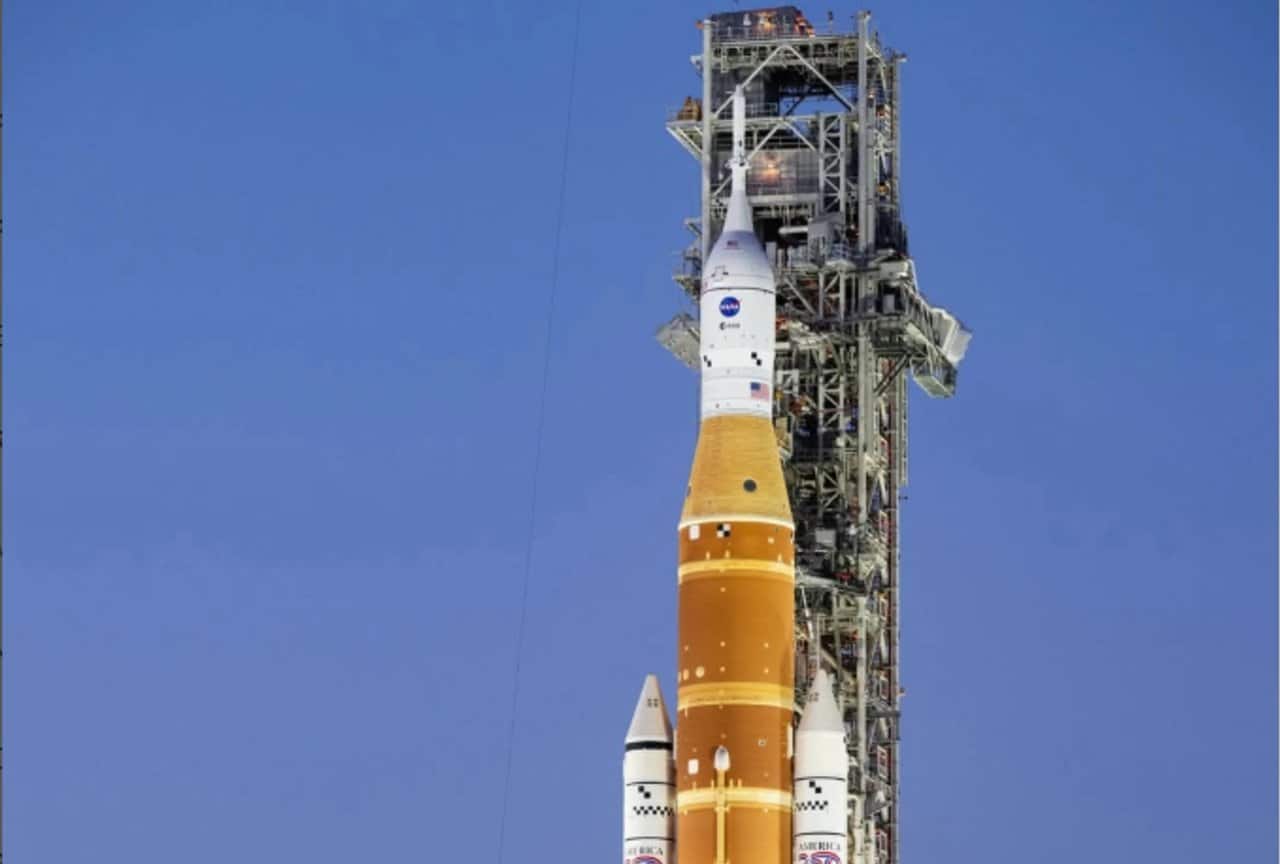
Anticipation builds for one of the most significant space missions of the upcoming year, as NASA officially targets September 2025 for the launch of its massive Space Launch System (SLS) rocket toward the Moon. This revised date marks a critical step in the Artemis II mission, designed to send four astronauts on a journey around Earth’s natural satellite, paving the way for future lunar landings. The endeavor represents humanity’s return to lunar orbit with a crew since the Apollo 17 mission in 1972, signifying a major milestone in space exploration.
The mission, a cornerstone of NASA’s multi-billion dollar Artemis program, aims to validate the Orion spacecraft’s systems with a crew aboard. It follows the uncrewed Artemis I flight in 2022, pushing the boundaries of human reach in space to a point farther than ever before. Preparations continue at the Kennedy Space Center in Florida, where extensive testing and integration are ongoing to ensure mission readiness.
Crew readies for historic lunar journey
The selected crew for the Artemis II mission is comprised of three American astronauts and one Canadian: Jeremy Hansen, Christina Koch, Victor Glover, and Reid Wiseman. These individuals are rigorously training for the 10-day orbital journey, which will test their endurance and the spacecraft’s life support systems in deep space. Their collective expertise and dedication are central to the mission’s success, building upon decades of spaceflight experience.
Christina Koch, one of the mission specialists, emphasized the profound significance of their voyage. “One of the reasons why these missions are so important is the discovery and the knowledge that we bring back to Earth, and that is the main goal. We have both lunar geological science and human research on this mission,” she stated, highlighting the dual objectives of scientific advancement and understanding human resilience in extraterrestrial environments. The crew’s insights will be invaluable for future long-duration missions to the Moon and beyond, including potential voyages to Mars.
Orion spacecraft undergoes rigorous pre-flight checks
The 322-foot-tall (98-meter) SLS rocket, fully assembled with the Orion capsule, underwent a significant readiness check in January 2024. Traveling at a mere 1 mile per hour (1.6 km/h) on its mobile launch platform, the towering vehicle slowly emerged from the gigantic doors of NASA’s Vehicle Assembly Building at sunrise, embarking on a deliberate 4-mile (6.4 km) trek to its launchpad. Hundreds of agency employees and contractors observed this meticulous process, which simulated key launch preparations.
This past rollout and subsequent tests, including crucial wet dress rehearsals, are integral to identifying any potential issues or setbacks well in advance of the crewed flight. The meticulous nature of these pre-flight activities underscores NASA’s commitment to astronaut safety and mission success, ensuring that all systems perform optimally under the extreme conditions of space travel. Such rigorous procedures are standard for human-rated spacecraft, guaranteeing reliability for the complex journey ahead.
Path to the moon: Key mission milestones and objectives
The September 2025 launch window is contingent on the successful completion of a comprehensive series of final tests and readiness reviews, including a critical general rehearsal expected to simulate the launch countdown. This full-scale simulation, which will occur approximately four days prior to any definitive launch attempt, is designed to uncover and address any remaining technical challenges. If unforeseen setbacks occur during this period, an initial launch window is anticipated to remain open for several days following the initial target. Should NASA be unable to launch within this window, subsequent attempts would be rescheduled, potentially for later in 2025, reflecting the dynamic and complex nature of crewed spaceflight operations.
Why Artemis II won’t land on the lunar surface
Despite its ambitious goals, the Artemis II mission is specifically designed for lunar orbit and will not attempt a landing on the Moon’s surface. Patty Casas Horn, NASA’s Deputy Lead for Mission Analysis and Integrated Evaluations, explained this decision simply: “The short answer is because it doesn’t have the capacity for that. It is not a lunar lander.” The primary focus of this mission is to demonstrate the Orion spacecraft’s performance and life support systems with a human crew in deep space.
This strategic approach aligns with NASA’s incremental philosophy for complex space endeavors. “Throughout NASA’s history, everything we do involves a certain risk, and so we want to make sure that risk makes sense and only accept necessary risk, within reasonable limits,” Horn added. The agency develops and tests capabilities sequentially, ensuring each component is validated before progressing to more complex phases. The Artemis II mission is specifically about the crew’s experience and the spacecraft’s reliability in preparation for future lunar surface expeditions.
Understanding the Artemis program’s ambitious vision
The Artemis program is NASA’s comprehensive initiative to return humans to the Moon, establishing a sustainable presence there, and ultimately paving the way for human exploration of Mars. It involves a series of increasingly complex missions, with Artemis I having successfully tested the uncrewed SLS and Orion system, Artemis II validating the crewed flight to lunar orbit, and Artemis III aiming for the first human landing on the lunar south pole since Apollo. This long-term vision requires innovative technologies and international partnerships.
Final preparations and launch window details
NASA’s extensive preparations for Artemis II include integrated system tests, astronaut training, and meticulous hardware checks. The Space Launch System, Orion spacecraft, and ground systems are undergoing continuous evaluation to meet the stringent safety and performance requirements for a crewed mission. These efforts ensure every aspect of the mission is thoroughly vetted before committing to a launch.
The target for September 2025 reflects a carefully considered schedule that prioritizes crew safety and mission success above all else. This revised timeline provides additional time for final testing and any necessary adjustments to the spacecraft and ground infrastructure. Such precision is paramount for a mission of this magnitude, which carries the hopes of a new era in lunar exploration.
While the primary launch target is set for September 2025, mission planners account for potential delays. Flexibility in the launch schedule is built into the program to accommodate weather conditions, technical issues, or other unforeseen circumstances. This adaptive strategy is crucial for complex space missions where numerous variables must align perfectly for a safe and successful launch.
