

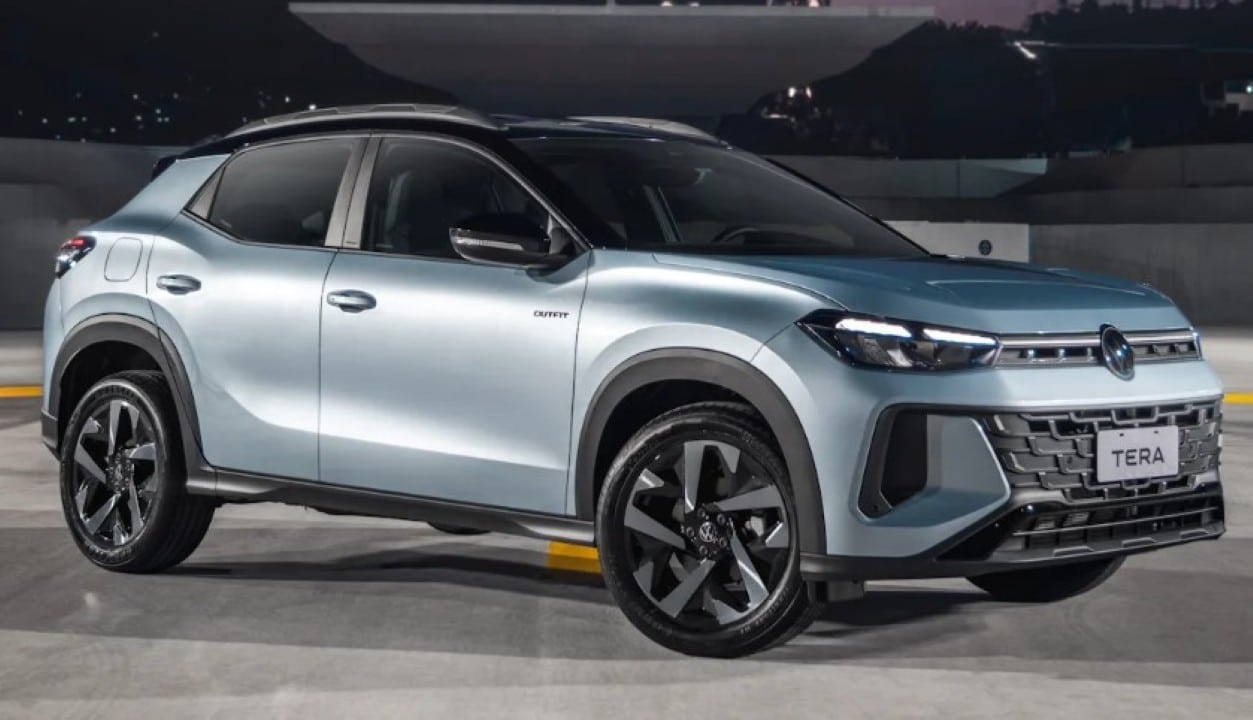
The Volkswagen Tera, launched in May, represents the German automaker’s latest bet in the entry-level SUV segment, a market driven by models such as the Fiat Pulse since 2021. The Este vehicle was designed to become a reference in its category, as did the Gol and the With a new body that does not share external panels with the Polo, its base, the Tera boasts a redesigned interior, inspired by the brand’s vehicles sold at Europa, promising freshness and modernity.
The basic version of the VW Tera MPI, initially priced at R$ 105,626, recently became more affordable after being included in the Essa cost reduction aims to position the SUV even more competitively, attracting attention to its value proposition and its differentiated design. The Volkswagen strategy is clear: focus on the Tera to compete directly with other compact SUVs, reinforcing its presence in the automobile scene.
This strategic move reinforces the importance of the model in the brand’s portfolio, demonstrating a significant effort to meet the demands of an increasingly demanding consumer. The commitment to the Tera highlights Volkswagen’s commitment to offering vehicles that combine innovation, accessibility and the brand’s DNA.
Renewed internal design and features

Volkswagen opted for a partially new layout for the interior of the Tera, moving away from the common design of the Polo, Virtus and Nivus line. The Este panel, although it presents an innovative design for the Brazilian range, incorporates elements from its “cousin”, the Skoda Kylaq. Essa approach resolves some of the criticism that the brand’s vehicles tend to have very similar interiors, introducing a feeling of originality and modernity.
Even in the entry-level 1.0 MPI manual version, there is notable care in the use of different materials and textures, despite being predominantly made of hard plastic. The 8-inch digital instrument panel is wrapped in a glossy black finish, which extends to the side air vents and the sides below the 10.1-inch VW Play multimedia center. The central Esta, positioned high, follows the trend seen in the brand’s more sophisticated models, such as the T-Cross, Taos and Tiguan, adding a touch of refinement to the environment.
To optimize costs in the entry-level version, the Tera MPI is equipped with manual air conditioning. However, the Volkswagen deserves recognition for maintaining physical buttons for each function, facilitating daily use without the driver having to be distracted by complex submenus. Nas doors, the design of the linings is unique, featuring a glossy black strip at the top and a central area with gray fabric for the armrest, as well as electric windows and mirrors, ensuring practicality.
Compromises between style and space
Measuring 4.15 meters long and with a wheelbase of 2.56 meters, the VW Tera has competitive dimensions, although the perception of internal space may be compromised. The body with a lower roof, which favors sporty design over spaciousness, makes the car appear smaller than it really is. The width of 1.77 meters and the height of 1.50 meters contribute to a look that is more similar to an elevated hatch.
This design decision, focused on aesthetics, has direct implications for the space available to occupants, especially in the rear. The one-piece front seats, similar to those used in entry-level Polo models, limit the field of vision for rear passengers and reinforce the feeling of a more compact environment. Além Additionally, the rear windows don’t roll down completely, a concession to exterior styling that affects functionality.
Comfort for three passengers in the rear seat is sacrificed, especially for those occupying the central area. In the MPI version, in particular, the simplifications are more evident: there are no air vents or USB sockets for the rear, features present in more expensive configurations. In place, there is just a small holder without a lid, ideal for a smartphone. Curiosamente, despite these omissions, the Tera includes roof handles, a detail not found on other MQB A0 platform vehicles on the market.
The rear doors also reflect the economy, without different fabrics or textures. Oferecem, however, power windows and a small storage compartment, which is not big enough for bottles, but useful for smaller items. The rear seats, in turn, are one-piece, allowing only the backrest to be folded down.
Trunk capacity and rivals in the segment
If the internal space for passengers does not stand out in direct comparison with some competitors, the trunk of the VW Tera presents itself as a positive point. Mesmo in the entry configuration, the automaker did not skimp on the finishing linings, covering the entire space with quality material. An extra plastic piece was added to protect the body against scratches when loading luggage, and right side lighting completes the features.
The trunk holds 350 liters, following the VDA standard. The Este volume places it behind rivals such as the Renault Kardian, which offers 410 liters, and the Fiat Pulse, with 370 liters, but still keeps it competitive within its compact SUV proposal. The rear suspension of the vehicle is of the torsion beam type, and the fuel tank has a capacity of 49 liters, contributing to adequate autonomy in urban use and on short trips.
The VW will have MPI in the entry segment
The positioning of the VW Tera in the entry-level SUV segment is strategic, seeking to combine modern design, technological resources and a competitive price, especially after the IPI reduction. The basic MPI version, with its well-thought-out interior and details that seek differentiation, demonstrates Volkswagen’s effort to create a vehicle that not only sells well, but is also perceived as a reference of style and functionality for the Brazilian consumer.