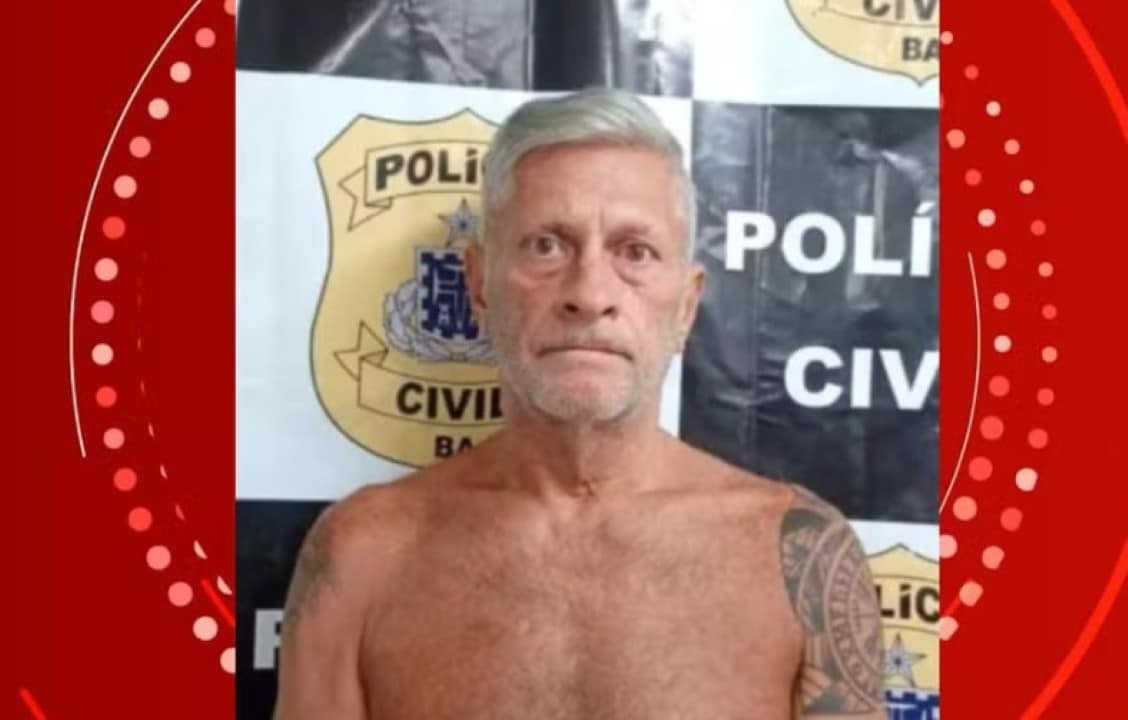
A São Paulo court has authorized the transfer of businessman Sérgio Nahas from a prison in Bahia to São Paulo. Nahas, who was recently apprehended, is set to serve an eight-year, two-month closed-regime sentence for aggravated homicide. This judicial decision paves the way for his return to the state where he committed the crime more than two decades ago.
The conviction stems from a fatal shooting involving Fernanda Orfali, his then-wife, in Higienópolis, a district in São Paulo’s western zone. The incident occurred 24 years ago, making it a long-standing case in the state’s judicial system that has finally seen its latest development. Nahas had been on the run for an extended period, evading justice until his recent identification and arrest.

His capture occurred earlier this year on the 17th of a recent month, following identification by facial recognition cameras operated by Polinter (Bahia’s Interstate Police Coordination) in Praia do Forte, Bahia. Ironically, this location was where Nahas and Orfali had spent their honeymoon before the tragic event that led to her death. At the time of his apprehension, authorities seized 13 sachets of suspected cocaine, three mobile phones, and a vehicle from him.
Extended Fugitive Status and Capture in 2025
Sérgio Nahas had been a fugitive for several years following his conviction, with his name placed on Interpol’s Red Notice list. This international alert system significantly expanded the search for him beyond national borders, reflecting the severity of the charges he faced. His capture in 2025 marked the culmination of a protracted pursuit by law enforcement agencies, finally bringing him into custody.
The businessman’s evasion of justice highlighted the challenges in apprehending individuals who intentionally flee to avoid their sentences. Interpol’s involvement underscores the global commitment to tracking down and prosecuting those accused of serious crimes, regardless of their attempts to disappear. His arrest provided a critical breakthrough in a case that had remained open for decades since the initial incident.
The Tragic Incident and Legal Proceedings
Investigations conducted by the police revealed that Fernanda Orfali had requested an end to her marriage to Nahas shortly before her death in 2002. She reportedly confronted him over his alleged abusive drug use and an extramarital affair, factors believed to have escalated the domestic dispute. This confrontation tragically preceded the fatal shooting, which ultimately led to Nahas’s long legal battle.
The legal process that followed the crime was protracted, with Nahas’s conviction for qualified homicide only occurring 16 years after the incident. Throughout the proceedings, the Public Prosecutor’s Office vehemently argued for Nahas’s conviction on charges of aggravated homicide, presenting evidence to support their claims of premeditation and intent.
In stark contrast, Nahas’s defense team maintained that Fernanda Orfali had committed suicide, attempting to shift the narrative away from a homicide charge. This conflicting account formed the core of the legal debate, prolonging the trial and leading to extensive scrutiny of forensic evidence and witness testimonies. The jury ultimately sided with the prosecution, confirming Nahas’s culpability in his wife’s death.
Details of the Crime and Allegations
The fatal shooting occurred in Higienópolis, a high-end neighborhood in São Paulo, adding a layer of public interest and scrutiny to the case. The alleged arguments between Nahas and Orfali prior to the incident painted a picture of a turbulent relationship marked by infidelity and substance abuse. These elements were crucial in the prosecution’s argument for qualified homicide, emphasizing the aggravated circumstances surrounding the death.
Evidence presented during the trial sought to disprove the defense’s suicide claim, highlighting the trajectory of the gunshot and other forensic details. The duration of the legal battle, spanning over a decade and a half, reflected the complexity of the case and the determination of both sides to present their interpretations of the events leading to Orfali’s death. The final verdict aimed to deliver justice for a crime that had deeply impacted Orfali’s family and the community.
São Paulo Authorities Prepare for Transfer
The São Paulo State Public Security Secretariat (SSP-SP) has confirmed that the Homicide and Personal Protection Department (DHPP), which submitted the request for Nahas’s transfer, will retrieve him in the coming days. This move signifies the final administrative steps to bring the convicted businessman back to São Paulo to begin serving his sentence. The seamless coordination between state police forces is essential for such inter-state transfers.
* Logistical Challenges: The transfer involves significant logistical planning to ensure the security of Nahas and the personnel involved.
* Legal Formalities: All legal documents and authorizations have been processed to facilitate a smooth transition between correctional systems.
* Public Interest: The case has garnered considerable public attention, necessitating a careful and transparent handling of the transfer process.
The DHPP’s active role in the transfer highlights the department’s ongoing commitment to ensuring that individuals convicted of serious crimes serve their sentences within the appropriate jurisdiction. This ensures accountability and reinforces the legal framework designed to uphold justice.
Broader Implications of the Case
The case of Sérgio Nahas serves as a stark reminder of the long reach of justice, even decades after a crime has been committed. The utilization of advanced technologies like facial recognition played a pivotal role in his eventual capture, demonstrating how law enforcement is increasingly leveraging modern tools to track down fugitives. This technological edge provides a new layer of security and efficiency in criminal investigations, closing cold cases and apprehending individuals who believe they are beyond the law’s grasp. The successful resolution, from capture to impending transfer, underscores the unwavering pursuit of justice for victims of violent crimes.
