
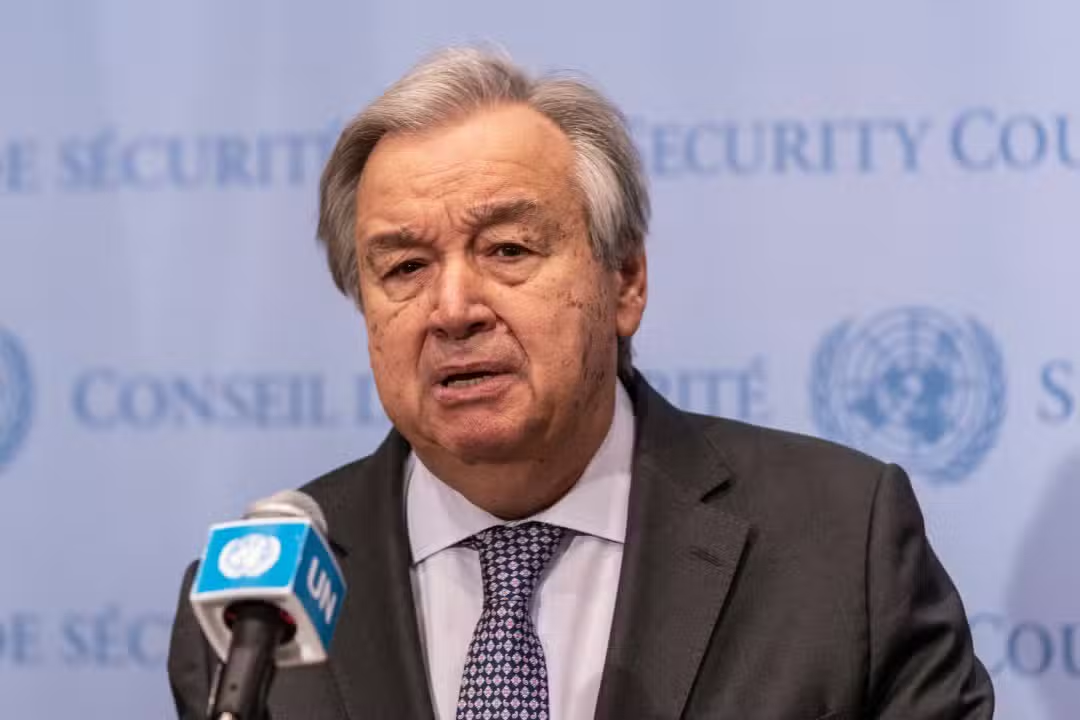
The United Nations faces an imminent risk of financial collapse, a stark warning delivered by Secretary-General António Guterres, who highlighted the severe liquidity crisis threatening the international body’s essential operations. This critical situation stems directly from the persistent failure of member states to pay their mandatory contributions, potentially jeopardizing the UN’s ability to maintain vital peace-keeping missions and humanitarian aid programs by the middle of 2025. The secretary-general has repeatedly called on member nations to honor their financial obligations, emphasizing that their continued delinquency could undermine global stability and the UN’s capacity to respond to urgent crises worldwide.
Guterres stressed that without prompt and full payment of these outstanding fees, the organization’s cash reserves could be depleted, leading to drastic cuts in services. Such an outcome would impact millions of people globally who rely on the UN for sustenance, protection, and development assistance. The current financial instability is not merely an administrative hurdle but a direct threat to the core mandate of the United Nations, which includes fostering peace and promoting human rights across continents.
Escalating financial pressures and operational consequences
The United Nations has been operating under increasing financial strain for several years, with the issue of unpaid assessments reaching critical levels. Member states’ contributions are crucial for funding the regular budget, which covers staff salaries, operational costs, and essential programs worldwide. When these payments are delayed or withheld, the UN is forced to borrow from other accounts or defer payments, creating a precarious financial juggling act.
This persistent shortfall directly impacts the delivery of aid and the effectiveness of peacekeeping initiatives. Missions in volatile regions may face resource constraints, potentially compromising the safety of personnel and the stability of the areas they serve. Humanitarian efforts, from delivering food to refugees to providing medical supplies in disaster zones, also face severe cutbacks, directly affecting vulnerable populations.
Urgent calls for member state compliance
António Guterres has intensified his appeals to member states, urging them to fulfill their financial commitments without further delay. He underscored that the responsibility for the UN’s solvency rests squarely with its members, whose collective inaction could lead to unprecedented operational challenges. The secretary-general’s message highlighted the critical need for predictable and timely funding to ensure the organization can effectively execute its mandated programs.
He outlined that reliable financial backing is not a discretionary contribution but a fundamental obligation enshrined in the UN Charter. The continuous cycle of delayed payments creates an environment of uncertainty, hindering long-term planning and efficient resource allocation. Guterres has emphasized that overcoming this financial hurdle requires a renewed commitment from all member states to the principles of multilateralism and shared responsibility.
Historical context of financial strains
The United Nations has historically grappled with financial challenges, but the current situation presents a uniquely pressing concern given the multitude of global crises demanding the organization’s attention. Throughout its history, periods of political disagreement among member states have often coincided with funding shortfalls, demonstrating a recurring pattern where geopolitical tensions translate into financial instability for the UN. This underscores the delicate balance between international cooperation and the practicalities of financing collective global efforts.
The organization’s budget operates on a system of assessed contributions, meaning each member state is legally obligated to pay a percentage of the UN’s expenses based on a formula that considers factors such as national income and population. However, compliance with these assessments varies significantly, with a core group of countries often shouldering the burden while others fall behind. This uneven distribution of financial responsibility contributes to the systemic vulnerability the UN faces today.
Specific financial shortfalls detailed
The current financial deficit is primarily driven by significant arrears from several key member states. These unpaid contributions accumulate over time, creating a substantial gap between the UN’s budgetary needs and its available funds. The impact of these shortfalls is multifaceted, affecting various aspects of the organization’s work:
* Regular budget: Funds essential administrative functions, human rights efforts, and economic and social development programs.
* Peacekeeping operations: Supports critical missions in conflict zones, providing stability and protecting civilians.
* International tribunals: Finances judicial bodies addressing war crimes and human rights abuses.
* Capital master plan: Covers maintenance and renovations of UN facilities, including the headquarters in New York.
The financial shortfall directly hinders the UN’s ability to innovate and adapt to new global challenges, forcing it into a reactive rather than proactive stance. Each delay in payment translates into postponed projects and reduced capacity to address emerging threats, from climate change to public health crises.
Pathways to enhanced financial stability
To mitigate the ongoing financial crisis, the United Nations is exploring various avenues for improving its financial health. Efforts include more rigorous follow-up with delinquent member states and internal austerity measures to optimize resource utilization. However, Guterres insists that these internal adjustments alone cannot resolve the systemic issue of unpaid contributions.
The secretary-general and his team are actively engaging in diplomatic dialogues with member states, stressing the importance of prompt payment not just as a financial obligation but as a reflection of their commitment to global cooperation. Furthermore, discussions revolve around potentially revising payment schedules and exploring alternative funding mechanisms, though such changes require broad consensus among all member nations.
Future outlook for UN operations
The future effectiveness and operational capacity of the United Nations hinge critically on the willingness of its member states to provide consistent and timely financial support. Should the current trajectory of unpaid fees persist into mid-2025, the organization risks being significantly hampered in its ability to fulfill its foundational mandate. A financially stable UN is indispensable for addressing global peace, security, and humanitarian needs in an increasingly interconnected and complex world.
