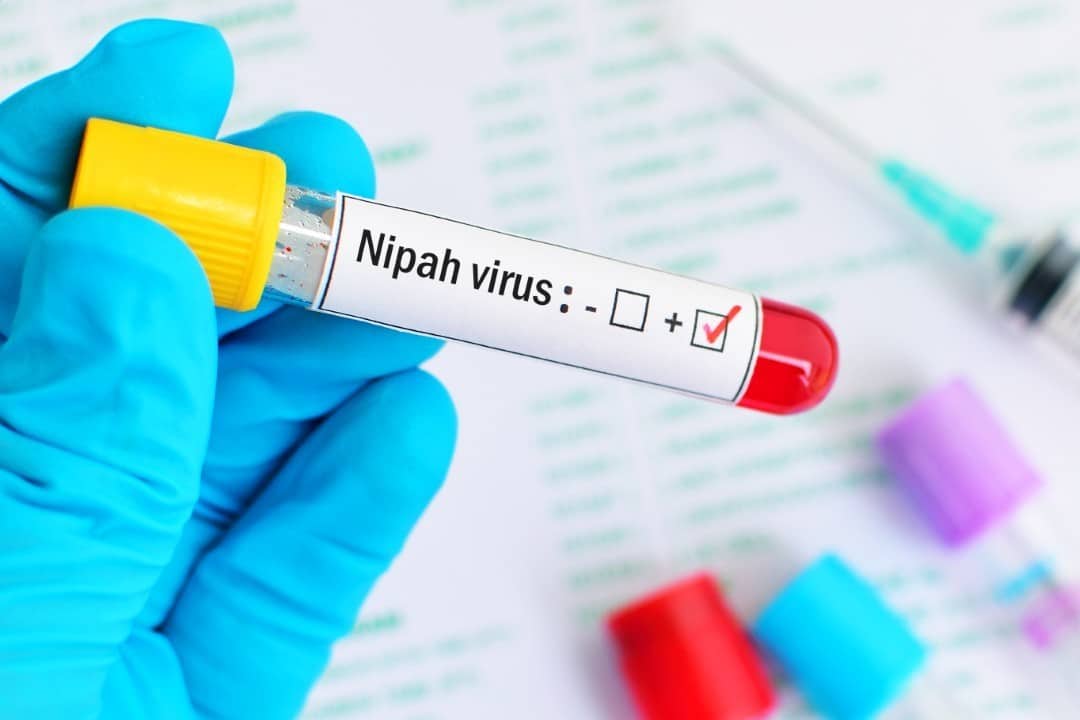
The emergence of new Nipah virus cases in India has triggered a global health alert, leading several Asian nations to reinstate stringent sanitary protocols reminiscent of the Covid-19 pandemic. This heightened vigilance comes amidst fears of a potential large-scale global health crisis, despite the virus’s low human-to-human transmissibility.
Authorities in Thailand, Nepal, and Taiwan, all bordering India, swiftly implemented airport security measures mirroring those seen during the Covid-19 pandemic. These proactive steps aim primarily at containing the spread of the pathogen, which, despite its limited person-to-person transmission, carries an alarmingly high fatality rate.
The virus’s origins and transmission routes
Discovered approximately three decades ago in Malaysia, the Nipah virus is a zoonotic pathogen. Infectious disease expert Renato Kfouri explained its origins, noting the pivotal role of the fruit bat in its transmission cycle. The initial identification in affected communities revealed a likely link to contaminated water sources.
Observations in local communities were crucial in recognizing the fruit bat as the primary carrier. Early investigations pointed to a cluster of cases where residents likely consumed water from a contaminated well, subsequently identifying bats as the source of the disease. This understanding has been fundamental in shaping preventive strategies.
Beyond direct contact with infected bats, the virus can also spread through the consumption of contaminated food or contact with other infected animals, particularly pigs. This multi-species transmission pathway complicates containment efforts and underscores the need for robust surveillance in affected regions.
High lethality rates prompt international alarm
Currently, the primary concern for global health authorities centers on the severe potential outcomes of Nipah infection. Estimates from the World Health Organization (WHO) indicate a mortality rate ranging between a stark 40% and 75%. This statistic highlights the grave danger posed by the virus to infected individuals.
Infectious disease expert Renato Kfouri further emphasized the severity of the situation, stating that approximately two-thirds of those who contract the virus ultimately succumb to the illness. The clinical spectrum of Nipah infection is broad, ranging from mild symptoms such as fever and headaches to severe and often fatal encephalitis and critical respiratory complications.
Despite the significant individual risk, the likelihood of a global pandemic is considered low compared to common respiratory viruses like Covid-19. Kfouri points out that the Nipah virus has not yet developed a significant capacity for person-to-person transmission. This characteristic substantially reduces its potential for widespread dissemination across populations, unlike airborne pathogens. Human-to-human transmission is rare, typically occurring only among close household contacts or healthcare professionals caring for infected patients.
Understanding Nipah symptoms and progression
The Nipah virus presents a worrying clinical spectrum, from asymptomatic cases to rapidly fatal complications. According to WHO data, the infection can progress swiftly, primarily impacting the respiratory and neurological systems, making early detection and intervention critical.
Initial symptoms often mimic those of a severe flu, necessitating heightened awareness. Patients commonly experience:
* High fever and headaches
* Muscle aches (myalgia) and sore throat
* Vomiting and general malaise
As the disease progresses, the condition can escalate to atypical pneumonia or acute respiratory failure, where the lungs lose their ability to adequately oxygenate the body. This rapid deterioration underscores the aggressive nature of the virus.
The most serious threat posed by Nipah lies in its capacity to cause acute encephalitis, an inflammation of the brain. Warning signs include dizziness, excessive drowsiness, and mental confusion. In severe instances, patients may experience seizures and can fall into a coma within a mere 24 to 48 hours, highlighting the rapid neurological compromise. While many survivors of encephalitis do recover, statistics indicate that about 20% of patients are left with residual neurological sequelae, such as personality changes or permanent seizure disorders, impacting their long-term quality of life.
Global vigilance and prevention efforts
As of 2025, no specific vaccine or targeted antiviral treatment exists for Nipah, making isolation and vigilant monitoring the most effective current tools against its spread. Kfouri highlighted that the virus’s characteristics and its natural host make large-scale international travel or introduction challenging. He noted that the primary mode of transmission involves fruit bats, a species not commonly found in many regions outside of Southeast Asia.
However, the specialist cautioned against complacency in an increasingly interconnected world. He stressed that in our globalized society, no one is entirely safe as long as diseases circulate anywhere. The ease and frequency of population movements, with people traversing the globe in less than 24 hours, create pathways for pathogens to emerge in new territories unexpectedly.
In the most recent 2025 outbreak, India confirmed infections among healthcare professionals who experienced rapid neurological complications. Although the Indian government reassured the public that the situation was under control and hundreds of contacts tested negative, the WHO continues to designate Nipah as a priority pathogen for research due to its significant potential to cause public health emergencies.
Brazil’s continuous monitoring in 2025
In Brazil, the Ministry of Health maintains continuous surveillance protocols designed to manage highly dangerous pathogenic agents, including the Nipah virus. The nation also actively collaborates with leading institutions such as Fiocruz and the Evandro Chagas Institute, bolstered by the support of the Pan American Health Organization (PAHO) and the WHO. According to the Ministry of Health, there are currently no indications of risk to the Brazilian population, and the situation remains under close observation.
Transmission of Nipah occurs primarily through the ingestion of food contaminated by the secretions of fruit bats, which are the main vectors of the virus. However, these specific fruit bat species do not inhabit Brazil, significantly reducing the probability of a local outbreak. While human-to-human transmission is rare, it can occur through direct contact with infected individuals or contaminated surfaces, emphasizing the importance of infection control measures.
Despite ongoing discussions among health authorities regarding potential defense strategies against the virus, infectious disease specialist Rosana Ritchamann advised that, at present, the issue should remain primarily within the purview of health authorities. She emphasized that there is no need for the general public in Brazil to be concerned. Instead, it is a matter for sanitary authorities to prepare for eventual clinical suspicions in travelers returning from affected regions, focusing on managing such cases through isolation measures and understanding incubation periods.
