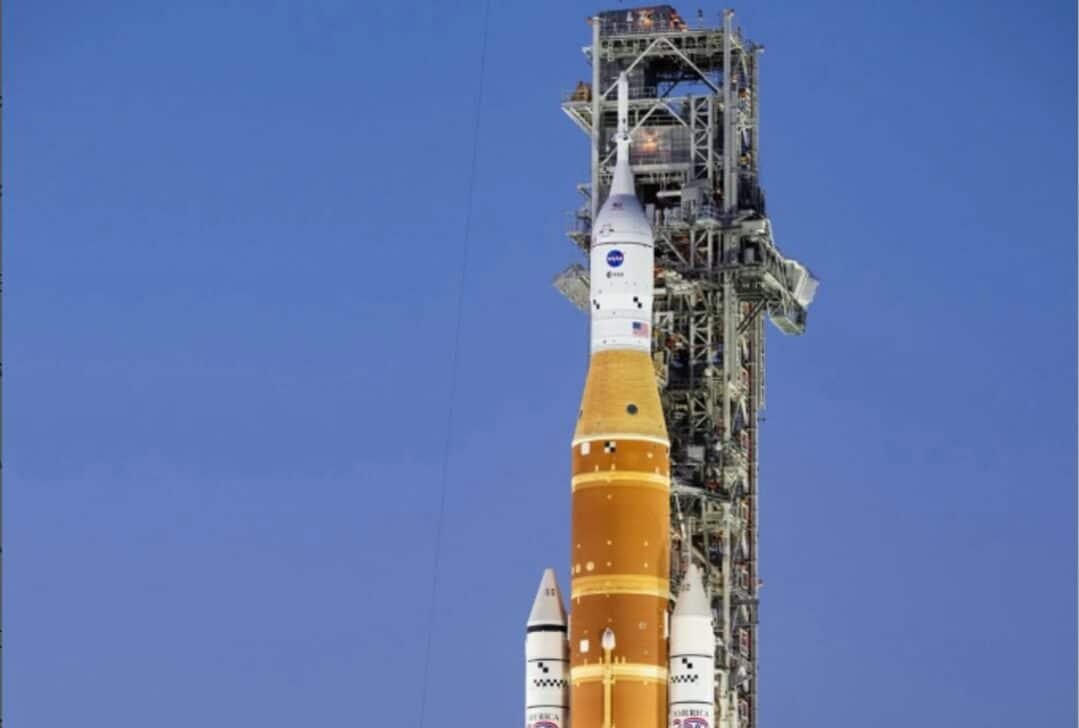
Agência Espacial Americana (NASA) began the final fueling test of the Space Launch System rocket (SLS) for the Artemis II mission on Centro Espacial Kennedy, on Flórida. Esse test, known as wet dress rehearsal, began on the night of February 2, 2026 and simulates all launch procedures, including the loading of cryogenic propellants.
Four astronauts are participating in the preparation for the first manned flight beyond low Earth orbit since 1972. The results of the test will determine the exact launch date, with a window open from February 8, 2026.
The mission represents the return of humans to the lunar environment after more than five decades. The current test is considered a critical step to ensure the safety of the crew and the success of the operation.
Details of the ongoing trial
The wet dress test includes the complete transfer of liquid hydrogen and liquid oxygen to the SLS tanks. Equipes techniques monitor all systems in real time to identify possible anomalies before the actual flight.
The procedure follows a strict schedule, with a simulated countdown that began hours before fueling. Técnicos constantly adjust parameters to replicate exact launch day conditions.
Crew in final preparation phase
The four astronauts selected for Artemis II have remained in quarantine on Centro Espacial Johnson, in Houston, since the end of January. Isolation protects the team from possible infections that could compromise the mission.
Reid Wiseman commands the operation, while Victor Glover acts as pilot of the Orion capsule. Christina Koch and Jeremy Hansen complete the group as mission specialists.
The crew has carried out intensive training in recent months, including emergency simulations and return to Terra procedures. Todos members underwent final medical evaluations before the period of imprisonment.
Profile of selected astronauts
Reid Wiseman accumulates previous mission experience on Estação Espacial Internacional. Ele coordinates the team’s activities throughout the planned ten-day flight.
Victor Glover also has a stint on the ISS and will be responsible for the Orion’s navigation systems. Sua participation marks a historic presence in lunar exploration.
Christina Koch holds the record for the longest stay by a woman in space. Ela will perform scientific experiments during the lunar flyby.
Jeremy Hansen represents Agência Espacial Canadense in the mission. Sua inclusion reinforces the international partnership in the Artemis program.
Technical structure of the SLS rocket
The Space Launch System is the largest rocket ever built by the Nasa since the Saturn V of the Apollo missions. Ele measures more than 98 meters in height and generates thrust in excess of 39 million newtons at takeoff.
Four RS-25 engines form the core stage, complemented by two side solid boosters. Esses components provide the power necessary to escape Earth’s gravity with the Orion capsule attached.
Orion capsule features
The Orion has life support systems designed for long duration missions. Ela includes advanced thermal protection capable of withstanding the high temperatures of atmospheric re-entry.
European modules provide additional propulsion and power to the ship. Painéis solar panels guarantee continuous supply throughout the lunar trajectory.
Planned mission trajectory
The Artemis II will follow a translunar orbit that will take the crew approximately 450 thousand kilometers from the Terra. The flight will include passage behind Lua, allowing full testing of deep communications systems.
The estimated total duration is approximately ten days, with return scheduled for Oceano Pacífico. Equipes recovering the American Marinha are already in position to rescue the capsule.
- Testing Deep Space Navigation Systems
- Free return trajectory validation
- Cosmic radiation data collection
- Checking communication with ground control
Historical importance of the program Artemis
The Artemis II mission marks the first crewed flight of the new Nasa lunar program. Ela paves the way for the human landing on the surface of Lua planned for Artemis III.
The program establishes the basis for sustainable exploration of the natural satellite. Parcerias international companies expand the technical and scientific capabilities of operations.
Weather conditions in Kennedy
Teams constantly monitor the weather off the coast of Flórida during the rehearsal. Temperaturas casualties recorded in February require special care with cryogenic propellants.
Strong winds or atmospheric instability may interrupt the procedure. Previsões indicate favorable conditions for completing the test in the next few hours.
Next steps after the rehearsal
If the wet dress rehearsal is completed successfully, Nasa will confirm the definitive launch date. Janelas alternatives are available until the end of February if adjustments are necessary.
Engineers will perform detailed analysis of all data collected during the test. Qualquer detected anomaly will receive immediate correction before the actual countdown.
