

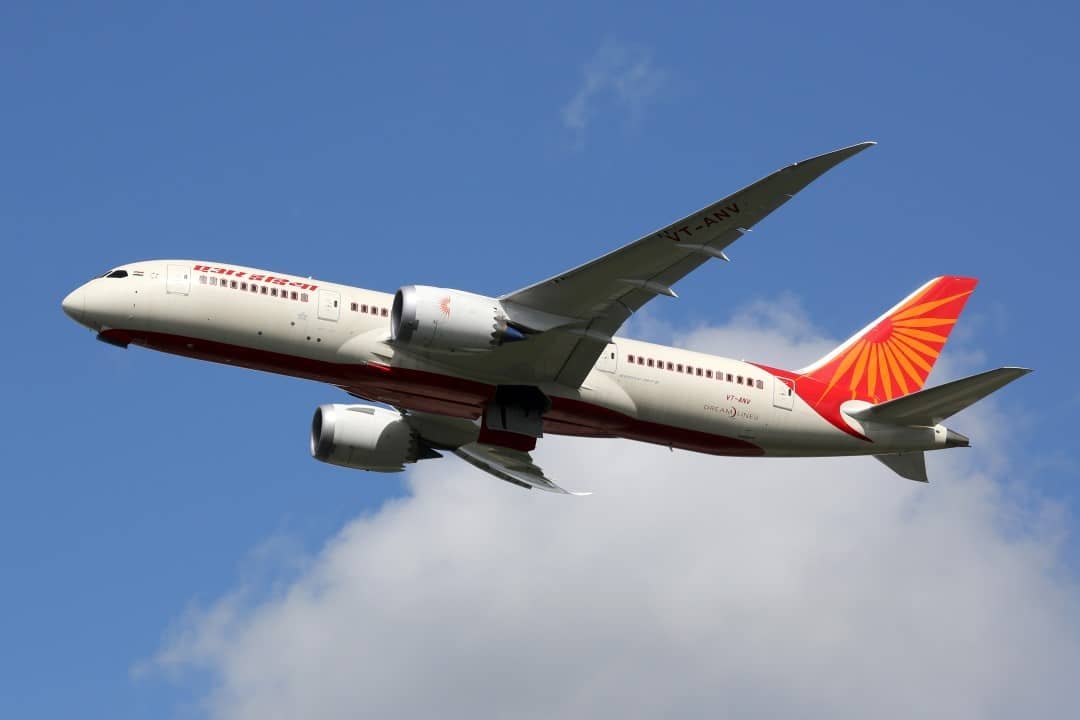
Diretoria Geral of Aviação Civil of Índia (Dgca) announced that it has not identified defects in the fuel control switch of a The aircraft had been immobilized following a pilot’s report about a possible failure during the engine starting procedure. The tests carried out followed the procedure recommended by Boeing and confirmed satisfactory functioning of the component.
The incident occurred on a flight originating from Londres that landed at Bengaluru the previous Sunday. Durante starting the engines for takeoff, the crew observed that the switch did not remain locked in the “run” position in two attempts with light vertical pressure. On the third attempt, the component stabilized, allowing the flight to continue without additional incidents under constant monitoring.
Air India immediately informed the regulator and prioritized verifying the concerns raised by the pilot. Boeing declared support for the review conducted by the airline. The conclusion of Dgca brought relief after initial attention motivated by the context of a previous investigation involving the same aircraft model.
Details of the reported incident
The crew recorded the abnormal behavior of the left fuel control switch when preparing the aircraft at Bengaluru. The component regulates the flow of fuel to the engines and has a locking mechanism to prevent unintentional movement. Apesar of the first two attempts failed to maintain the correct position, stabilization in the third allowed the operation to safely continue.
The pilots maintained heightened vigilance throughout the journey to the final destination. Nenhum additional problem arose in flight, and the landing occurred normally. The decision to immobilize the aircraft came shortly after the formal report, demonstrating the strict safety protocol adopted by the company.

Conducted verification procedure
Inspectors from Dgca carried out tests directly on the affected aircraft and on another similar unit in the fleet. Quando operated as instructed by Boeing, the switches remained firmly in the “run” position without migrating to “cut-off”. Essa position stops the fuel supply to the engines if activated improperly.
However, incorrect handling allowed easy movement of the component to the cutting position. The regulatory authority has deemed it to function properly under normal operating conditions. Como preventive measure, determined that Air India distribute the correct procedure to all crew members qualified for the model.
The exams took place in the presence of official representatives, ensuring transparency in the process. The airline had previously inspected similar switches across its entire fleet of Boeing 787s, with no reports of anomalies at the time.
Model context Boeing 787-8
The Boeing 787-8 Dreamliner has been part of the Air India long-range fleet for years, operating international routes such as Londres-Bengaluru. The model stands out for its fuel consumption efficiency and advanced technology in control systems. Milhares units fly globally with a consolidated operational history across several companies.
- Critical components such as fuel switches undergo rigorous certification before entering service.
- Locking mechanisms prevent accidental activation during critical phases of flight.
- Preventative maintenance follows schedules established by the manufacturer and regulators.
Manufacturers and authorities continually monitor the performance of these systems in real operation. Atualizações of procedures occur whenever necessary to reinforce safety standards.
Previous fleet inspections
Following directive issued by Dgca in 2025, Air India performed full fuel control switch checks on all Boeing 787s. The action met international recommendations for specific models of the Boeing.
Other Indian companies with similar aircraft also completed similar inspections during the period. The results reinforced confidence in the integrity of the installed components. Air India formally communicated the negative findings of those tests to the authority.
These preventative measures were part of the industry’s coordinated response to ongoing regulatory surveillance. Protocolos of maintenance remain aligned with global best practices.
Position of aviation experts
Independent consultants positively evaluate the design of the Boeing fuel switches for the 787. The mechanism prioritizes prevention of unintentional movement in normal cockpit conditions. Especialistas highlight the robustness of the system when operated according to standard training.
Experienced investigators express confidence in the component’s original engineering. Casos isolates of abnormal behavior are generally associated with specific operational factors. Treinamento appropriate and adherence to procedures minimize associated risks.
The aviation industry benefits from the constant exchange of information between manufacturers, operators and regulators. Field Feedback contributes to continuous refinement of critical components.
Measures adopted by Air India
The airline reinforced internal communication about the correct procedure for handling switches. Todos Boeing 787 pilots receive updated guidance issued by Dgca. Essa initiative aims to standardize practices between crews.
Furthermore, Air India maintains direct dialogue with Boeing for technical monitoring of the case. Verificações additions to other aircraft in the fleet occur proactively. Prioridade absolute safety of passengers and crew remains.
The company operates a diverse fleet of widebodies, including multiple Dreamliners on global routes. Protocolos of voluntary reporting encourages early identification of any potential anomaly.
Technical functioning of the component
The fuel control switch is located below the power knobs in the 787 cockpit. Sua spring-loaded action ensures automatic return to the safe position when released. Positive Travamento requires deliberate movement to change state.
In normal operation, the component maintains continuous supply to the model’s GE or Rolls-Royce engines. Posição “cut-off” stops flow immediately, used only in specific shutdown procedures. Dual Design provides redundancy for each engine individually.
Pilots extensively train simulations of correct handling in all possible scenarios. Checklists standardized guide actions during departure and flight operation.
Ongoing regulatory surveillance
Dgca maintains active supervision over operators of Boeing in Índia, including Air India. Diretrizes issued periodically reinforce compliance with international airworthiness standards. Relatos of crew receive priority attention in analysis.
Coordination with authorities such as FAA and EASA ensures global alignment on technical issues. Compartilhamento of operational data contributes to the collective security of the sector. Indian authorities demonstrate proactivity in responding to reported events.
Permanent monitoring ranges from individual components to overall fleet performance. Ações corrections are quickly implemented when specific needs are identified.
The investigation into the previous accident involving Boeing 787 of Air India continues with a focus on multiple technical factors. Preliminary Relatório indicated movement of the switches to the cut-off position shortly after takeoff in Ahmedabad. Autoridades continue detailed analysis to accurately determine causes.
The recent case in Bengaluru does not have a direct connection with the 2025 event. Independent Verificações reinforce the absence of a structural defect in the component examined. Procedimentos adequate operations remain key to incident prevention.