
On a Tuesday, January 3rd, Russia unleashed its most extensive barrage of missiles and drones against Ukraine in what has been described as the largest single attack of its kind, striking major urban centers across the nation. This significant escalation followed a temporary pause in hostilities against Ukrainian cities and energy infrastructure, a halt that the Kremlin had previously stated was agreed upon following a personal request from former U.S. President Donald Trump. As temperatures plunged dramatically, thousands of residents found themselves without vital heating, exacerbating an already dire humanitarian situation.
The concerted aerial assault targeted key regions, including the capital Kyiv, Dnipro, Kharkiv, Sumy, and Odesa, illustrating a deliberate strategy to inflict maximum damage on critical civilian infrastructure during the brutal winter months. Ukrainian authorities swiftly confirmed the widespread attacks, with emergency services responding to multiple incidents amidst the freezing conditions.
This renewed aggression immediately raised questions about the efficacy of international diplomatic efforts and the nature of the ceasefire previously observed. The precise timing of the strike, immediately after the agreed-upon cessation of attacks on major cities expired, suggested a calculated move by Russian forces.
Coordinated bombardment devastates infrastructure
The attack on January 3rd involved an overwhelming number of aerial weapons, with Ukrainian officials reporting approximately 70 missiles and 450 drones launched against various targets. This unprecedented scale marked it as the most substantial assault of the year, underscoring the intensity of the conflict.
Cities such as Kyiv, Dnipro, Kharkiv, Sumy, and Odesa bore the brunt of these coordinated strikes. Reports from teams on the ground in Kyiv detailed multiple powerful explosions, while local authorities in other major urban areas confirmed direct hits, signaling a widespread and impactful offensive designed to overwhelm defenses and cause extensive damage.
Humanitarian crisis deepens amid sub-zero temperatures
The immediate aftermath of the attacks saw a rapid deterioration of living conditions for many Ukrainians, as essential services were severely disrupted. With temperatures plummeting to -20°C in Kyiv and -25°C in Kharkiv, the loss of heating posed an immediate and life-threatening risk to the civilian population.
In Kyiv alone, Mayor Vitaliy Klitschko announced that nearly 1,200 residential buildings across two districts were left without heating, highlighting the extensive damage to critical infrastructure. The mayor of Kharkiv, Ihor Terekhov, similarly confirmed that the strikes left at least 820 high-rise buildings in his city without central heating, emphasizing the deliberate targeting of energy systems.
These disruptions forced countless individuals to seek refuge in subway stations, bundled in heavy coats and blankets, enduring prolonged periods of intense cold as they waited for the aerial threat to subside and services to be restored.
Kyiv bears brunt of renewed aggression
The capital, Kyiv, faced a particularly intense and prolonged assault, with residents enduring air raid alerts for a grueling seven hours. Beyond residential buildings, initial assessments confirmed that a kindergarten had also sustained damage, illustrating the indiscriminate nature of the bombardment.
Emergency services were actively engaged throughout the night, with videos depicting flames erupting from damaged structures and responders working tirelessly in extreme cold. At least three people in the capital were reported injured, underscoring the immediate human cost of the renewed offensive.
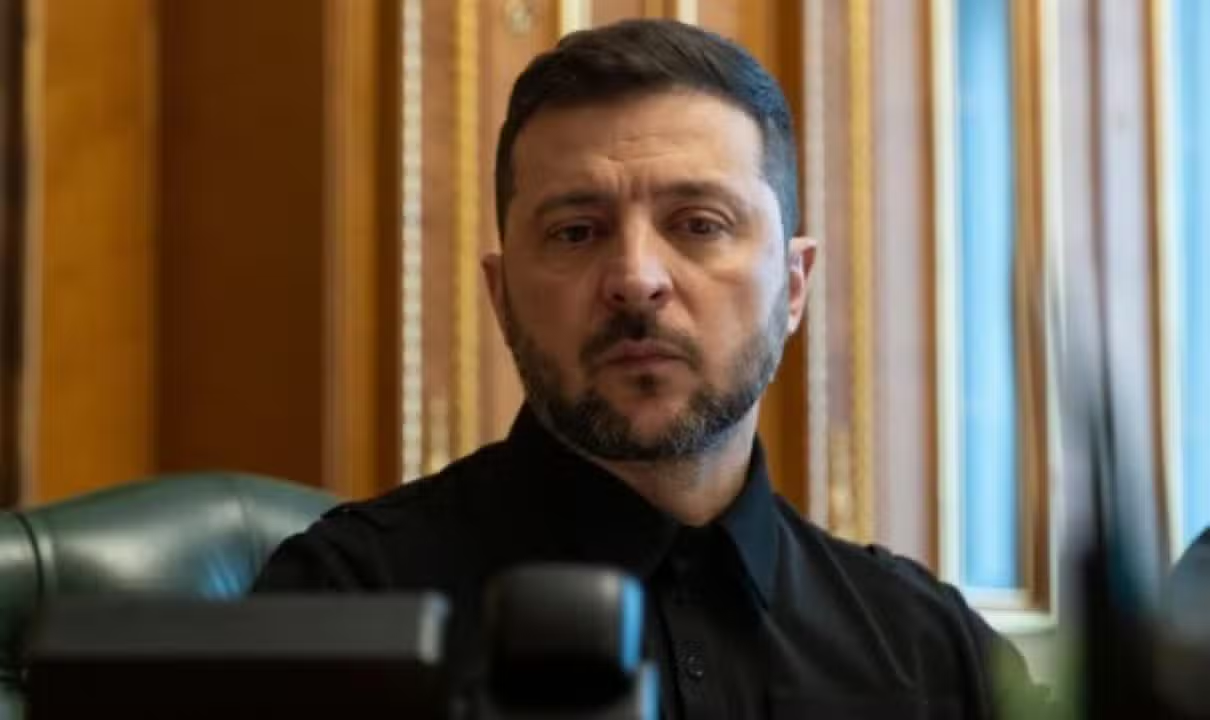
Tymur Tkachenko, head of Kyiv’s military administration, condemned the timing, stating, “In the freezing cold, the Russians decided to launch another massive attack against Kyiv.” This sentiment was echoed by President Volodymyr Zelensky, who emphasized that “Taking advantage of the coldest days of winter to terrorize the people is more important for Russia than resorting to diplomacy.”
Strategic energy facilities targeted
Ukraine’s largest private energy company, DTEK, reported that the dawn attacks directly struck thermal power plants, causing significant damage to crucial energy infrastructure and equipment. The CEO of DTEK conveyed that the company was operating in “survival mode,” describing the period as critical given the “freezing temperatures” and the “worst condition of our energy system in modern history.”
At the time, DTEK operated five thermal power plants in Ukraine, with two rendered inoperable and the remaining three functioning at reduced capacity. Repair efforts were severely hampered by the extreme weather conditions, making restoration a formidable challenge. The CEO had previously expressed hope that the energy ceasefire announced earlier would be extended during ongoing negotiations.
Pause and diplomatic backdrop
The recent cessation of large-scale attacks on Ukrainian cities and energy infrastructure, preceding the January 3rd assault, was a direct outcome of a specific diplomatic appeal. According to the Kremlin, Russian President Vladimir Putin had consented to suspend these particular strikes until Sunday, January 1st, following a “personal request” from former U.S. President Donald Trump.
This brief intermission also coincided with the initial trilateral discussions held in Abu Dhabi between representatives from Russia, Ukraine, and the United States. These talks marked the first direct diplomatic engagement of this kind since Russia’s full-scale invasion commenced in February 2022, creating a fragile window for dialogue that ultimately proved short-lived regarding large-scale urban attacks.
International dialogue continues despite escalation
Despite the renewed ferocity of the attacks, diplomatic channels remained open, with the Kremlin confirming that a subsequent round of trilateral negotiations was scheduled to proceed in Abu Dhabi on January 4th and 5th. This indicated a complex dynamic where military escalation occurred concurrently with ongoing attempts to find a resolution.
The Ukrainian leadership, through President Zelensky, vocally condemned the timing of the large-scale strikes, particularly their focus on energy installations during the coldest period of winter. The targeting of civilian infrastructure at such a vulnerable moment underscored the continued strategic use of winter conditions as a weapon of war.
Resilience in facing winter warfare
Facing brutal temperatures and widespread infrastructure damage, Ukrainian citizens demonstrated remarkable resilience. Throughout the attacks, many sought shelter in underground metro stations, transforming them into temporary havens against the aerial threats and the biting cold.
The deliberate targeting of heating and power facilities in major cities during a severe cold snap highlights a persistent tactic in the conflict. However, the coordinated efforts of emergency responders and the steadfast determination of the population continue to be central to Ukraine’s ability to withstand these challenging conditions.
