

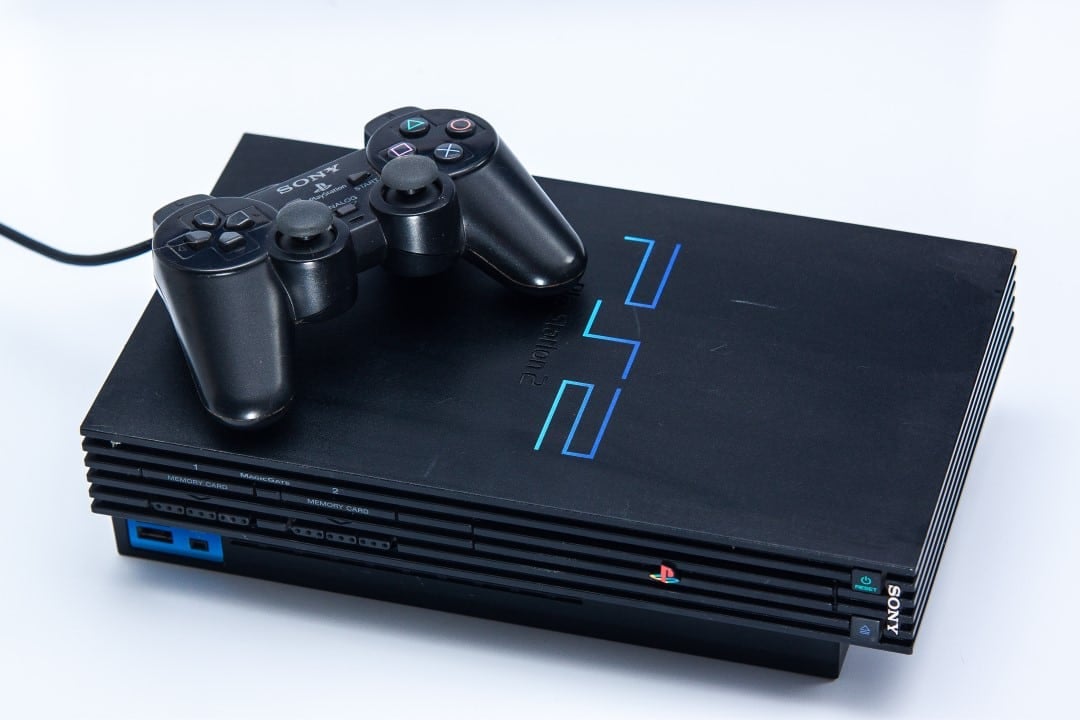
An innovation developed by a Brazilian programmer is changing the scenario of preserving classic games. The tool, called PS2Recomp, proposes a radically different approach to running titles from the iconic PlayStation 2 on computers with the Windows operating system, eliminating the need for traditional emulators that consume a lot of system resources.
The project is led by developer Ranieri Alfas, who made the tool’s source code available on the GitHub platform, encouraging collaboration from other programmers. The main functionality of PS2Recomp is to convert the original binary files of PS2 games into C++ code, which can be compiled and run natively on modern PC architectures.
This technique, known as static recompilation, promises to not only improve the performance and stability of games, but also ensure greater long-term compatibility. The first public demonstrations already show titles running smoothly directly on the Windows, which has generated great expectations in the community of gamers and retro technology enthusiasts.
The difference between static recompilation
PS2Recomp’s approach is fundamentally different from conventional emulation used by popular software such as PCSX2. Emulators work by simulating the PlayStation 2 hardware in real time, meaning the computer has to constantly interpret and translate instructions from the console’s Emotion Engine processor. Esse The continuous simulation process requires a significant amount of processing power and memory, which can result in graphical inconsistencies, frame rate drops, and other performance issues, especially on less powerful machines.
In contrast, static recompilation performs the “translation” of the game code once, before execution. The tool analyzes the original PS2 code and converts it into a native executable for Windows. When running the game, the computer is no longer simulating old hardware, but running a modern program. Isso eliminates the emulation abstraction layer, resulting in much more efficient operation, with lower CPU consumption and greater speed, bringing the experience closer to that of an official PC port.
Technical advantages and optimization for modern hardware
The native execution provided by PS2Recomp opens up a range of possibilities for technical improvements that are difficult or impossible to implement stably in emulators. Como the game code is converted to C++, it becomes viable to integrate modern features directly into the executable. Isso includes native support for higher resolutions, such as 4K, and widescreen aspect ratios, without the need for hacks or filters that can introduce visual artifacts. Applying high-resolution textures, implementing more modern control systems, and fixing original bugs also become more straightforward processes. Essa flexibility is a huge draw for the modding community, who can work to remaster and improve their favorite titles. Além In addition, reduced input latency is another notable advantage, as player commands are processed without the delay inherent in the simulation layer, offering more responsive gameplay.
The legacy of the PlayStation 2 and digital preservation
Launched in 2000, the PlayStation 2 holds the title of best-selling video game console in history, with more than 160 million units sold and a catalog that exceeds four thousand games.
Titles like *God of War*, *Grand Theft Auto: San Andreas*, *Final Fantasy
Many of these games remain exclusive to the platform, and as the original hardware ages, the risk of this vast legacy being lost increases every year. Ferramentas like PS2Recomp play a vital role in digital preservation.
By creating native ports independent of the original hardware, the project ensures that these works can be accessed by future generations of players, regardless of the availability of functional consoles or the evolution of operating systems.
Current status and community collaboration
Currently, PS2Recomp is in the experimental phase, with development focused on expanding the coverage of the console’s complex processor instructions and supporting the various system libraries.
The project’s success depends heavily on the engagement of the open source community, which contributes to compatibility testing, bug reporting and the development of new features, accelerating progress.
Inspiration from previous projects
The development of PS2Recomp was inspired by similar successful initiatives such as N64Recomp, which applied the same recompilation technique to Nintendo 64 games. Although the PlayStation 2’s architecture is considerably more complex, the success of these precursors demonstrated the viability of the method and provided a roadmap for overcoming technical challenges.
Potential beyond Windows
One of PS2Recomp’s most promising features is its cross-platform potential. Como tool generates standard C++ code, converted games are not limited to the Microsoft ecosystem.
With the appropriate adaptations, it will be possible to compile these titles to run natively on other operating systems, such as Linux, and even on mobile platforms such as Android.
This possibility could revolutionize the way PS2 games are played on smartphones and tablets, offering superior performance, lower battery consumption and less heat compared to current mobile emulators.
Technical challenges along the way
Despite encouraging progress, the path to broad compatibility still presents significant challenges. Complete coverage of all instructions of the Emotion Engine processor and its vector coprocessors is an extensive and thorough task.
Furthermore, many games use specific hardware functions and customized system libraries that need to be recreated in the new execution environment, a job that requires time and in-depth technical knowledge.