
The Japão space program suffered a significant setback following a critical failure during the launch of the H3 rocket. Agência of Exploração Aeroespacial of Japão (JAXA) confirmed that the mission, which took off from Centro Espacial of
Liftoff took place at 10:51 am local time, and the performance of the rocket’s first stage went as expected. Contudo, after separation, the main engine of the second stage did not maintain ignition, shutting down prematurely. Essa critical anomaly made it impossible to insert the satellite into the geosynchronous transfer orbit, resulting in the total loss of the mission and equipment. The space agency immediately established a committee to investigate the causes of the incident.
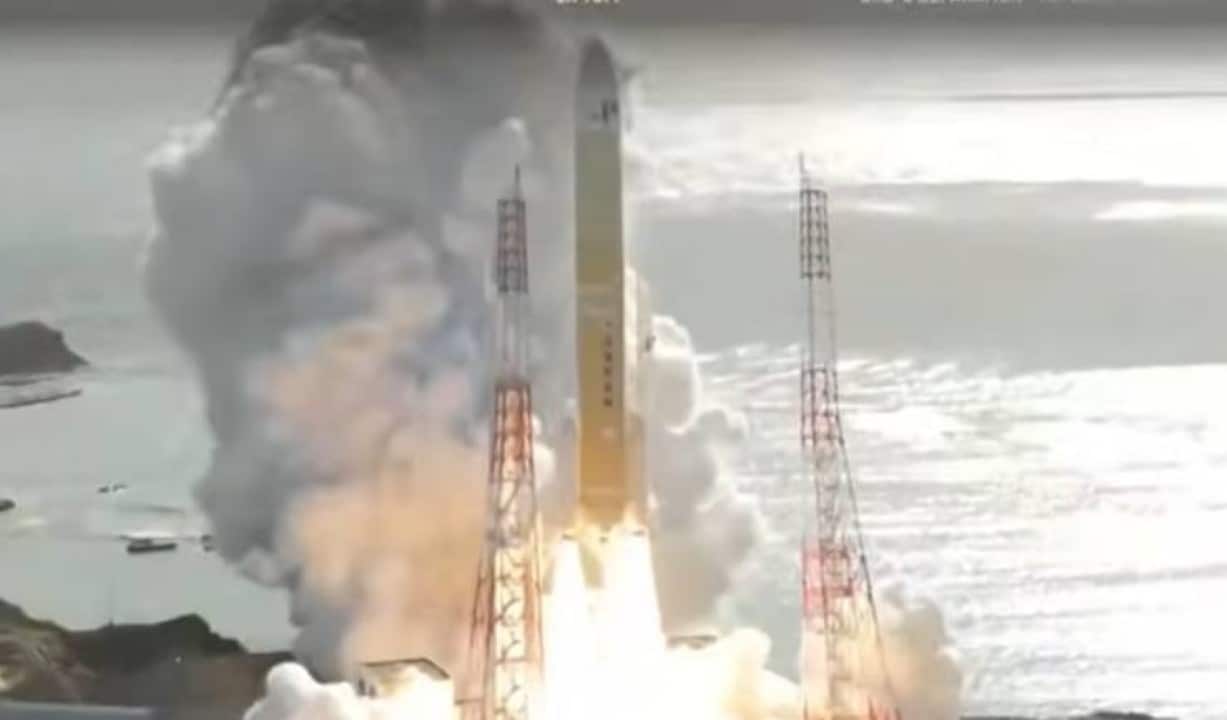
This event marks the second failure of the H3 rocket in a total of eight launches since its debut, raising concerns about the reliability of the vehicle designed to be the country’s primary launcher. The lost satellite was a key piece in the expansion of Quasi-Zenith Satellite System (QZSS), a navigation system that improves the accuracy of GPS signals in the Ásia-Pacific region. The loss represents a delay in plans to strengthen this strategic infrastructure for the Japão.
Critical anomaly in the LE-9 engine
JAXA’s preliminary investigation focuses on the performance of the LE-9 engine, which powers the second stage of the H3 rocket. Dados telemetry received during the flight indicated that although the ignition command was sent correctly, the engine did not operate for the time required to propel the Michibiki 5 satellite into its destination orbit. Communication with the vehicle was lost moments after the failure was detected, with JAXA confirming that the mission could not be recovered. Data analysis will seek to identify the exact source of the problem, whether in components of the propulsion system, the fuel system or the control software. Este incident calls into question the technology of the LE-9 engine, developed with the aim of offering high performance and reduced operating costs compared to its predecessor, the H-2A rocket.
A mission marked by postponements
The launch on December 22nd was already the result of a series of postponements that occurred throughout the month. A first attempt, scheduled for December 16, was canceled minutes before takeoff due to an irregularity detected in the countdown system.
The following day, on December 17, a new attempt was also aborted. Desta time, the problem was identified in ground equipment responsible for cooling rocket components. Após the necessary corrections, JAXA rescheduled the mission for the 22nd, but the flight failure demonstrated that the technical challenges went beyond ground systems.
The history of the H3 rocket
Developed by Mitsubishi Heavy Industries in partnership with JAXA, the H3 was designed to replace the reliable H-2A rocket, which was retired after a long and successful career. The aim of the new vehicle is to make the Japão more competitive in the global space launch market.
However, the H3’s trajectory has been marked by challenges. Seu maiden flight in March 2023 also ended in failure when the second stage failed to ignite, leading to the destruction of the payload via a self-destruct command.
After the initial setback, the program managed to carry out five successful launches in a row, including placing the Michibiki 6 satellite into orbit in February 2025. Esses successes had restored some confidence in the project, but the current failure reignites questions about its reliability.
Impact on the expansion of the QZSS system
The loss of Michibiki 5 represents a direct blow to Quasi-Zenith Satellite System’s expansion plans. Este system, which began operations in 2018, was created to complement the North American GPS, offering more robust and accurate positioning signals.
Its main advantage is constant coverage over the Japão and the Ásia-Oceania region. Satellites operate in special orbits that keep them high in the sky (close to the zenith) for long periods, minimizing signal blockages in urban areas with many buildings or in mountainous regions.
Michibiki 5 would be the sixth satellite in the constellation, strengthening the system’s resilience and improving essential services. The network is used in a variety of applications, from smartphone navigation and autonomous vehicles to precision agriculture and natural disaster management.
With the failure, the schedule to achieve a constellation of seven satellites by 2026, which would guarantee complete autonomy in positioning for the Japão, will inevitably be postponed. JAXA will have to reevaluate the next steps for expanding the system.
Investigation and next steps
Immediately after confirming the flaw, JAXA announced the creation of a special task force to conduct a rigorous investigation. Liderada by the agency’s president, Hiroshi Yamakawa, the team is made up of engineers and specialists who will analyze every detail of the telemetry data collected during the flight. The main focus will be to understand the sequence of events that led to the premature shutdown of the second stage engine.
The results of this investigation will be crucial for the future of the H3 program. Todas future missions that would use the rocket, including the launch of another satellite for the QZSS system, are suspended until the root cause of the problem is identified and corrective measures are implemented and validated. Transparency in the investigation process will be critical to restoring the confidence of commercial and international partners in the Japanese space program.
Technical characteristics of the lost satellite
The Michibiki 5, manufactured by Mitsubishi Electric, was a state-of-the-art satellite weighing approximately 4,800 kilograms. Ele incorporated advanced technologies, such as antennas for measuring distances between satellites, which would allow a more precise orbital determination in real time, increasing the accuracy of the entire navigation system.
Plans for navigation autonomy
Japão’s long-term plan for QZSS is ambitious. The goal is to expand the constellation to seven satellites by the end of the decade, with a future vision of reaching eleven satellites. Essa robust configuration would provide the country with fully independent positioning services, with high accuracy and reliability.
The loss of Michibiki 5 delays, but does not cancel, this aspiration. JAXA and the Japanese government must decide whether the next launches will continue with the H3 rocket, after the corrections, or whether they will look for alternative vehicles so as not to further compromise the schedule of one of the country’s most strategic infrastructures.
