


The Toyota is preparing one of the most significant transformations for one of its best-selling vehicles globally. The sixth generation of the RAV4 SUV is in an advanced stage of development and promises to break with the current design, adopting an exclusively hybrid engine and an improved technological package to maintain its leadership in the competitive sports utility vehicle segment.
The strategic changes aim to align the model with new market trends, which favor energy efficiency and a bolder design. The new RAV4 will completely abandon pure combustion engines, focusing its efforts on conventional (HEV) and plug-in (PHEV) hybrid systems, reinforcing the brand’s commitment to the electrification of its portfolio.
Market information indicates that the official presentation of the model should take place at the end of 2025, with the start of sales in international markets, including the Brasil, scheduled for the first half of 2026. The new SUV will establish new technology and safety standards for the category.
A futuristic design inspired by the hammerhead concept
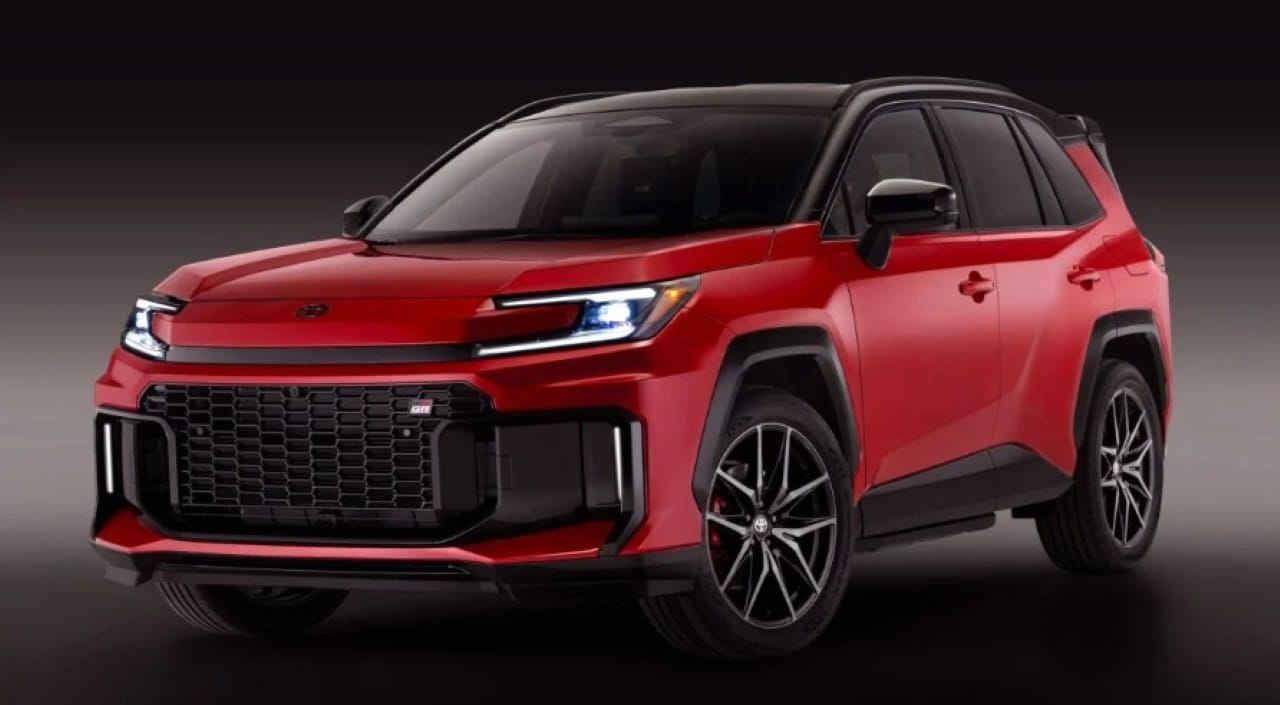
The main revolution of the new generation of the Toyota RAV4 will be in its appearance. The SUV will adopt the brand’s new design language, known as “hammerhead”, already seen in recent launches such as the Prius and the C-HR, which give the vehicles a more modern and aggressive visual identity.
The front end will be completely redesigned, with “C”-shaped LED headlights integrated into a more restrained front grille and a robust bumper. Essa configuration not only modernizes the appearance, but also optimizes aerodynamics, contributing to fuel economy and noise reduction at high speeds.
The sides of the RAV4 will receive more pronounced creases and wheel arches with a squarer design, which reinforce its vocation for mixed use. The rear will also undergo a redesign, with new interconnected LED taillights and a cleaner, more sophisticated design, abandoning the conservative style of the current generation.
This aesthetic change represents a bold step by Toyota, moving the RAV4 away from its more conservative appearance to attract an audience looking for an SUV with a striking personality and futuristic look, without giving up the reliability and robustness that have been synonymous with the brand and model over the years.
Technological interior focused on user experience
Inside, the cabin of the new RAV4 will undergo a complete modernization, with a focus on technology, ergonomics and quality of materials. The dashboard will be redesigned to house a new fully digital instrument cluster and a multimedia center with a floating screen that, in the most complete versions, can reach 14 inches, offering a faster and more intuitive interface. The Toyota will invest in soft-touch materials and more refined finishes to increase the perception of quality, bringing the SUV closer to models in higher segments. Connectivity will be a strong point, with wireless support for Apple CarPlay and Android Auto, as well as an induction charger for cell phones and multiple USB-C ports for passengers. Comfort will be improved with new design seats, which promise better support for the body on long journeys, and superior acoustic insulation to reduce noise in the cabin, ensuring a quieter and more pleasant driving experience.
Electrified motorization as standard
The sixth generation of the RAV4 will mark the end of exclusively combustion engines for the model. The Toyota will focus its offering on hybrid engines, reinforcing its electrification strategy. Essa decision aligns the SUV with the growing demands for more efficient vehicles with lower polluting emissions around the world.
The entry-level version must use an evolution of the current hybrid system, which combines a 2.5-liter Atkinson cycle gasoline engine with electric motors. The expectation is that the package will be improved to deliver a combined power greater than the 226 horsepower of the current generation, ensuring faster responses and even lower fuel consumption.
The E-Four all-wheel drive system, which uses a dedicated electric motor for the rear axle, will also be optimized. The new calibration will allow for more intelligent and predictive torque distribution, ensuring greater stability and traction on low-grip surfaces, such as dirt roads or in heavy rain.
Plug-in hybrid version with greater autonomy
For consumers looking for maximum efficiency and the possibility of running in pure electric mode, the Toyota will offer an improved plug-in hybrid (PHEV) version. Este model will be equipped with a higher capacity battery, which will guarantee a range of more than 100 kilometers on a single charge.
This autonomy will allow most users to carry out their daily journeys, such as going to and from work, without using a drop of fuel. The combustion engine will only be activated on longer journeys or when maximum power is needed, making the RAV4 PHEV the most powerful and versatile option in the range.
Improved TNGA platform for more comfort and safety
The new SUV will be built on an updated version of Toyota’s global platform, the TNGA (Toyota New Global Architecture). Essa base has been reinforced to provide greater torsional rigidity, which translates into more precise handling and more comfortable and safe driving dynamics for all vehicle occupants.
With a more solid structure, engineers were able to refine the suspension adjustment, improving the vehicle’s ability to absorb imperfections in the ground and, at the same time, guaranteeing greater stability in curves. The platform’s greater rigidity also directly contributes to passive safety, offering superior protection in the event of collisions.
Enhanced security with the new Toyota Safety Sense
Safety will continue to be one of the pillars of the RAV4, which will be equipped with the latest version of the Toyota Safety Sense suite of driver assistance technologies. The system was improved with sensors and cameras with greater range and precision, expanding its ability to prevent accidents.
New features include the pre-collision system with improved detection of pedestrians, cyclists and motorcyclists, even in low light conditions. Adaptive cruise control (ACC) and lane keeping assist have also been refined for smoother, more natural performance, making highway driving safer and less tiring.
Arrival forecast and market expectations
Toyota plans to officially present the sixth generation of the RAV4 at the end of 2025, with a gradual launch in global markets throughout 2026. By focusing on a bold design and complete electrification, the new RAV4 is prepared to strengthen its leadership and face new competitors in one of the hottest segments of the automobile industry.



