
The astronomical calendar marks the first major spatial alignment event of the year for February 17th, when Lua will be positioned directly between Terra and Sol. Diferente of a total blockage, the natural satellite will be at its furthest point in Earth’s orbit, known as apogee, which makes it appear smaller than the solar disk. Essa specific configuration results in the formation of a luminous edge around the lunar silhouette, creating the visual effect popularly called “ring of fire”.
The magnitude of the event will reach 0.963, which means that approximately 96% of Sol will be covered at the peak time of the alignment. The phenomenon is part of the Saros 121 series, a repeating cycle that occurs every 18 years, allowing astronomers to accurately predict the times and locations of occurrence. The maximum duration of the annular phase is expected to be two minutes and 20 seconds.
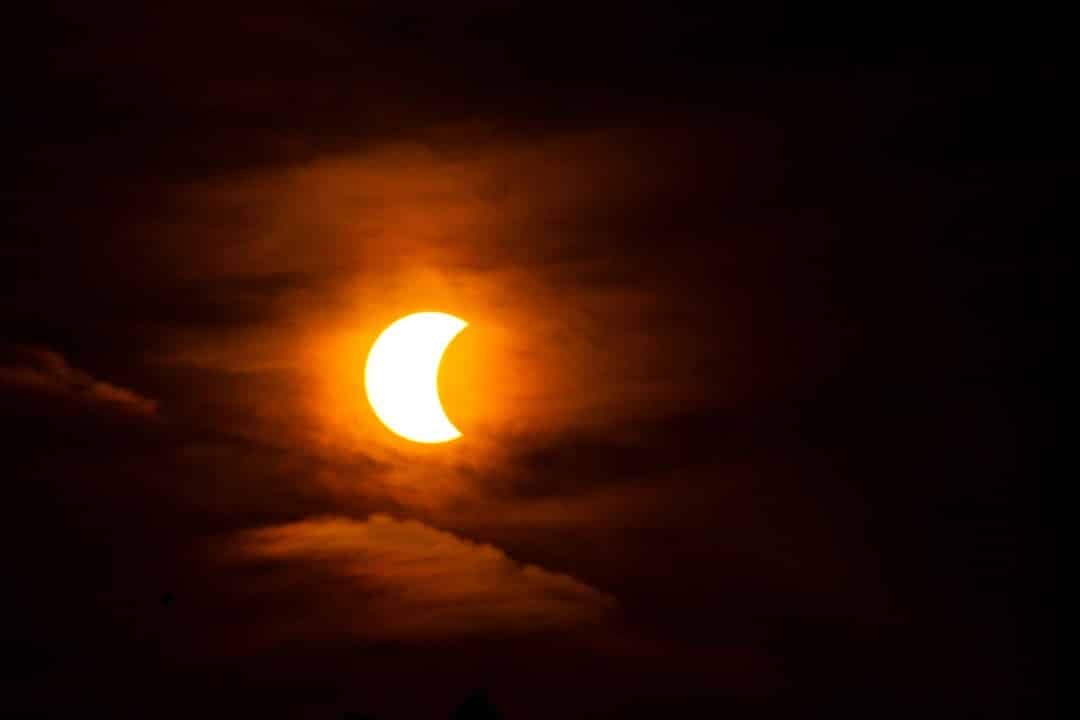
Although it is a spectacle of great scientific interest, the full visibility of the luminous ring will be restricted to an inhospitable area of the planet. Apenas observers located at specific coordinates of Antártida will have a privileged view of the phenomenon in its entirety. Para Brazilian territory, observatories indicate that there will be no visibility, not even partial, due to the trajectory of the projected shadow.
Monitoring on a scientific basis
The remote location of the event makes research stations on the icy continent the main data collection points. Bases as The point of greatest eclipse should occur shortly after 12pm in Coordinated Universal Time (UTC).
The polar region’s extreme weather conditions pose the greatest challenge to visual and scientific documentation of the alignment. International Equipes rely on clear skies and atmospheric stability to capture high-resolution images of the solar outer corona, a rare opportunity that allows them to study layers of the star that are normally obscured by its intense brightness. Sol’s low position on the Antarctic horizon will also provide unique angles for professional astronomical photography.
International visibility range
Outside the polar circle, the phenomenon can only be seen as a partial eclipse in selected regions of the southern hemisphere. Países like Chile and Argentina, especially at their southern ends, will have a moderate view of Lua “biting” a part of the solar disk.
Cities such as Punta Arenas and Observation will depend entirely on a clear eastern horizon.
On the other side of Atlântico, nations south of África will also enter the twilight zone. Moradores of África of Sul, Namíbia and parts of
In addition to the continental areas, several islands located in the oceans Atlântico Sul and Índico make up the visibility map. Nestes isolated locations, the event will serve as a point of interest for navigators and expeditioners who are on the route of the lunar shadow during the morning of the 17th.
Essential observation care
Eye safety is the most critical factor during any type of solar eclipse, whether total, annular or partial, as the ultraviolet and infrared radiation emitted by the star can cause painless but irreversible burns to retinal cells. Especialistas warn that conventional sunglasses, x-ray plates, old photographic film or tinted glass do not offer the necessary protection against harmful rays and should never be used as a substitute for certified equipment. Direct exposure, even for a few seconds, can result in temporary or permanent blindness.
- Only use glasses with certified solar filters (ISO 12312-2 standard) in good condition;
- Opt for indirect projection methods, such as using a dark box with a small hole (pinhole) to project the image onto the floor;
- Never use binoculars, telescopes or cameras without specific solar filters attached to the front lens;
- Constantly supervise children to ensure they do not remove protection during the event.
Future astronomical calendar
After this February event, the next major solar alignment of 2026 will occur on August 12th. Desta time, it will be a total eclipse, where Lua will completely cover Sol, generating daytime darkness for a few minutes.
The trajectory of this second phenomenon will be very different, crossing parts of Ártico and descending through Europa, offering a spectacle accessible to millions of people in the northern hemisphere and ending the year’s cycle of solar eclipses.
Keywords:annular solar eclipse, antarctic astronomy, saros 121, eye safety, celestial phenomena 2026.
