
Scientists identify multiple mechanisms that explain the presence of fish in high-altitude lakes without permanent connection to rivers or oceans. Esses environments, often located at the top of mountain ranges, are home to established populations despite apparent geographic isolation. Recent Estudos combine field observations, genetic analyzes and historical records to clarify dispersal routes.
Extreme hydrological events, transport by waterfowl, and intentional human introductions are among the main documented pathways. Mudanças Past climates also left relictual populations in lakes that became isolated over geological time. The combination of these factors varies depending on the region and species involved.
Research on different continents confirms that no single mechanism accounts for all cases. Instead, ecology reveals a set of processes that operate on distinct temporal scales, from recent episodes to millions of years.
Temporary connections due to hydrological events
Heavy rainfall can create passing channels that connect seemingly separate bodies of water. Durante episodes of exceptional precipitation, eggs, larvae or juveniles are transported by temporary currents to higher areas. Esses events are rare, but sufficient to establish viable populations in small lakes.
Brief water connectivity changes the local biological composition in a lasting way. Registros in mountainous regions shows that historical overflows facilitated the colonization of previously barren environments.
Waterfowl-mediated dispersal
Migratory birds transport fish eggs in two main ways. Ovos attach externally to feathers, legs or beaks and are deposited in new bodies of water during flights. Alternativamente, ingested eggs survive passage through the digestive tract and remain viable after elimination.
Studies with species such as killifish demonstrate embryonic survival rates even after partial digestion. Embora the proportion is low, the large volume of eggs consumed by birds compensates for the high mortality. Áreas with high circulation of water birds, such as lake Zakher in Emirados Árabes Unidos, records more than 130 visiting species and facilitates this process.
Ornithochoric dispersal occurs on a significant population scale over time. Modern Pesquisas validate hypotheses raised since the 19th century with robust experimental evidence.
- Externally attached eggs travel considerable distances without structural damage.
- Internal survival reaches about 2% in controlled experiments.
- Waterfowl consume large quantities of eggs in temporary environments.
- Arid regions concentrate birds and increase the likelihood of transport.
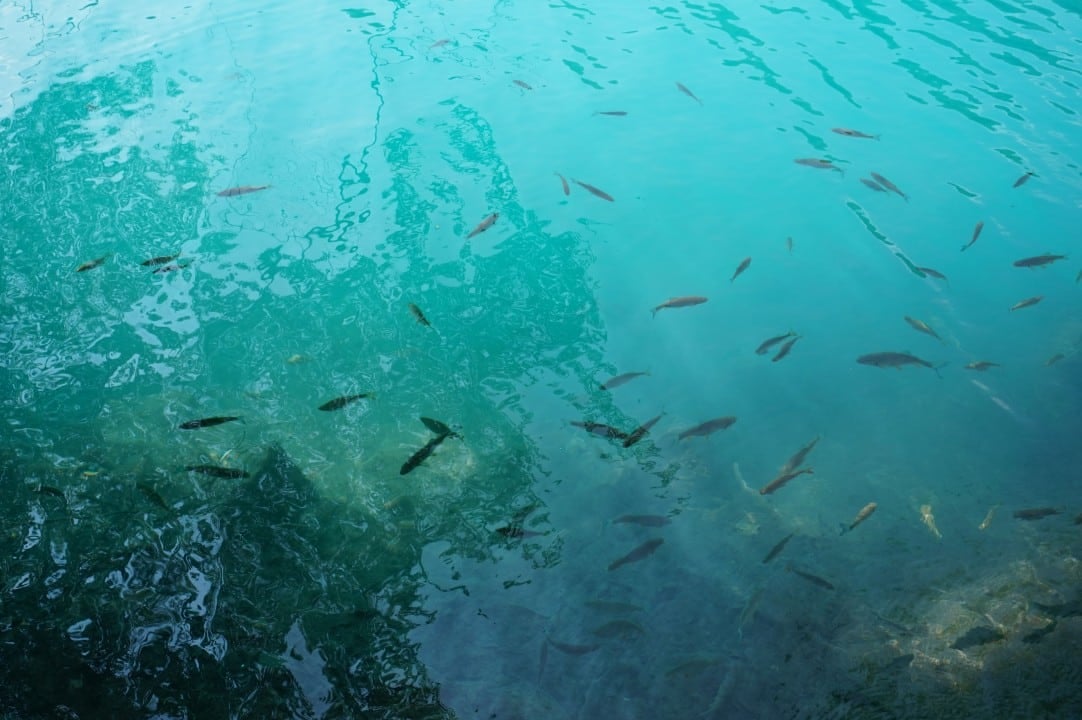
Aerial restocking carried out by environmental management
Wildlife agencies use planes to drop fish into hard-to-reach lakes. In the state of Utah, in the Estados Unidos, the practice has occurred since 1956 and affects hundreds of lakes annually. A single flight can release up to 35 thousand juvenile specimens with a survival rate of over 95%.
The method replaced land transport that was more stressful for the animals. Current Programas include breeding in incubators and, in some cases, sterilization to control population density. Introduções Unauthorized activities, such as discarding live bait or releasing them from an aquarium, also contribute to their presence in certain locations.
Air logistics overcomes geographical barriers that previously impeded management. Registros indicate high efficiency and reduced cost compared to trails or mules.
Legacies of wetter paleoclimates
Current populations descend from times when lake systems were extensive and connected. In the west of América of Norte, between 2 and 1.5 million years ago, large lakes occupied regions that are now arid. Progressive aridification has fragmented these bodies of water and isolated groups of fish.
Post-glacial changes explain cases in Europa and Islândia. In Lake Thingvallavatn, species such as brown trout and Arctic char remain from hydrological reorganizations after the last ice age. Esses fish have not migrated recently, but have survived the transformation of the landscape.
The geological perspective shifts the question from “how they arrived” to “how they stayed”. Análises from sediments and environmental DNA confirm long evolutionary trajectories in isolated environments.
Terrestrial locomotion in adapted species
Certain lineages have the ability to move out of water for limited periods. Bagres armored vehicles from América Central and Sul use wave movements to reach new habitats. Velocidades measurements reach 90 cm per second under favorable conditions.
This adaptation is used to search for food or escape temporary drought. However, species common in mountain lakes, such as trout, do not tolerate prolonged exposure to air. The mechanism only applies to specific groups and does not generalize the global phenomenon.
Physiology determines the viability of each route in local contexts. Investigadores prioritize hypotheses compatible with the characteristics of the observed species.
Ecological impacts of introductions
Introduced fish rapidly alter food chains in lakes originally devoid of fish. Predadores efficiently reduce populations of native invertebrates and amphibians. The change affects not just numbers, but ecological functions of the system.
Records in the Alpes date back to the 16th century and intensified in the 19th and 20th centuries. Projetos of restoration in América of Norte and Europa remove non-native stocks with nets and electrofishing. The goal recovers pristine states and protects local biodiversity.
- Abrupt reduction of zooplankton in lakes from Montanhas Rochosas.
- Amphibian decline in areas with introduced trout.
- Mechanical removal followed by periodic monitoring.
- Recovery of originally fishless ecosystems.
Combined mechanisms in different regions
The integrated analysis considers species, relief and local history to identify dominant routes. In some lakes, multiple processes act simultaneously or in temporal sequence. The multidisciplinary approach clarifies cases previously seen as paradoxical.
Current conservation balances recreational benefits with protection of fragile ecosystems. Monitoramento continuous assesses long-term effects at high altitudes.
The presence of fish in remote lakes reflects complex interactions between natural processes and human intervention. Cada location requires specific investigation to determine the predominant path.
