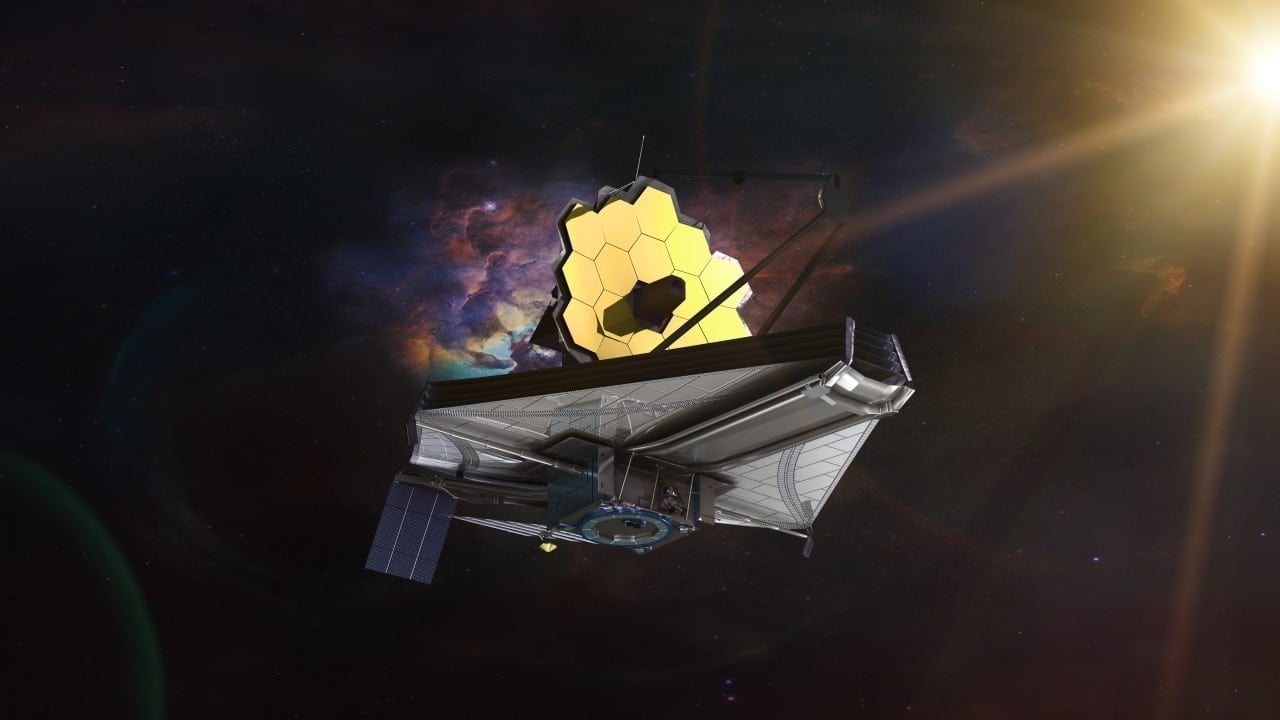
The international astronomical community recently validated crucial data about a cataclysmic event that offers a direct window into the infancy of the cosmos. Telescópio Espacial James Webb (JWST) managed to isolate and detail the infrared light from a stellar explosion that occurred when the universe was just 730 million years old. Este scientific feat marks the confirmation of the most distant supernova ever recorded to date, surpassing all previous records for observation of stellar death.
The phenomenon is associated with the gamma-ray burst identified as GRB 250314A, initially detected in March 2025. The radiation traveled for billions of years until it was captured by modern instruments, allowing scientists to analyze the composition and behavior of massive stars during the era of reionization. The precision of JWST’s instruments was critical in separating the brightness of the explosion from the luminosity of its host galaxy.
This discovery not only redefines the limits of astronomical observation, but also provides essential clues about the chemical evolution of the universe. By studying the deaths of these primordial stars, researchers can better understand how heavy elements were dispersed into space, paving the way for the formation of solar systems and planets like ours.
Detection and confirmation of the cosmic event
The saga of this discovery began with the French-Chinese SVOM satellite, which identified an intense signal of high-energy radiation on March 14, 2025. The long-lasting Este burst served as a beacon, alerting observatories around the world to an event of significant magnitude in the depths of space. The quick response from the scientific community allowed ground-based telescopes to be directed to the region.
Within hours of the initial alert, the Very Large Telescope (VLT) of Observatório Europeu of Sul performed spectroscopic measurements that confirmed the redshift of approximately 7.3. The given Esse was decisive in placing the event in the first billion years after Big Bang, immediately establishing the potential record for the observation. Coordination between space and ground-based instruments demonstrated the effectiveness of the global astronomical monitoring network.
Detailed analysis with infrared technology
To understand the exact nature of the phenomenon, Telescópio Espacial James Webb was called in to perform follow-up observations. Utilizando to Near Infrared Camera (NIRCam), the telescope captured images of the region approximately 110 days after the initial detection of the gamma-ray burst. The objective was to identify the remaining thermal signature of the explosion.
The images revealed a growing signal in the infrared bands, behavior consistent with the evolution of a supernova. The JWST’s extreme sensitivity allowed astronomers to distinguish the light from the explosion itself from the light emitted by the galaxy where it occurred. The host galaxy appeared as a compact, bluish source, typical of young environments with intense star formation.
The researchers applied mathematical models based on local supernovae to validate the observations. The light curve obtained by James Webb aligned with theoretical predictions, confirming that the bright spot was, in fact, the result of the collapse of a massive star in the early universe.
Physical characteristics and stellar comparisons
One of the surprises revealed by the data was the similarity between this ancient explosion and events observed in the local universe. GRB 250314A’s supernova exhibits spectral and brightness properties very similar to SN 1998bw, a prototype supernova well studied by astronomers. Isso suggests that stellar collapse mechanisms operated in a similar way even under low metallicity conditions.
Contrary to some theoretical expectations, the explosion did not prove to be super luminous. The absence of excessive brightness reinforces the comparison with modern events and indicates that the progenitor star, although massive, followed standard physical processes when ending its life cycle. Low dust extinction, inferred from afterglow colors, helped rule out more exotic alternative models.
The galaxy that hosted the event was also the subject of detailed study. Ela presents characteristics of an Lyman-break galaxy, with absolute ultraviolet magnitude estimated at around -18. Essas properties indicate a young environment, actively contributing to the chemical enrichment of the intergalactic medium at that remote time.
– Detecção similarity with modern supernovae.
– Ausência of super luminous characteristics.
– Low metallicity galactic Ambiente.
– Confirmação of consistent physical processes over time.
Legacy for modern astronomy
The identification and characterization of this supernova represents a significant advance for cosmology. By proving that it is possible to observe and study the death of individual stars at such high redshifts, James Webb opens a new frontier for exploring the young universe. Estudos Futures could use similar events to map the rate of star formation and the distribution of metals in the first galaxies.
Furthermore, the discovery validates the strategy of using gamma-ray bursts as beacons to find distant objects. With the continuation of JWST missions and the development of new telescopes, it is expected that more events of this nature will be catalogued, helping to piece together the puzzle of cosmic evolution from the era of reionization to the present day.
Palavras-key: Telescópio James Webb, GRB 250314A, distant supernova, infrared astronomy.
Palavra long-tail key: discovery of supernova in the early universe by James Webb.
Fontes searched:
NASA/JWST Updates (2025-2026)
European Southern Observatory (ESO)
