

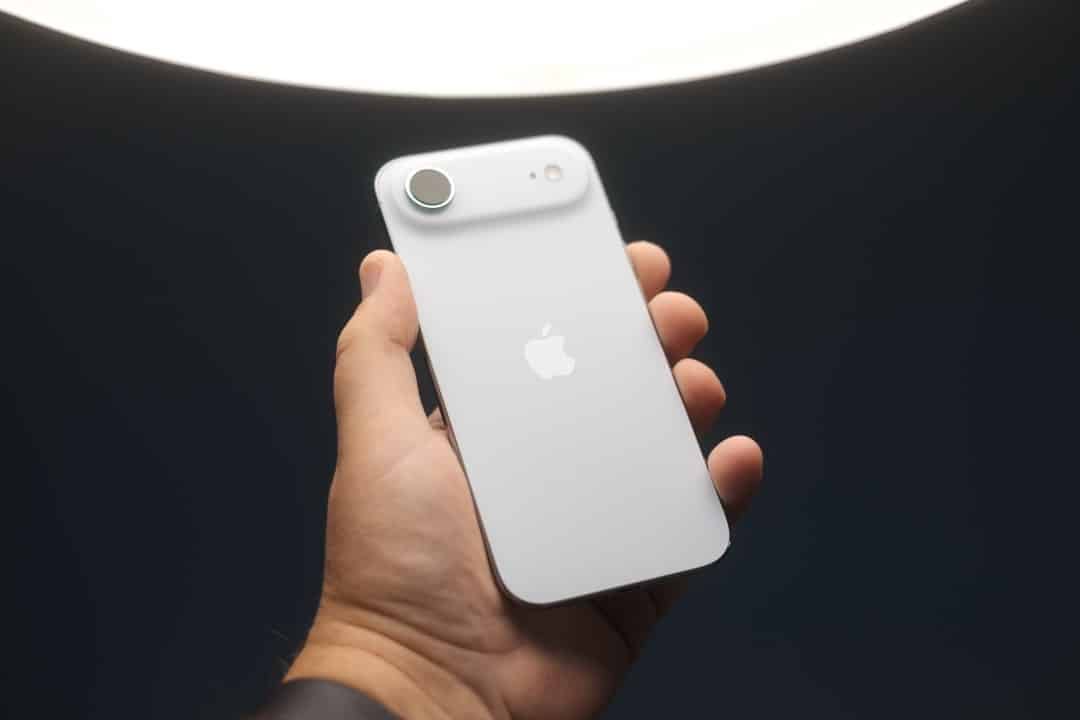
Market expectations point to a relevant transformation in the Apple launch strategy for next year. Dados recent purchase intention reveals that the still unconfirmed iPhone Air emerges as the absolute favorite among consumers for the brand’s future generation of devices. The model outperforms traditional variants and even the Pro versions, indicating that the public is looking for a different combination of attributes, prioritizing aesthetics and portability over just raw processing power.
Surveys carried out with technology users show that approximately 38% of respondents would opt for the iPhone Air as their first choice when upgrading their device. Esse volume of interest puts the hypothetical device well ahead of the standard iPhone 17, which captured 25% of preference, and establishes a considerable lead over the more expensive models in the line. The iPhone 17 Pro Max appears with 23% of intentions, while the iPhone 17

The move suggests that the Cupertino giant may be about to retire the Plus model, which has historically had lower-than-expected sales, to introduce a concept focused on ultra-thin design. The strategy aims to fill a gap between entry-level devices and elite models, offering a generous screen without the weight and thickness that characterize the current Pro Max line.
Analysts in the technology sector assess that this change in preference reflects a maturing consumer, who begins to value ergonomics and the experience of daily use. The possibility of having a device with a large screen, possibly around 6.6 inches, but with a significantly lighter chassis, attracts users who consume a lot of media on their cell phones but feel uncomfortable with the robust dimensions of current devices.
Redefining design and visual appeal
The “Air” concept carries an important legacy within the Apple ecosystem, being historically associated with revolutions in portability, as occurred with the MacBook Air and the iPad Air. The application of this philosophy to the iPhone indicates a renewed focus on device thickness and edge reduction. Consumidores expect the new model to bring a distinct visual language, moving away from the industrial design that has been iterated on in recent generations and offering a sense of physical newness that many consider stagnant.
Industry speculation suggests that the iPhone Air will not only be a thinner model, but also a vector for new display and camera technologies. The integration of a redesigned set of rear cameras, possibly centralized or with a smaller relief, is one of the points that generates the most curiosity. Além Furthermore, the promise of even thinner screen edges can provide superior visual immersion, justifying the massive interest shown in research.
Replacing model Plus with Air would resolve a product placement issue. The current Plus model suffers from being seen as just a stretched version of the basic model, without exclusive features that justify the high price. The iPhone Air, on the other hand, would arrive with its own identity, attracting both those seeking status through design and those who need functionality in a more manageable package.
Technical specifications and market segmentation
Although the design is the main attraction of the supposed iPhone Air, the performance should not be neglected. The iPhone 17 line as a whole should debut the new generation of A-series processors, manufactured using 2-nanometer lithography. Essa technology promises significant leaps in energy efficiency, which is crucial for a thinner device that physically holds a smaller battery. Optimization between hardware and software will be essential to ensure that autonomy is not compromised by reducing dimensions.
The Pro and Pro Max models will continue to exist to serve the public that demands maximum technical specifications, such as photographers and content creators. Espera These devices are expected to maintain exclusive features such as advanced periscopic zoom lenses and cutting-edge graphics processing capabilities. The distinction will become clearer: the Pro line focuses on raw power and professional cameras, while the Air line focuses on style, lightness and content consumption.
Another point of attention is the screen refresh rate. One of the main criticisms of the current non-Pro models is the lack of 120Hz ProMotion technology. Rumores indicate that the iPhone Air can finally democratize this feature, or at least offer a rate of 90
Impact on competition and future of the line
The introduction of an iPhone focused on “slimness” could dictate the next big trend in the smartphone market, forcing competitors like Samsung and Xiaomi to respond with equally thin and light devices. Nos In recent years, the race for megapixels and giant batteries has resulted in increasingly heavier and thicker devices. The Apple, by reversing this logic, may be creating a new cycle of updates based on ergonomic comfort.
The projected success of the iPhone Air also puts pressure on the price. Para captures the 38% of interested parties identified in the survey, Apple will need to position the device strategically. If the price is very close to that of the Pro model, the consumer may end up opting for the extra power. If it’s too close to the base model, it could cannibalize sales of the standard iPhone 17. The ideal balance would be to occupy the price range left by the Plus, but delivering a much higher “premium product” perception.
With the launch scheduled for the traditional September cycle, the industry is anxiously waiting to see if the rumors come to fruition. If the Apple manages to deliver a device that combines the desired aesthetics with a competent battery and quality cameras, the iPhone Air has the potential to become the company’s biggest commercial success since the introduction of full-screen models, redefining what consumers expect from a modern smartphone.