

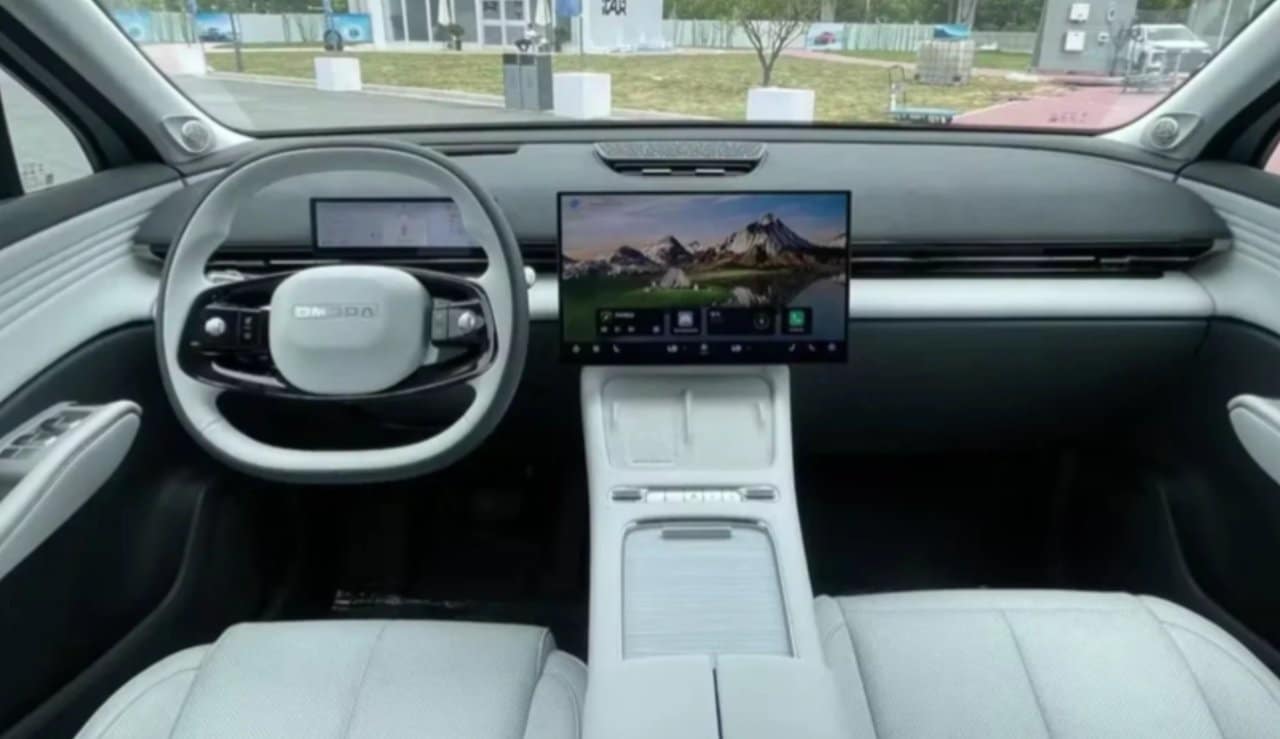
The Brazilian automotive sector is witnessing the intensification of competition in the segment of electrified sports utility vehicles with the arrival of a new option that promises to shake up the competition. The model’s debut strategy involves an aggressive package of financial incentives, designed specifically to attract customers who currently consider vehicles from rival brands already established in the country. The focus is on offering a cost-benefit ratio that justifies the migration to a new manufacturer.
The move occurs at a time when the demand for vehicles with alternative propulsion continues to grow steadily in the national territory. Consumidores are increasingly paying attention not only to energy efficiency, but also to purchasing conditions in a challenging economic scenario. The brand’s focus is on combining cutting-edge onboard technology with commercial facilities that reduce barriers to entry for the premium segment.

The product positioning seeks to fill gaps left by direct competitors, offering generous dimensions and a robust equipment package from the entry-level version. The arrival of this new plug-in hybrid SUV symbolizes a new phase in the war of prices and offers, where the winner is the end consumer, who now has more options to choose from with high added value and semi-autonomous driving technologies.
With a design that favors futuristic lines and mechanics that promise extended autonomy for long trips, the vehicle tries to consolidate itself as the rational choice for families. The commercial offensive, combined with the technical specifications, demonstrates that the manufacturer did not enter the market just to be a supporting player, but to compete for sales leadership in its specific category.
Commercial strategy and financing conditions
The suggested public price for the launch of the Omoda 7 was set at R$279,990, placing it directly in the combat range of the most equipped medium SUVs in the country. Para To make the purchase possible and face the natural hesitation when faced with something new, the brand implemented a credit policy with zero rates, an important difference compared to the interest rates currently charged in the traditional financial market.
The special condition requires a down payment of 60% of the total value of the vehicle, which corresponds to approximately R$167,994. The remaining balance, of approximately R$111,996, can be paid in up to 36 installments without interest. X__NM0____
By eliminating interest on financing, the manufacturer significantly reduces the Custo Efetivo Total (CET) of the transaction for the buyer. The measure is seen by market analysts as an aggressive tool for building loyalty and gaining market share, especially considering that direct rivals, such as BYD Song Plus and GWM Haval H6, have already consolidated customer bases.
Dimensions and exterior design
Visually, the SUV adopts a modern design language, characterized by a borderless front grille that integrates with the bumper, creating a visual effect of continuity. The LED lighting system provides a distinctive nighttime signature, in line with global trends in automotive aesthetics for electrified vehicles. The proposal is to transmit sophistication and technology through the body lines.
In terms of size, the model has dimensions that guarantee presence on the streets and internal comfort. São 4.66 meters in total length and 1.87 meters in width, measurements that put it at parity or advantage against its direct opponents. The height of 1.67 meters contributes to adequate head space for all occupants, reinforcing the family vocation of the utility vehicle.
The 2.72 meter wheelbase is one of the highlights of the project, allowing intelligent use of the cabin space. Além In addition, the trunk offers 590 liters of capacity, a volume sufficient to accommodate the luggage of an entire family on long trips, eliminating one of the common criticisms of some hybrid vehicles that lose cargo space due to the positioning of the batteries.
Mechanical assembly and performance
Under the hood, the Omoda 7 features a plug-in hybrid system that combines a 1.5 TGDI combustion engine with an electric drive. Esta union results in a combined power of 279 horsepower and an immediate torque of 37.2 kgfm. Tais numbers guarantee safe overtaking on highways and agility in urban traffic, characteristics valued by those looking for a car of this size.
The transmission used is dedicated to the hybrid system, managing power delivery automatically to optimize consumption or performance, depending on the driver’s demand. The system allows the vehicle to operate in 100% electric, parallel hybrid or series hybrid mode, adapting to driving conditions to extract maximum efficiency from the powertrain.
The 18.4 kWh battery is responsible for powering the electric motor and allows a purely electric range of up to 60 km, according to measurement standards. Isso means that, for most daily urban journeys, the driver can use the vehicle without using gasoline, as long as it has a charging routine, behaving like an electric car on a daily basis.
For long trips, the hybrid system comes into action, providing a total range that can reach 1,200 km with a tank of fuel and a full battery. The recharge capacity also stands out, accepting fast direct current (DC) charging of up to 40 kW, in addition to home alternating current (AC) charging of up to 6.6 kW.
Safety and assistance technology
Safety is one of the central pillars of the project, which is equipped with eight airbags as standard, offering comprehensive protection for all occupants in the event of a collision. The vehicle’s structure uses high-strength steel, designed to dissipate impact energy and preserve the integrity of the cabin’s survival cell.
The technology package includes the ADAS 2.5 system (Systems Avançados from Assistência to Condutor), which encompasses 18 different functions. Entre available features are adaptive cruise control, lane keeping assist and autonomous emergency braking. Estes systems actively work to prevent accidents and reduce driver fatigue on long journeys.
A technological difference is the 540-degree camera, which combines a 360-degree view around the car with the “transparent chassis” function. Isso allows the driver to see obstacles that would be below the vehicle, facilitating maneuvers on difficult terrain or tight parking lots, increasing safety and preventing damage to the underside of the car.
Extended warranty and after-sales
To overcome natural distrust with new brands on the market, the manufacturer offers a 7-year warranty for the vehicle. Esta extensive coverage demonstrates the company’s confidence in the product’s durability and construction quality, serving as a strong argument to convince conservative consumers.
The battery system and high-voltage electrical components have an even longer warranty of 8 years. Considerando Since the battery is the most expensive component of an electrified vehicle, this long-term protection is essential to guarantee the resale value of the model and the owner’s peace of mind regarding future maintenance costs.
Market context and competition
The launch of the Omoda 7 takes place in a scenario where the rivalry between Chinese brands in the Brasil reaches its peak. Modelos like the Caoa Chery Tiggo 7 PHEV, in addition to the aforementioned BYD and GWM, make up a segment that has stolen sales from traditional combustion SUVs from European and North American brands.
The focus on superior onboard technology and refined finishing is the brand’s answer to differentiating itself. By offering a complete package without options, the strategy simplifies the purchasing process and delivers more value for the price charged, putting pressure on competitors to update their products or review their pricing policies.
With charging infrastructure expanding in the Brasil, plug-in hybrid vehicles like this represent the ideal transition for many drivers. Eles offer the electric experience in the city without the range anxiety when traveling, a formula that has proven to be a winner in accumulated sales in recent years.