

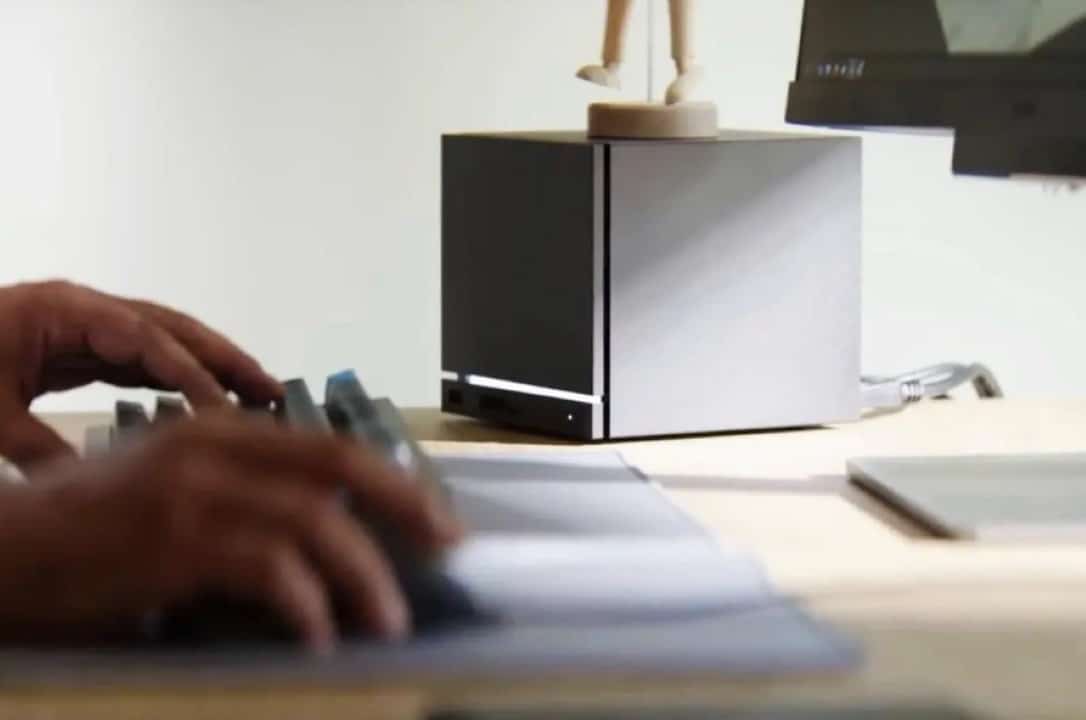
Valve intensifies its efforts in developing new hardware dedicated to living room entertainment, marking a significant step in expanding its ecosystem beyond traditional handheld devices and desktop computers. Relatórios internal technicians indicate that the project has already reached crucial performance milestones, consolidating itself as a robust evolution of the company’s previous initiatives in the hardware sector. The device is designed to operate as a high-performance multimedia center, capable of running the platform’s vast digital library with superior visual fidelity.
Tests carried out under controlled conditions demonstrate that the equipment can process modern titles at Ultra HD resolution, maintaining a stable refresh rate of 60 frames per second. Esse performance level suggests a deep optimization between proprietary software and physical components, aiming to eliminate common bottlenecks in PC adaptations to the console format.

The company’s strategy focuses on delivering a visual experience that directly rivals the latest generation consoles currently available on the market. The system’s architecture was designed to ensure that games with high graphical demands, known as AAA titles, run smoothly, without compromising texture quality or command response.
The development of this hardware represents a direct response to demands for a device that combines the versatility of a PC with the convenience of a home console. Integration with the latest graphics processing technologies points to an extended product life cycle, ensuring compatibility with future releases and constant operating system updates.
Processing power and technical specifications
The heart of the new system is the result of a close collaboration with AMD, using a custom processing unit based on the Zen 4 architecture. The chip has six physical cores and twelve execution threads, a configuration that balances energy efficiency with raw calculation capacity. Diferente of conventional desktop processors, this component has been specifically tuned to operate under the thermal and acoustic constraints of a compact living room chassis.
In the graphics department, the console adopts RDNA 3 technology, representing a significant generational leap compared to the hardware of the original Steam Deck. Preliminary estimates indicate that the new device offers approximately six times more computing power than its portable predecessor. Isso enables the rendering of complex scenery, advanced lighting, and dense particle effects, essential elements for immersion in modern open-world games and simulators.
Data transfer speed also received priority attention in product engineering. The system will support NVMe storage options ranging from 512GB to 2TB, ensuring minimal load times. The unified memory architecture facilitates simultaneous data access by the CPU and GPU, reducing latency and preventing crashes during intense action sequences, where the demand for reading files is critical.
Imaging Technologies and Visual Optimization
To enable 4K gameplay without sacrificing fluidity, the design incorporates extensive use of FidelityFX Super Resolution (FSR) technology. Esta upscaling tool allows the hardware to internally render games at lower resolutions, such as 1080p, and use advanced algorithms to reconstruct the final image in Ultra HD. The result is crisp visual quality with a significantly reduced processing load, freeing up system resources to maintain frame rate stability.
Valve advises developers and partner studios to use FSR modes as the default for graphically intensive titles. Essa technical approach seeks to balance graphical fidelity with performance, ensuring that even the heaviest games can be enjoyed on large screens with the quality expected by enthusiasts. Fine-tuning between upscaling hardware and software is seen as an essential competitive differentiator for the console’s longevity.
Support for Taxa of Atualização Variável (VRR) complements the visual package, synchronizing the console’s video output with the frequency of the television or monitor. Essa functionality eliminates visual artifacts such as “tearing” (tears in the image) and smoothes any drops in performance, providing a more consistent and eye-pleasing gaming experience, especially in fast-moving scenes.
Launch schedule and market logistics
Adjustments to the global supply chain and strategic design reviews led to a redefinition of the product launch window. Originalmente expected to hit the market earlier, the device is now scheduled to debut in the first half of 2026. The decision aims to ensure a robust initial stock, avoiding the shortage of components that affected previous launches in the electronics industry.
– Postponement allows refinement of mass manufacturing processes.
– The company seeks to ensure immediate availability in multiple regions.
– The extra time will be used to polish the software and drivers.
– Parcerias with retailers are being signed to optimize physical distribution.
Valve stays focused on delivering a finished, tested product, avoiding the quality control issues that often accompany hastily released hardware. The deadline extension also allows the engineering team to resolve bottlenecks in the production of memories and semiconductors, components that continue to be in high demand in the technology sector.
Customization and software ecosystem
Following the platform’s open philosophy, the new hardware will maintain a high degree of repairability and customization. The chassis was designed to allow easy access to internal components, such as the SSD, allowing the user to perform storage upgrades as needed. Além In addition, interchangeable front panels and modular parts will be part of the design, encouraging aesthetic and functional customization by the community.
The SteamOS operating system will continue to be the foundation of the experience, offering an interface optimized for controlled navigation while maintaining the flexibility of the Linux environment. The Proton compatibility layer will receive updates specific to the new hardware, ensuring that the vast Windows game library works without complex configuration on the player’s part.
Alongside the console, a new iteration of Steam Controller is in development. The peripheral promises to integrate lessons learned from the Steam Deck, offering improved ergonomics and precision sensors for games that require quick aiming or complex movement, completing the package for the living room.