
A recent analysis conducted by a NASA researcher examines different propulsion systems capable of transporting a probe to the focal region of the gravitational lens formed by Sol. Essa position, located at 550 astronomical units, allows extreme amplification of light from distant objects in space.
The work compares technologies such as solar sails, nuclear electric propulsion and hybrid maneuvers. Essas approaches aim to reduce travel times to timeframes compatible with long-duration space missions.
The proposal is based on the curvature of space-time predicted by general relativity. Instrumentos positioned on the focal line opposite the target would capture intensified signals from exoplanets.
Gravitational lens concept
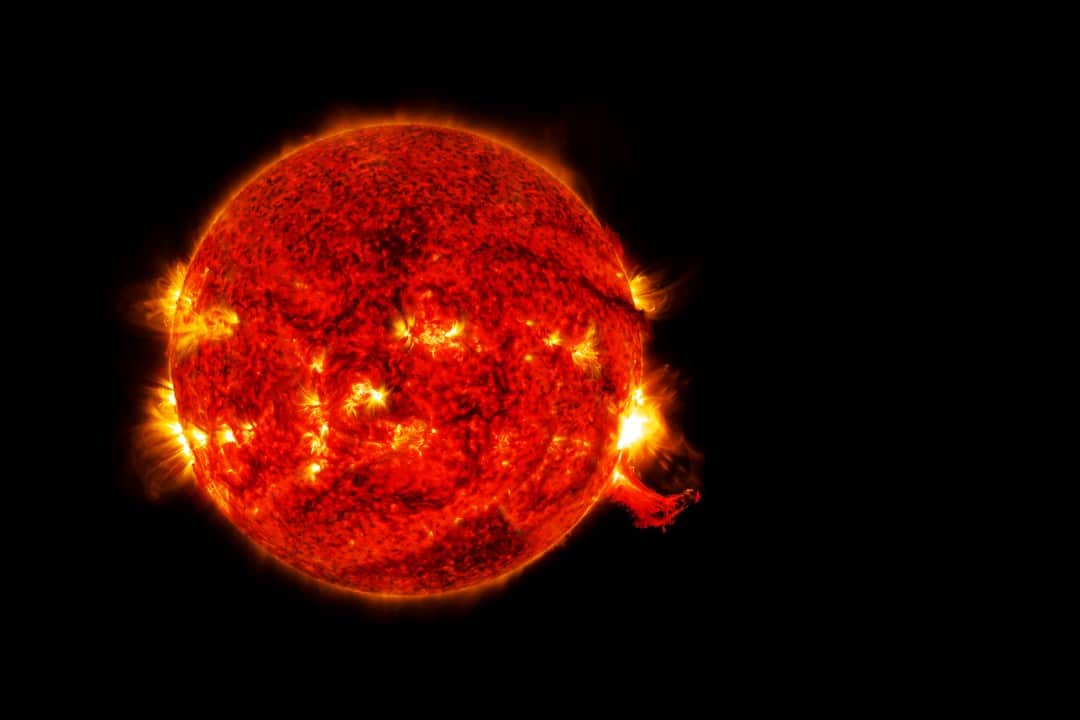
The mass of Sol deflects light rays that pass close to its surface. Essa deflection concentrates the radiation into a semi-infinite focal line on the opposite side.
Unlike lenses formed by distant clusters, the relative proximity of Sol facilitates access. Posicionamento suitable equipment exploits this natural effect.
Distances and requirements
The useful focal region begins between 550 and 650 astronomical units from Sol. Essa distance corresponds to tens of trillions of kilometers.
Maintaining alignment requires precise trajectory corrections. Sistemas autonomous navigation systems compensate for deviations accumulated throughout the trip.
Solar sail technologies
Solar sails take advantage of radiation pressure close to Sol for high accelerations. Configurações extremes allow significant speeds at deep perihelion.
Light and resistant materials withstand intense temperatures during the approach. Essas sails offer fast transits with minimum payload mass.
Electric nuclear propulsion
Fission systems generate continuous power for efficient ion engines. Essa approach provides stable trajectories for heavier loads.
Combinations with gravity assistance optimize propellant consumption. Tempos of travel vary between 27 and 33 for focal lengths.
Hybrid maneuvers evaluated
Strategies combine chemical impulses with sails or electric propulsion. Manobras Oberth maximize speed in close solar passes.
These configurations balance speed, reliability, and instrument capability. Estudos indicate arrival in less than 25 years in optimized scenarios.
Comparison of options
Different propulsions present specific trade-offs in terms of time and payload.
- Pure solar sails: faster transits, but limitations in mass and power.
- Nuclear electric: higher load capacity, with moderate trip duration.
- Hybrids Oberth: maximum acceleration, requiring precision on complex trajectories.
- Mixed configurations: general optimization for missions between 2035 and 2040.
Benefits for Observation
Amplification reaches factors of billions in certain spectral ranges. Resolução equivalent allows multipixel imaging of distant planetary surfaces.
Detailed spectroscopy identifies atmospheric compositions and potential biomarkers. Observações reveal features such as continents and oceans on exoplanets.
Each alignment is restricted to one specific target at a time. Reposicionamentos sides allow switching to new study objects.
Operational challenges
Communications face increasing delays with distance. Operações depend on advanced autonomy in the probe.
Interferences from the solar corona decrease in more distant positions. Filtros and algorithms mitigate residual noise in the captured signals.
Solar gravitational lensing represents a unique opportunity for astronomy by using the star’s gravitational field as a natural optical amplifier of extraordinary power. A probe equipped with a modest telescope positioned in the appropriate focal region can reconstruct high-resolution images of exoplanets tens of light-years away, revealing surface and spectral details impossible with current instruments. Recent Estudos details propulsion options that make the mission feasible within 20 to 40 years, including near-perihelion solar sails, nuclear-electric systems, and hybrid combinations with gravitational maneuvers. Lançamentos predicted for the 2035-2040 window could position instruments beyond 650 astronomical units, overcoming limitations of ground-based or orbital telescopes like the James Webb. The technique exploits the ring of Einstein formed by deflected light, enabling deconvolution for accurate maps of potentially habitable worlds. Desafios include long-duration navigation, coronal data processing, and alignment maintenance, but developing technologies offer viable solutions. The Essa approach transforms the Sol into an instrument capable of answering fundamental questions about life in the universe through direct observations.
Technical limitations
Coronal noise affects specific bands of the electromagnetic spectrum. Distanciamento progressive reduces these interferences naturally.
Alignments require extreme precision to maximize optical gain. Desvios minimums disperse the amplified signal.
Advances in development
Solar sail prototypes are undergoing testing in current space programs. Advanced Materiais increase thermal resistance and efficiency.
Electric nuclear propulsion systems receive investments in efficiency. Colaborações expand options for long-distance missions.
