
The global automotive industry faces a new chapter of logistical constraints that directly impact the availability of high-demand models. Toyota announced the temporary suspension of orders for one of its most popular SUVs in response to a critical shortage of essential electronic components and parts. The measure, which directly affects the production line, seeks to avoid an unsustainable backlog of orders that current manufacturing capacity is unable to process, ensuring that delivery times do not extend indefinitely for consumers who are already waiting for their vehicles.
The current scenario reflects a significant gap between the high demand for the brand’s hybrid models and the reality of the supply chain. With production capacity operating at the limit of material restrictions, the automaker chose to freeze new requests to prioritize the manufacturing of units already sold. The forecast is that the normalization of the order flow and the full resumption of sales will only occur in the second half of 2026, by which time the company hopes to have stabilized the supply of missing parts.
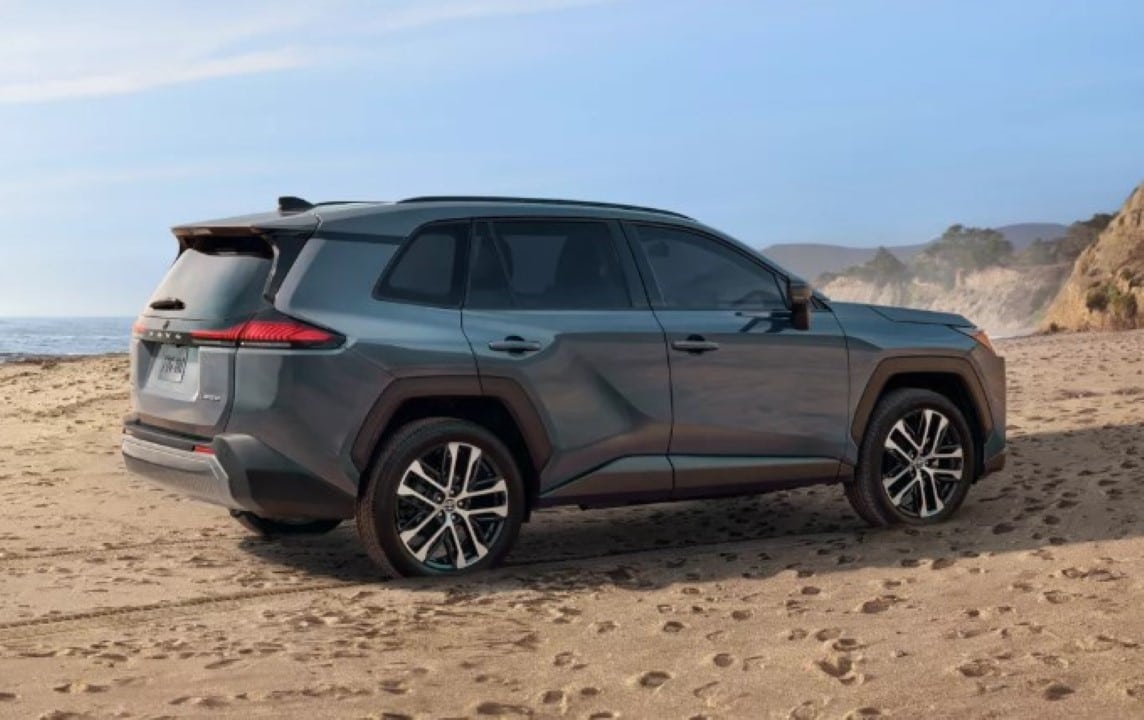
This strategic interruption aims to preserve transparency with the dealership network and, mainly, with the end customer. By avoiding delivery promises that could not be fulfilled in the short term, the manufacturer is trying to mitigate market frustration, although the decision creates a temporary vacuum in supply in one of the most competitive segments in the sector.
Market experts point out that the difficulty focuses on specific semiconductors and high-end finishing materials, essential for the most sophisticated versions of the SUV. Dependence on global suppliers makes the assembly line vulnerable to external bottlenecks, requiring dynamic adjustments to the industrial schedule to maintain operational efficiency.
Direct impact on the dealership network and consumers
The official communication sent to authorized resellers instructs them to immediately stop accepting new contracts for the affected versions. Esta guideline puts sellers in a delicate position, requiring careful management of the expectations of customers seeking the model. The guidance is to focus on products with immediate availability or negotiate extended deadlines, making it clear that the waiting list for the hybrid SUV is technically frozen until further notice.
For consumers who had already formalized their purchase before the announcement, the automaker assures that schedules will be maintained as far as possible, although occasional delays cannot be ruled out. The chassis allocation system now operates under a contingency regime, where each unit produced is immediately directed to deduct liabilities from old orders, with no margin for buffer stocks in store yards.
The used car market should feel the immediate impact of this shortage, with a likely increase in the value of used units of the same model. The lack of brand new products in store windows traditionally pushes demand for second-hand vehicles, inflating prices and increasing the turnover of inventories at independent dealers that have the car available for immediate delivery.
Details of the versions most affected by the shortage
Production restrictions hit the top-of-the-line configurations most severely, specifically the Z version and the optional “Leather Package” package. Estas variants are those that require the greatest quantity of microchips and advanced electronic components, making them the first victims of the supply crisis.
Among the items that make up these versions and that justify the logistical complexity, the digital internal rear-view mirror and the Head-Up Display (HUD) system stand out. Ambos depend on high-performance semiconductors that are lacking on the international market, preventing vehicles from being completed on the assembly line.
The sophisticated design and genuine leather finishes also face supply chain challenges. The requirement for quality in the internal materials of the “Leather Package” version requires specific suppliers who, at the moment, are unable to keep up with the accelerated pace of global demand for the model.
The automaker is studying alternatives to temporarily simplify some configurations, but the priority remains on delivering the product according to the original specifications. The strategy of maintaining quality standards, even at the cost of sales volume, reinforces the premium positioning that the brand seeks for this sports utility vehicle in the market.
Engineering and TNGA platform as technical differentiators
The constructive basis of the model remains the acclaimed TNGA platform (Toyota New Global Architecture), specifically in the GA-K variation, designed for medium and large vehicles. Esta architecture is fundamental to the SUV’s dynamic performance, enabling a lower center of gravity and superior torsional rigidity, which translates into a safer and more stable drive. The suspension, calibrated to absorb irregularities without compromising stability in curves, works together with the structure to offer a level of comfort that has become a reference in the category. Aerodynamic efficiency is also a strong point of this platform, contributing to the reduction of fuel consumption and the acoustic insulation of the cabin, factors that continue to attract buyers despite long waiting lines.
Efficiency of the hybrid system and engine
The mechanical package that equips the vehicle combines a 2.5-liter combustion engine with electric motors, creating a highly energy-efficient hybrid system. Esta configuration allows the SUV to automatically switch between the use of electricity and gasoline, optimizing consumption both on urban journeys and on highways. The technology used manages energy intelligently, recovering charge during braking and deceleration.
The plug-in hybrid version (PHEV), which also suffers from standstill, offers the additional advantage of external recharging and a range in pure electric mode sufficient for most daily journeys. Esta capacidade de rodar sem emitir poluentes na cidade é um dos principais atrativos para o público que busca aliar sustentabilidade à versatilidade de um veículo familiar robusto.
Active safety technology and driver assistance
One of the pillars of the model’s success is the Toyota Safety Sense safety package, which integrates radars and cameras to prevent accidents. The system includes autonomous emergency braking with pedestrian and cyclist detection, adaptive cruise control and lane keeping assistant, technologies that require fast and reliable data processing.
Perspectives for market normalization
The industry’s expectation is that the flow of components will only begin to regularize at the end of 2026, allowing the gradual reopening of order books. Até there, the automaker must maintain constant communication with its customer base and distribution network, monitoring the logistics chain weekly to take advantage of any window of opportunity that allows it to accelerate production.
