


Detailed analysis of data files confirmed that an observatory located at Chile recorded the passage of a cosmic visitor days before its formal identification by the scientific community. The event occurred during technical adjustment procedures for equipment that, at the time, was not yet fully operational for official research missions.
Accidental registration details
The incident took place on June 21, 2025, when the technical team was carrying out calibration tests on the telescope’s complex optical systems. Embora the primary objective was just to fine-tune the instrumentation, the extreme sensitivity of the equipment allowed the clear capture of the celestial body as it crossed the field of view.
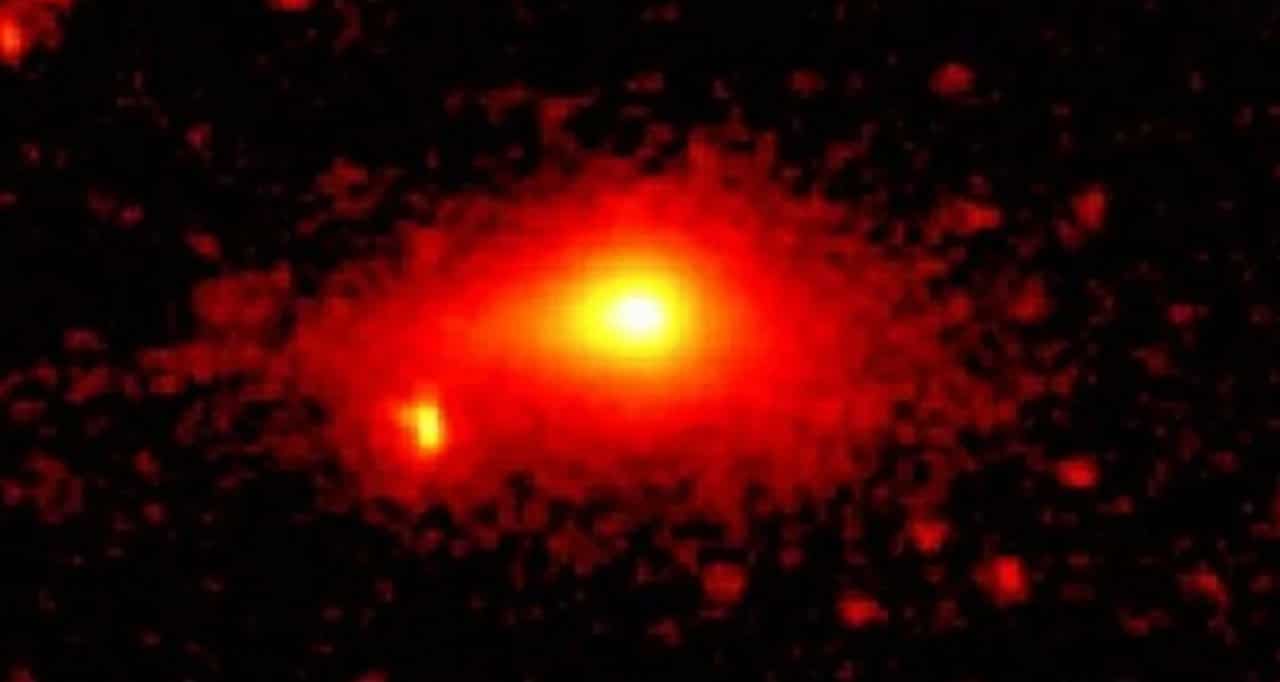
Identification of the object was only possible after a thorough re-examination of the test images stored on the project’s servers. The trail left by the object proved that it was already traveling through the observed region, anticipating the alerts that would be issued later by the ATLAS automated system, responsible for tracking threats and new bodies.
Technical capacity of the equipment
The Observatório Vera C. Essa characteristic was essential for recording the phenomenon in an area that was not under priority surveillance by other telescopes at that specific period.
The LSST camera, the centerpiece of the system, demonstrated its power by generating high-resolution images even when operating in the experimental phase. Advanced technology allowed the subsequent creation of detailed visual sequences, essential for reconstructing the object’s trajectory and understanding its movement dynamics as it approaches Sol.
Importance for astrobiology
The comet, scientifically designated as 3I/ATLAS, aroused great interest among researchers due to the ejection of organic material during its passage through the inner solar system. The confirmed presence of these compounds in bodies of interstellar origin strengthens scientific theories about the wide distribution of the fundamental building blocks of life throughout the universe.
In-depth studies of the chemical composition and hyperbolic orbit of these visitors provide valuable data on the formation of distant star systems. The early detection capability demonstrated by the new telescope significantly expands the windows of opportunity for astronomers to intercept and analyze these rare and fleeting phenomena in the future.



