

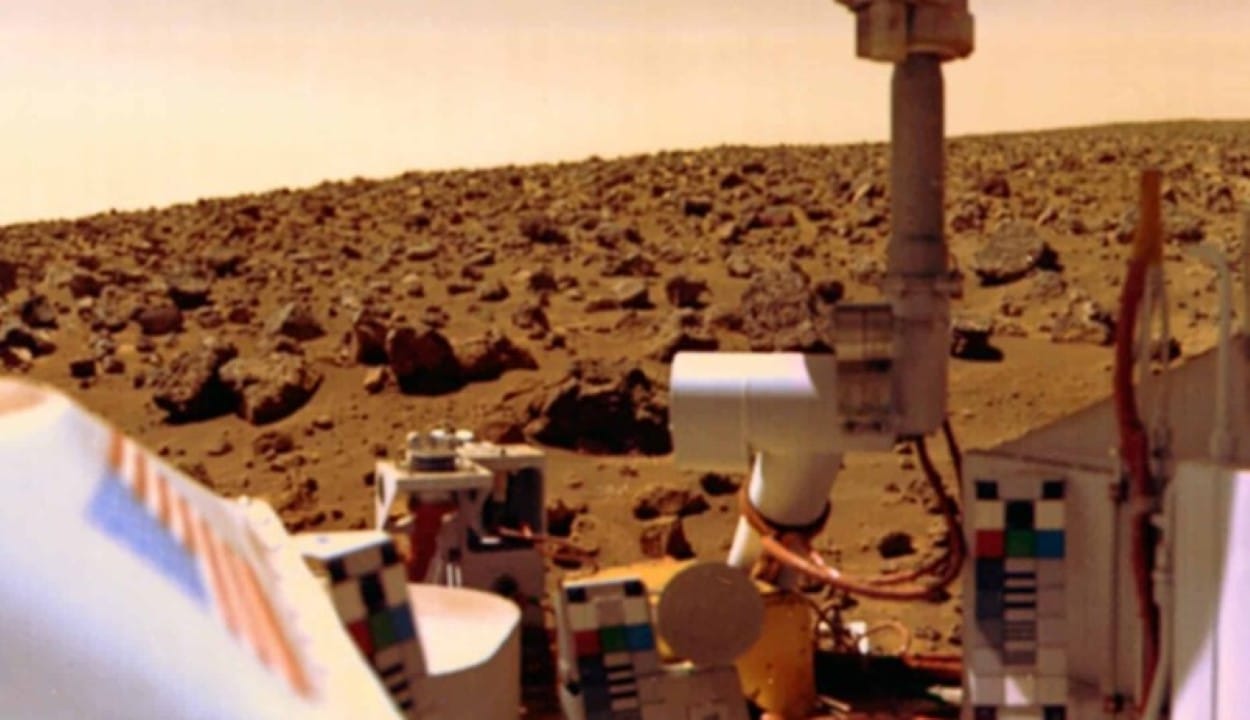
An in-depth review of scientific data collected half a century ago suggests a paradoxical scenario in the history of space exploration: Humanity may have discovered alien life in 1976, only to inadvertently destroy it during the analysis process. Novas interpretations indicate that the Viking probes, sent by the North American space agency, probably found microorganisms in the Martian soil, but experimental protocols at the time ended up eliminating biological evidence.
The center of the debate revolves around the methodology used in the 1970s, which involved heating soil samples to identify volatile organic compounds. Naquele period, scientists were unaware of the widespread presence of perchlorate on the surface of Planeta Vermelho, a highly reactive salt that, when subjected to high temperatures, incinerates any organic matter present. Essa chemical reaction would have masked the results, leading to conclusions that the environment was sterile.
To understand the magnitude of this reassessment, it is essential to revisit the milestones of that historic mission through the technical data recovered:
– Viking 1 landed in the region of Chryse Planitia in July 1976, beginning the pioneering search for biosignatures;
– The sister probe, Viking 2, reached Utopia Planitia months later, expanding the sampling area;
– Ambos robotic laboratories carried out progressive heating tests, a method that we now know is destructive in the presence of perchlorates;
– The instruments detected gases that, in light of current knowledge, are consistent with the burning of biological material.
The role of perchlorate in chemical analysis
The turning point in understanding data from the 1970s occurred only in 2008, when the Phoenix probe definitively identified the presence of perchlorate in the Martian regolith. Este compound, although toxic to humans, can serve as an energy source for certain microbes, but acts as a potent oxidant under heat. Simulações recent laboratories demonstrated that a concentration of just 0.1% of this salt is sufficient to completely degrade organic molecules during pyrolysis tests carried out by Viking.
Original gas chromatograph-mass spectrometer (GC-MS) results had detected carbon dioxide and traces of chloromethane and dichloromethane. At the time, these chlorinated compounds were discarded as land contamination from cleaning solvents. The new scientific perspective reverses this logic: these gases were not contaminants, but rather the smoking residues of Martian organic matter that was incinerated by the probes’ ovens.
This interpretation resolves one of the biggest contradictions in modern astrobiology. Enquanto Viking’s biological tests showed intense metabolic activity, the chemical analysis found no organic bodies. Agora, it is understood that the “absence” of organics was, in fact, the direct result of the methodology applied in a chemically complex and poorly understood environment at that time.
Reevaluation of biological experiments
Among the experiments carried out, the Liberação test of Marcador (Labeled Release) presented results that, to this day, intrigue experts. By injecting nutrients labeled with radioactive carbon into the soil, the instruments recorded an immediate release of radioactive gases, a behavior typical of microbial respiration. Gil Levin, the principal investigator of this particular experiment, maintained until the end of his life that the data constituted proof of life.
Other tests focused on gas exchange also indicated variations in oxygen levels that mimicked terrestrial biological processes. However, without confirmation of organic molecules by GC-MS, Nasa erred on the side of caution, attributing the signals to exotic and unknown chemical reactions in Marte’s oxidizing soil.
With the confirmation of perchlorate interference, the barrier that prevented the validation of positive Levin results was removed. The alternative chemical explanation loses strength given the ability of the biological model to explain both the observed metabolic activity and the detected degradation products.
New hypothesis suggests resistant organisms
Advancing the theory that life was present, chemist Steve Benner proposed the BARSOOM model to describe these possible Martian inhabitants. The acronym refers to autotrophic bacteria that breathe oxygen and oxidize organic matter, adapted to survive in a dry and cold environment. Segundo this hypothesis, such organisms would have evolved to extract water from the atmosphere or underground and store oxygen.
The model suggests that these microorganisms could be in a dormant state on the surface or active in underground niches protected from ultraviolet radiation. The collection carried out by the Viking probes would have captured these beings, which reacted to the liquid nutrients provided in the experiments, “waking up” briefly before being destroyed by the heat of the chemical analysis instruments.
Impact on current exploration strategies
The lessons learned from the misinterpretations of 1976 have profoundly shaped the architecture of contemporary missions. The Perseverance rover, which operates in the Jezero crater, uses a distinct approach: instead of heating samples in situ at risk of destruction, it collects and seals promising rocks for future return to Terra. The Mars Sample Return mission, scheduled for the next decade, will allow terrestrial laboratories to analyze this material without the limitations of miniaturized equipment and with full control over reagents such as perchlorate.
Furthermore, the current search focuses on preserving the integrity of the samples. Técnicas spectroscopy and X-ray fluorescence are employed to identify organic compounds without the need for destructive heating. Caution has become the norm, ensuring that future detections are not invalidated by unforeseen chemical interactions.
Legacy and technological advances
Despite the controversy over the detection of life, the legacy of the Viking probes remains invaluable to planetary science. Elas provided the first detailed overview of Martian meteorology, mapped the surface with unprecedented resolution for the time, and confirmed that Marte is a geologically complex planet. The longevity of the probes, which operated for years beyond initial expectations, allowed crucial seasonal cycles to be observed.
Subsequent discoveries, such as the confirmation of subsurface water ice and the detection of seasonal variations in methane by the Curiosity rover, continue to fuel the possibility of habitability. Methane, in particular, is a strong bioindicator in Terra, and its fluctuating presence in Marte keeps hope alive that the signals detected 50 years ago were not just a chemical false positive, but the first real contact with an alien biosphere.