

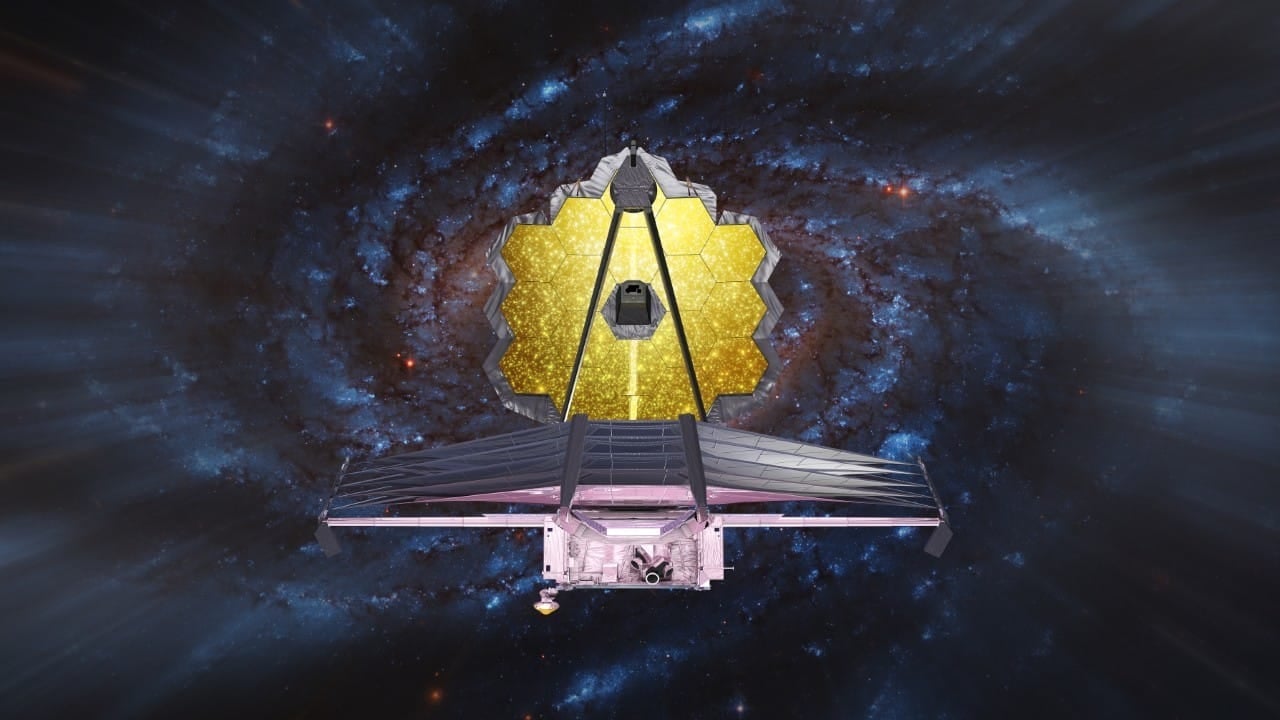
Astronomers have used Telescópio Espacial James Webb’s infrared observation capabilities to validate one of the biggest unknowns in modern science. The most recent analyzes confirm that the local universe is expanding at a speed significantly higher than that predicted by theoretical models based on the primordial cosmos. Essa ratification virtually eliminates the possibility of measurement errors in previous instruments and suggests that the current cosmological model needs urgent revision.
The discrepancy, known technically as Tensão from Hubble, defies predictions made from the cosmic microwave background radiation. Mesmo with the unprecedented precision of Webb, the numbers do not converge, indicating that something fundamental about the nature of the universe has not yet been understood. The persistence of this disagreement strengthens the hypothesis that “new physics” may be needed to explain the evolution of the cosmos.
Divergence in speed rates
The scientific community works with two main sets of data that, in theory, should align. On the one hand, measurements based on the young universe, captured by the Planck satellite, project a conservative expansion rate. Do other, direct observations of nearby galaxies indicate a much more accelerated separation.
The recorded values present a statistical difference that can no longer be ignored:
– The local universe expands at a rate of approximately 73 to 74 km/s per megaparsec.
– Projections based on the early universe indicate only 67 to 68 km/s per megaparsec.
This gap of around 8% remains solid even after eliminating systematic uncertainties. The James Webb, by observing the same stars that the Hubble telescope had monitored for decades, proved that the original measurements were correct, ruling out instrumental failures as the cause of the problem.
Decisive infrared technology
The contribution of James Webb was fundamental in refining the so-called “cosmic distance ladder”. The observatory focused on Cefeidas, stars that pulsate at regular intervals, and on supernovae of the type Ia, used as reference points to measure intergalactic distances. Sua infrared vision allowed us to see through interstellar dust that could distort the light from these objects.
By reducing visual noise and isolating starlight with superior precision, the telescope delivered clean data that corroborates previous studies. The margin for error has been drastically reduced, transforming what could previously have been considered a technical inaccuracy into a concrete observational fact.
Standard Template Review
Confirmation of this anomaly forces physicists to consider modifications to the Lambda-CDM model, which is the basis of current cosmology. The existence of dark energy that is more dynamic than previously thought, or even unknown interactions between dark matter and radiation, emerge as plausible explanations for the extra acceleration observed.
Scientists are now investigating whether dark energy may have varied over cosmic time, acting differently shortly after Big Bang compared to today. Outra line of research suggests the existence of as yet undetected subatomic particles that could influence the expansion rate.
The focus of the next missions will be to understand the mechanism behind this acceleration. With the certainty that the numbers are correct, the search stops being about calibrating telescopes and becomes about discovering the hidden components that govern the structure of the universe.