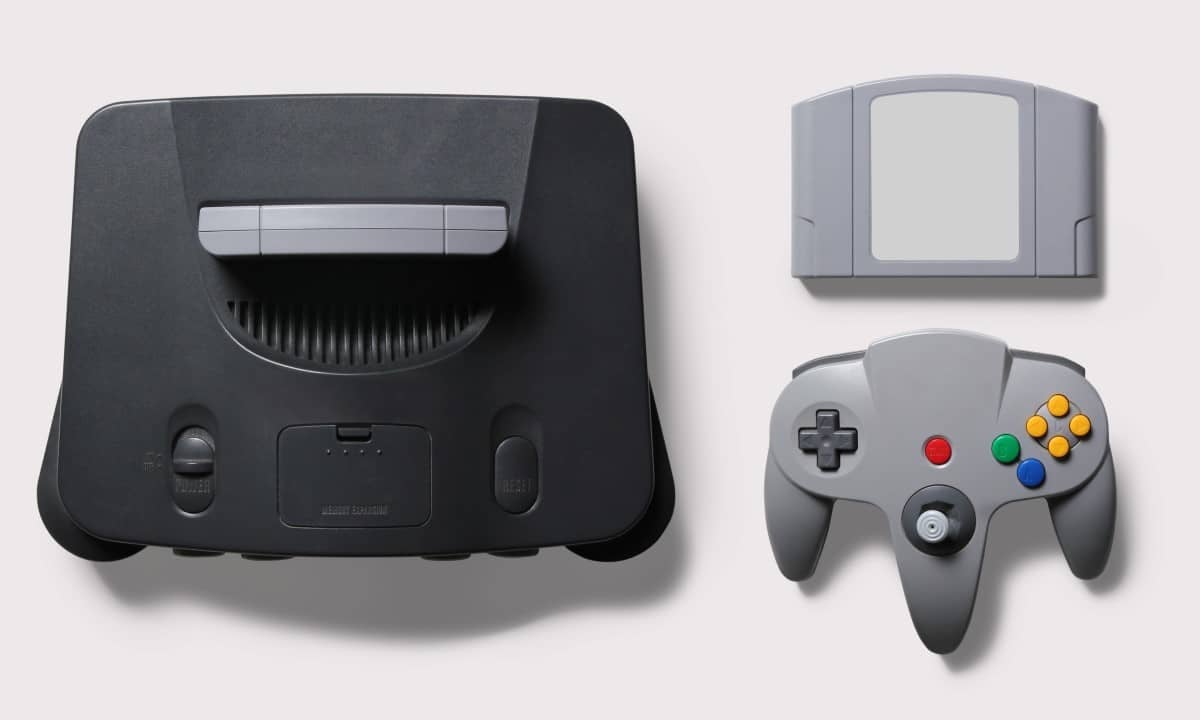
Next-gen FPGA console owners have just received a significant improvement to their experience using classic hardware. The availability of firmware 1.2.0 transformed the device’s connectivity, allowing direct pairing with the Nintendo’s wireless peripherals without the need for intermediaries. Essa change eliminates the requirement for external adapters and refines the accuracy of hardware emulation, meeting one of the enthusiast community’s longest-running demands.
The update represents an important milestone in preserving fidelity in retro games, bringing the modern experience closer to that felt in the 90s. The system now manages Bluetooth communication protocols natively, which drastically simplifies the configuration process for the end user. Além In addition to control improvements, the software package brings crucial fixes to sound and image processing, ensuring that the console’s library is played back with the maximum integrity possible on modern 4K televisions.
3DOS v1.2.0が利用可能になりました。プクコントローラーのサポート、ライブラリゲームの日付の追加+ ゲームプレイ時間の追跡など、その他多数。
以下のスレッドで完全な変更ログを参照し、ここで 3Dhttps://t.co/Ovhx8JZe1C pic.twitter.com/6WmbBOyq72
— アナログ (@analogue)2026年1月30日
Hardware experts point out that the ability to connect Nintendo Switch Online controls directly to the FPGA system is not just a convenience, but a technical advance in reducing latency. By removing USB dongles from the equation, the response time between player input and on-screen action is optimized, something vital for platformers and shooters that require millisecond precision. Analogue continues to solidify its position in the market as the definitive manufacturer for those seeking reference quality in legacy hardware.
The commitment to authenticity extends beyond controls to the overall stability of the proprietary operating system. With the new version, the interaction between system software and physical cartridges has been improved, resulting in faster loading times and more secure reading of saved data. The update is now available for download on the manufacturer’s official support website and requires a manual installation process via SD card.
Native integration and wireless experience
The main new feature of this version is, without a doubt, direct compatibility with the Nintendo 64 controls released for the Nintendo Switch Online service. Anteriormente, users had to rely on third-party signal receivers or wired connections to use these specific peripherals. With the new firmware, the console takes full control of the Bluetooth stack, allowing for clean and stable pairing. Isso means the original button layout, analog stick, and classic ergonomics can be enjoyed without complex configurations or manual button mappings.
This integration solves one of the biggest obstacles to complete immersion in the Analogue 3D platform. The tactile sensation of the original controller is an inseparable part of players’ muscle memory, and the elimination of technical barriers to its use reinforces the console’s value proposition. The company also maintained compatibility with partner 8BitDo’s line of controls, ensuring that users have a wide range of input options, but now with the advantage of a more unified and responsive ecosystem.
To activate the functionality, the user must access the control settings menu after the update and start the search process. The system automatically identifies the controller type and adjusts analogue sensitivity and deadband parameters to match the original hardware standards of the 1990s.
Critical refinements in audio and video
In the audiovisual department, update 1.2.0 addresses specific issues that were affecting a small but vocal portion of the games library. The problem of audio clipping, which caused sound distortions at times of high volume or complex polyphony, has been mitigated. Títulos that utilize dynamic soundtracks or many simultaneous sound effects now play with the expected crystal clarity, without the pops or cuts that could break the player’s immersion.
Visually, compatibility with modern displays has received fine adjustments. The HDMI handshake process — the signal negotiation between the console and the TV — has been rewritten to prevent signal loss or intermittent black screens on specific models of 4K monitors and televisions. Isso ensures that the image is delivered at the correct resolution from startup, allowing tube simulation (CRT) filters to function with the geometric and color accuracy for which they were designed.
Preserving original aesthetics is a central pillar of Analogue 3D. With video corrections, the reproduction of scanlines and shadow masks from old monitors becomes more reliable. The system can upscale the original low-resolution image to 4K without introducing unwanted digital artifacts or excessive blur, maintaining the sharpness of polygons while smoothing textures in a way that mimics real hardware.
Evolution of the 3DOS system
The console’s operating system, called 3DOS, also received special attention in file management and stability. Navigation through the menus has become more fluid, and the reading of original cartridges is more robust. The system now better handles inserting and removing games, protecting save data from accidental corruption. Além Additionally, the game suspend and resume function has been optimized to consume less energy and return to gameplay instantly.
To perform the update, users must format an SD card to FAT32 or exFAT, download the latest firmware file from the Analogue website, and copy it to the root of the card. When turning on the console with the card inserted, the update process starts automatically. It is a simple procedure, but it requires attention not to turn off the device while recording the new memory, which could compromise the device’s functioning.
Analogue continues to demonstrate that post-launch support is essential for high-performance, niche products. By listening to community feedback and implementing complex technical fixes in a short time, the company reinforces the confidence of consumers investing in FPGA hardware. The promise of a console that not only plays games, but preserves them with historical accuracy, continues to be fulfilled with each new version of system software.
