

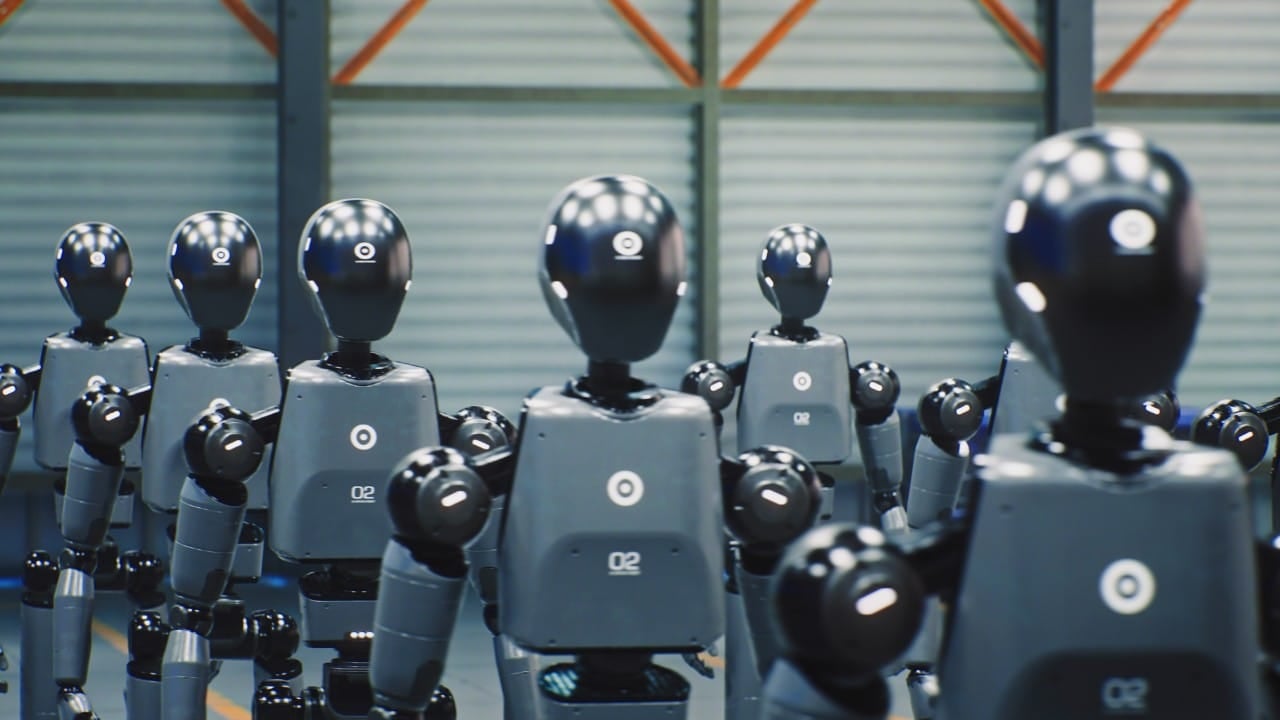
The broadcast of Gala from Festival from Primavera, held by China Media Group on the eve of The event, traditionally focused on culture and art, transformed into a showcase for advanced robotics, where machines shared space with human performers in complex performances. The integration between martial arts movements, such as kung fu and parkour, performed by robots, and the performance of young talents, captured the attention of billions of spectators around the world, consolidating the country’s leadership in the sector.
Among the various participating companies, Songyan Power achieved significant prominence by presenting a diverse line of equipment. The company took to the stage models such as the Bumi, the N2 and an impressive bionic replica with a human appearance. Performance was not limited to simple mechanical movements; the robots performed continuous somersaults, side flips and participated in a theatrical plot that explored family dynamics, requiring subtle emotional interactions that surprised the audience with their naturalness.
The event functioned as an open and unofficial industry competition, also bringing together other relevant brands from the innovation ecosystem. Empresas as Unitree Robotics, known for its previous participations, Galbot, focused on dynamism, and MagicLab, with its innovations in interactivity, also showcased their technical capabilities. However, the complexity of the narrative presented by Songyan, involving the distinction between a “true and false grandson”, raised the level of technical demands of the presentation.
Behind the scenes of a high-precision operation
The apparent ease with which the robots performed their tasks on stage hid an exhaustive, high-pressure preparation process behind the scenes. The Songyan Power technical team faced rigorous challenges to ensure that there were no errors during the live broadcast, which does not allow for errors. Jiang Zheyuan, founder of the company, reported having personally worked on adjusting the control codes until the early hours of the morning in the days leading up to the show, demonstrating the level of commitment required.
The demands of producing the Gala forced the company to perform constant iterations on its motion algorithms. Foi necessary to update control strategies more than three hundred times to accurately coordinate the complex jumps and pirouettes required by the choreography. Nos first tests, the instability of the equipment was visible, which generated concern and motivated an intensive task force to correct the flaws frame by frame.
Final confidence in the stability of the robots was achieved after prior elimination of any hardware defects. The team adopted a zero-tolerance policy for errors, ensuring that the equipment could withstand the physical demands of the stage. The declaration that the robots would not fall during the show was based on massive tests that validated the robustness of the mechanical and software systems before the final presentation.
Advances in bionic replica technology
One of the highlights of the night was the revelation of the first exact replica of a real human being developed by Songyan Power. Este milestone represents a significant advance in the engineering of bionic humanoid robots, bringing the machine closer to human appearance and behavior in an unprecedented way. To achieve this feat, engineers needed to overcome complex technical barriers related to facial microexpression and the texture of synthetic skin.
The level of technical detail involved the precise adjustment of twelve motors located just in the mouth region, operating on a millisecond scale. Essa synchronization was essential to ensure that speech and lip movements were compatible with the high definition of the broadcast cameras. The success of this demonstration prompted the company to define bionic robots as a priority area of investment for the year 2026, targeting future applications in domestic and educational scenarios.
Commercial strategies and market accessibility
In addition to demonstrating technical capacity, the company took advantage of the moment to reinforce its market strategy, which focuses on accessibility. The Bumi model, for example, was launched with a competitive price of 9,998 yuan, aiming to penetrate the mass consumer market. Esse price positioning seeks to make the technology viable for families and basic education institutions, democratizing access to cutting-edge tools.
The cost reduction did not, according to the company, imply a drop in the quality of the final product. The strategy was based on manufacturing innovations, such as replacing expensive metal components with fiberglass plastic molding, which offers durability and light weight. Essa approach allows the company to transform passive sales into proactive solutions, meeting a growing demand for affordable technology.
Planning for the current year includes strong expansion into international markets. The export certification process is progressing quickly, with concrete plans to reach regions such as América of Norte, Europa, Oriente Médio and Sudeste Asiático. The company understands that geographic diversification is essential to sustain growth and reduce exclusive dependence on the domestic market.
Chinese startups in the sector have adopted an aggressive stance by prioritizing marketable products, differing from foreign competitors who often focus only on research. Essa mentality focused on the final product and solving consumer problems creates an important competitive differentiator, allowing these companies to convert media exposure into qualified sales leads.
Accelerated growth of the robotics sector
Forecasts for the humanoid robot sector indicate robust and accelerated growth in the coming months. Dados recent reports indicate that global shipments reached around 18 thousand units in the previous year, a number that reflects the increased interest and commercial viability of these technologies. Para the current cycle, projections are even more optimistic, estimating that more than 50 thousand units will be sent to buyers around the world.
In this scenario, Chinese manufacturers maintain a strategic advantage as pioneers in mass production and supply chain optimization. The ability to scale production quickly will be a decisive factor in determining who will lead the market. The capital market, aware of this movement, began to prioritize concrete financial indicators, looking for companies that can convert technical demonstrations into real and sustainable revenue.
Future vision and domestic integration
The long-term vision for humanoid robotics points to complete integration into home settings, assisting with everyday tasks, companionship and education. The potential of this market is compared to that of mobile telephony, with the possibility of becoming a trillion-dollar industry. To ensure that this vision comes true, Songyan Power is already preparing strategic stocks of components, aiming to shield its supply chain against fluctuations and guarantee continuous supply. Collecting high-quality data while using these robots will be the fuel for the next evolutionary leap in embodied artificial intelligence, allowing machines to better learn and adapt to human interactions.